


“The people are in despair.”
That’s all my friend said when he returned from Bethlehem.
The words were few, but they were heavy. They fell like a stone in my chest. My heart hit the floor. I wanted to look away. Because despair is too much to hold.
I wanted him to say the people were hopeful, resilient, creative. I wanted a story about joy in the middle of hardship, about laughter that survives. I wanted something I could fix, something I could support, something I could believe in. But despair doesn’t give you that. Despair is the absence of every solution.
And yet this is Bethlehem.
Bethlehem, the city of David, the birthplace of Jesus. The place where angels sang to shepherds and heaven broke into earth. The place where Mary laid her child in a manger and the weary found joy. The place where the kingdom of heaven began.
And now, in that same city, the word that rises is despair.
Turning Away
That was my instinct: to turn away. Isn’t it always?
We want hope, not hopelessness. We want joy, not despair. We want a Bethlehem of carols and candlelight, not a Bethlehem surrounded by walls and checkpoints.
It is human nature to pull back from suffering that feels unfixable. Despair makes us afraid, because it reminds us how fragile we are. And so we turn away.
But Jesus never turned away.
Jesus and the Hopeless
Look at his life. He sought out the ones everyone else avoided:
- He touched the lepers who had been cast out, the ones society declared untouchable.
- He spoke with the Samaritan woman at the well, who was so alone that she came to draw water in the heat of the day.
- He stopped for beggars crying by the roadside, voices most people had learned to ignore.
- He ate with tax collectors and sinners, the despised and the discarded.
He moved toward those who had no hope left in themselves.
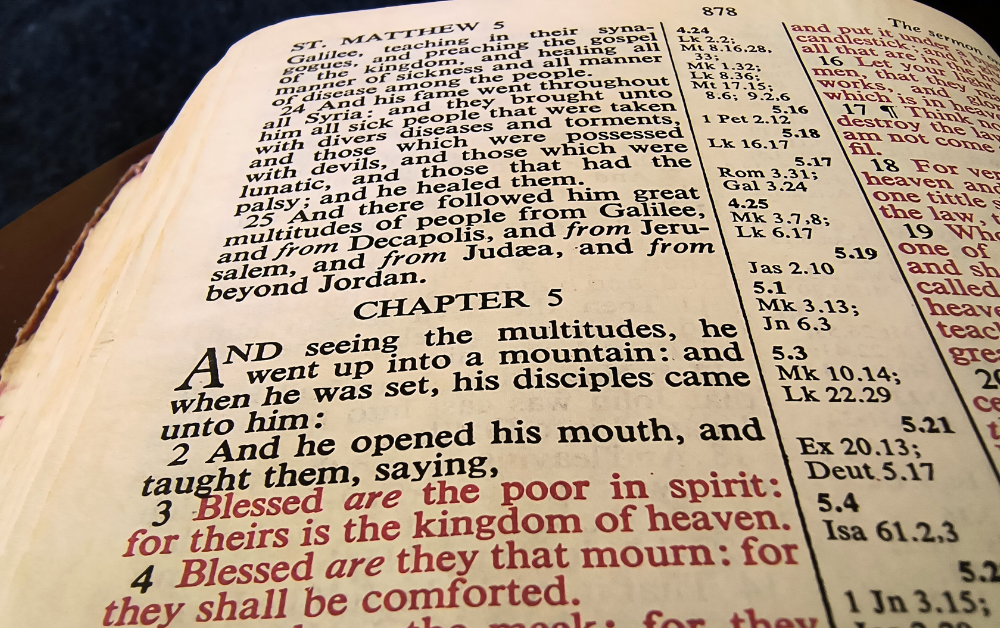
And when he opened his mouth to preach his first great sermon, the Sermon on the Mount, he began here:
“Blessed are the poor in spirit, for theirs is the kingdom of heaven.”
That is where the kingdom begins with the despairing, the destitute, the powerless.
What Despair Looks Like in Bethlehem
My friend didn’t give details, but I know what despair looks like.
It looks like walls that tower higher than the olive trees.
It looks like checkpoints where time and dignity are stolen daily.
It looks like streets once alive with pilgrims and tourists, now quiet, shops shuttered, families without income.
It looks like churches struggling to keep doors open as Christians emigrate, feeling abandoned not just by the world but by their brothers and sisters in faith. It looks like a mother staring at an empty shelf where bread should be, or a father unable to find work, or a child who has never once left the shadow of the wall.
Bethlehem is where heaven first came down. And yet today Bethlehem feels like lambs penned in, surrounded by wolves.
Despair is not mourning. Mourning still hopes for tomorrow. Despair has stopped hoping. It is not just sorrow, but the sense that sorrow will never end. It is emptiness with no horizon.
That is what my friend meant. And that is what Jesus names blessed.
The Kingdom of Heaven for the Poor in Spirit
Why would Jesus say that? Why begin here?
The Greek word Matthew records is ptōchoi, the utterly destitute, those crouching in poverty, those who have nothing left. Luke makes it even plainer: Blessed are you who are poor, for yours is the kingdom of God. In Aramaic, it carries the same sense: meskene, the broken, the powerless, the dependent.
We turn from despair. Jesus turns toward it. We call it hopeless. Jesus calls it blessed.
Not because despair itself is good, but because it is here, in the place where human hope is gone, that God’s kingdom breaks in first. “O the joy,” the Aramaic suggests, “O the deep flourishing of those who have nothing left but God, for theirs is the kingdom of heaven.”
The kingdom of heaven does not begin with the strong. It begins with the poor in spirit. It begins in Bethlehem.
The Cross and Despair
We see this again at the cross.
All hope collapsed. The disciples’ Messiah was executed, their movement scattered, their future destroyed. Jesus himself cried out the words of despair: “My God, my God, why have you forsaken me?” (Matthew 27:46).
This was despair, the absence of God, the death of hope, the silence of heaven.
Holy Saturday dawned like Bethlehem today: heavy, empty, still. Everything they believed in lay in a tomb.
And yet, three days later, the stone rolled away. Resurrection came. What felt like the end was not the last word.
That is what Jesus meant: blessed are the poor in spirit. Because when all human hope is gone, God’s hope is near.
Bethlehem’s Witness
Bethlehem today lives in Holy Saturday. The people are in despair. And yet, Jesus’ promise remains: “Theirs is the kingdom of heaven.”
This does not erase despair. It does not pretend life is easy or pain is absent. It names despair honestly, and still says: the kingdom is here.
If I could choose anywhere in the world to worship, I would choose Bethlehem. Not because they are triumphant, but because Jesus’ blessing rests there. If the kingdom of heaven belongs to the poor in spirit, then Bethlehem is its beating heart.
Closing
I don’t want to turn away from despair anymore. I want to learn to listen. To sit with it. To let it teach me what it means to need God, to depend on God, to find hope not in solutions but in the kingdom that cannot be taken.
Because the kingdom of heaven does not begin at the top. It begins at the bottom. It begins with despair. It begins in Bethlehem.
“Blessed are the poor in spirit, for theirs is the kingdom of heaven.”
Reflection
- When have I wanted to turn away from someone’s despair?
- What does it mean that Jesus begins with the lowest?
- Can I believe that Bethlehem’s despair holds the kingdom of heaven?
Action Do One Today
This Holy Week, choose one simple way to enter into shared worship and prayer with Christians in Bethlehem. You don’t have to do everything, just pick one and let it be enough.
Join an Online Worship Service
Participate in worship with Evangelical Lutheran Christmas Church, the historic Palestinian Christian congregation beside the Church of the Nativity.
Church-to-Church Encounter: Learn and Pray
- Invite your small group or church to explore a teaching from the Bethlehem Institute for Peace and Justice, a program of Bethlehem Bible College that brings the Palestinian Christian voice into conversation with the global church.
- Explore courses and resources here: Bethlehem Institute for Peace and Justice Courses
- Pray together after watching a short video or reflection asking God to deepen your understanding of discipleship, peace, and the kingdom of heaven from the perspective of Christians living amid suffering.
Invitation to Christ at the Checkpoint
Christ at the Checkpoint is a biennial conference in Bethlehem that gathers Christians from around the world to meet Palestinian believers, study Scripture together, and reflect on faith, justice, and the kingdom of God.
- If members of your church feel called to go in person, this is a powerful way to encounter Palestinian Christians face-to-face in worship, prayer, and study. Even if you’re not going, you can pray for the conference community and ask your congregation to pray for attendees and hosts.
Prayer
Lord,
teach me not to turn away.
When hope is gone, let me stay.
When despair speaks only silence,
remind me:
the kingdom is theirs. |
The kingdom is here.
Amen.
An excerpt from Bethlehem is Not a Storybook, published for Advent 2026. Lani Lanchester is the author of Learning to Listen to Palestine, A Personal Quest.
