


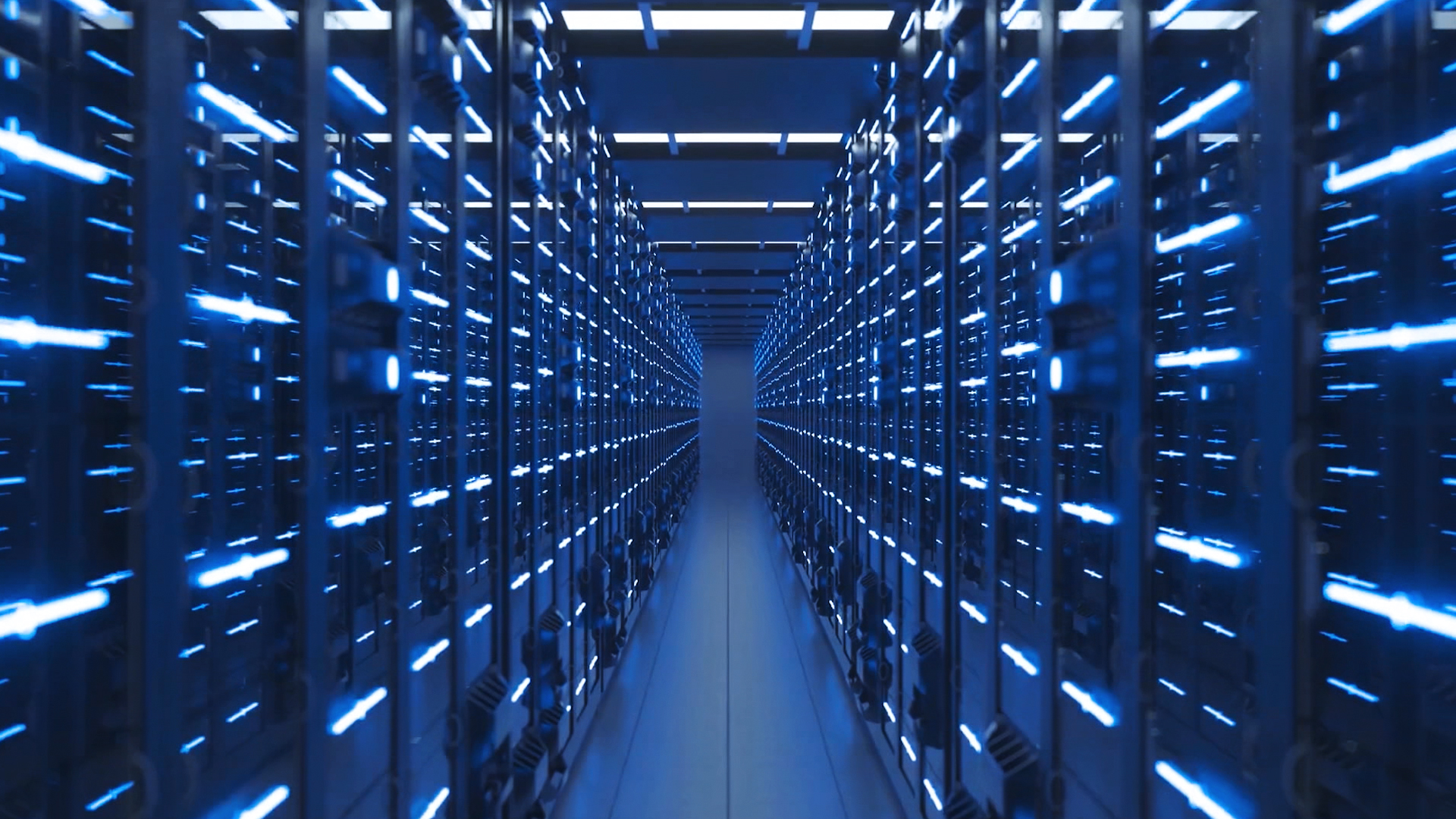
Data centers, once largely out of sight, out of mind, have moved to the center of a growing national debate.
In Ashburn, Virginia, data centers sit just steps from parks, trails, and homes. The area, known as Data Center Alley, handles roughly 70 percent of the world’s internet traffic, and with the explosive growth of artificial intelligence, demand is skyrocketing.
“The number of data centers already under construction, never mind forecasts, is greater than all the data centers we’ve built in the last 20 years,” said Mark Mills, Executive Director of the National Center for Energy Analytics.
Mills has tracked this industry for more than two decades. He tells CBN News that while Northern Virginia is where data centers are currently the most concentrated, the need for more land and power means rapid expansion in all directions.
“They’re being built all over the country, in almost every state…The highest concentration of new announced plans is Texas,” he explained.
As development accelerates, so does backlash.
“These are large structures, the size of a super Walmart is a good comparison, and they tend to come in clusters, and so we’re seeing areas that were farmland two years ago now with a million, a million and a half square feet of buildings,” said Chris Miller, President of the Piedmont Environmental Council.
He tracks the impact of data center growth across Virginia.
“You’re building something you haven’t planned for. It’s huge. It’s going to cost hundreds of billions of dollars, and we might end up being stuck with the bill. People are already seeing big jumps in their electrical bill over the last two years, it’s been in the range of 30 percent,” Miller told CBN News.
He admits there’s no stopping data centers, but the goal is to hopefully slow down construction and plan for their impact. The outcry over who foots the bill has reached inside the beltway, with President Trump making it clear that big tech should not pass the cost on to Americans.
“We’re telling the major tech companies that they have the obligation to provide for their own power needs,” Trump said during his February State of the Union address.
With the rise of AI, Mills predicts the U.S. would need an additional country’s worth of electricity added to the grid over the next five to ten years.
“Conventional compute is like a car. AI is like a truck. Lots of data going constantly,” Mills explained.
As the demand skyrockets, so do the challenges; from energy to water to land use. Now, Elon Musk is proposing the radical solution of sending data centers to space.
“Can you put data centers in space? Well, the answer is yes, because he’s already done it,” Mills said.
He points to the Starlink network, which uses 6,000 satellites to provide internet connectivity around the world. But that doesn’t mean it would be a simple tweak to put data centers in orbit.
“You have to worry about running into space debris…you would have to deal with a tremendous spacecraft coordination issue, making sure you don’t bump into other satellites,” said Victoria Samson, Chief Director of Space Security and Stability for the Secure World Foundation.
Samson tells CBN News, there’s also the risk of interference from adversaries.
Things like jamming, like preventing satellites from getting their transmissions to where they need to go. So that happens, and that’s the possibility. You can have spoofing, where you put incorrect information there…someone gets up close and gets into orbit and then does something, and whether they’re going to spy on you, listen to what you’re listening to. Listen to what you’re broadcasting…There’s also cyber attacks you can use on the space infrastructure,” she explained.
Ultimately, Mills predicts we will see data centers in space, although it likely won’t solve the pain of energy costs people are already feeling here on earth, at least not exactly.
“The energy for the rockets to get the equipment in space is essentially the swap. Instead of burning the energy to make electricity, I burn energy to put solar panels in space to make electricity…So, yes, it can be done. It will be done, by the way, for reasons that have nothing to do with energy…If I were picking a number, maybe 10 percent of global data center capacity could end up in orbit in the future, but the other 90 percent will be right here on terra firma,” Mills said.
Experts maintain the U.S. isn’t running out of energy, but meeting this new, growing demand will require major decisions about infrastructure, cost, and priorities. For now, those decisions will still be made here on earth.
