


JERUSALEM, Israel – As the Trump administration weighs a proposed 60-day ceasefire extension with Iran, one key question remains: will President Trump sign off on the deal? Uncertainty has been growing across the Middle East, and months of diplomacy now hang in the balance.
The fragile ceasefire’s future remains unsettled: according to multiple press reports, negotiators have reached a tentative memorandum of understanding (MOU), but neither side has officially signed the agreement.
One U.S. official reportedly said, “The president relayed to the mediators that he wants a couple of days to think about it.”
Under the plan, Iran would reportedly have to remove mines from the Strait of Hormuz within 30 days. That could lead to lower oil and gas prices. For its part, the U.S. would gradually lift its naval blockade of Iran’s ports and relax its sanctions.
If the deal is accepted and the ceasefire is extended, a key issue to be negotiated during those 60 days is the fate of Iran’s highly enriched uranium.
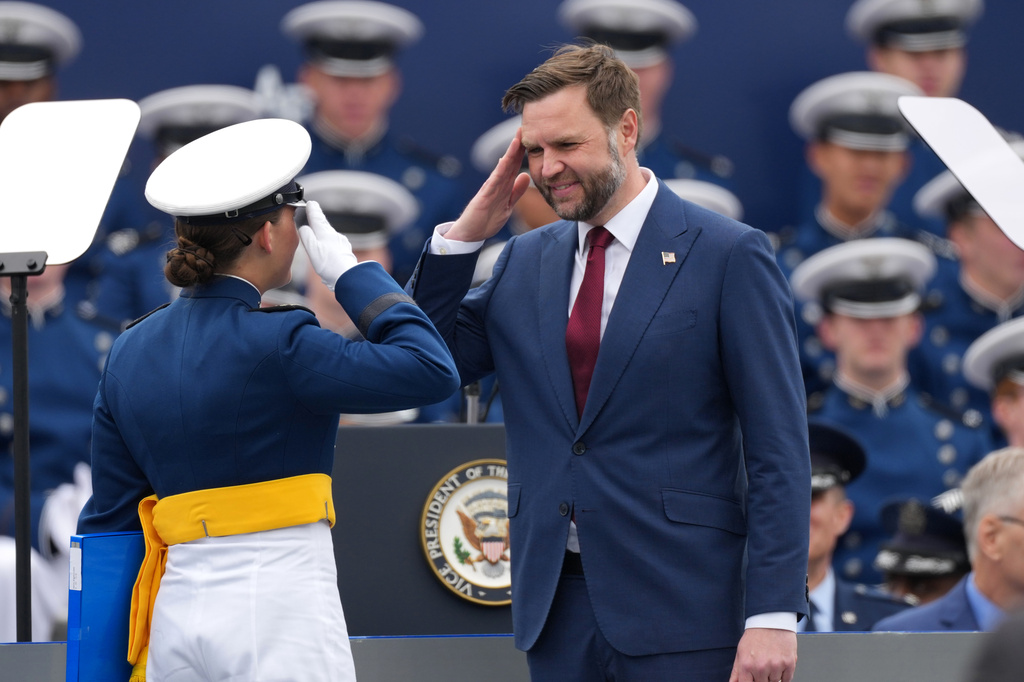
Vice President JD Vance cautioned that a deal has not yet been reached, noting on Fox News, “It’s to say exactly when or if the president’s going to sign the MOU. We’re going back and forth on a couple of language points.”
Vance also stressed the importance of verification.
“You don’t take anything on faith, even the guarantee that they not build or procure a nuclear program, which is something they have agreed to. We’re going to have to verify that over time,” he stated.
*** Please sign up for CBN Newsletters to ensure you receive the latest news from a distinctly Christian perspective.***
Meanwhile, the U.S. military remains on high alert in the Persian Gulf as Iranian state media reported that the Islamic Revolutionary Guard Corps (IRGC) fired warning shots at four vessels attempting to cross the Strait of Hormuz, forcing the ships to turn back.
While training with U.S. Navy personnel stationed in Singapore, Secretary of War Pete Hegseth delivered a firm message to Tehran.
“Iran has a choice, and as the president said, ‘Well, Iran can either do it the right way, with a deal across the table, or they can deal with my guy on the left.’ That happened to be me. But it’s not me,” Hegseth said to the Navy personnel, “It’s you guys.”
President Trump reportedly circulated a draft agreement to key allies, including Israel. However, the Israel Defense Forces warn that the current deal leaves Iran’s ballistic missile arsenal unchecked, a threat that could prove devastating to Israeli civilians in any future conflict.
Prime Minister Benjamin Netanyahu indicated that the IDF is expanding its current control of roughly 60 percent of the Gaza Strip while tightening the noose on Hamas.
Netanyahu clarified, “My directive is to…go step by step. First of all, 70 percent (control).”
In Lebanon, Israeli military officials report that one-third of Hezbollah’s prewar fighting force has been eliminated since October, 2023, marking another setback for Iran’s regional proxy network.
For now, the region waits to see whether an agreement with Iran can be reached. As U.S. forces remain on high alert across the Middle East, Hegseth delivered a final message to America’s troops.
He exhorted, “So, God bless you all, Godspeed in your mission. You got a lot of good stuff ahead. On behalf of the American people, we’re with you all the way. Go get them, and God bless.”
