


OMDURMAN, Sudan — Four years of violent warfare between factions of the Sudanese military have spawned the world’s worst humanitarian crisis.
Estimates range between 12 million and 14 million people who have been forcibly displaced. Even more, approximately 20 million people face severe hunger. That’s more than a third of the entire population. And anywhere between 60,000 and 400,000 lives have been claimed since the fighting began in 2023.
The overwhelming majority of the suffering has fallen on civilians, bystanders of the power struggle between the Sudanese Armed Forces and the paramilitary Rapid Support Forces. The latter is the successor to the notorious Janjaweed Arab militia responsible for the genocide in Darfur in the early 2000s.
While women and children are the most vulnerable victims — often preyed upon for violent sexual attacks or recruited as child soldiers — Christians also are among the communities hardest hit in Sudan.
“Christians in the midst of this volatility are often last in line,” explained Ryan Brown, CEO of Open Doors US, a nonprofit that highlights Christian persecution worldwide. “If there is any type of aid to be made available, very rarely would that be provided to Christians. If there is any type of safe havens that are being granted from all the violence, Christians are often not welcome in.”
*** Please sign up for CBN Newsletters to ensure you receive the latest news from a distinctly Christian perspective.***
Open Doors recently ranked Sudan as the fourth-worst country in the world for Christian persecution, up one spot over the previous year as advocacy groups warn attacks against Christians have intensified as the war spreads.
“Historically, persecution was concentrated in rural areas,” Brown said. “That’s no longer the case. It’s now rampant throughout the country, including urban areas that once served as safe havens for Christians.”
According to the U.S. State Department, more than 160 churches have been damaged or destroyed since the war began. Churches and mosques have reportedly been looted, confiscated, or turned into military barracks and weapons depots by armed groups.
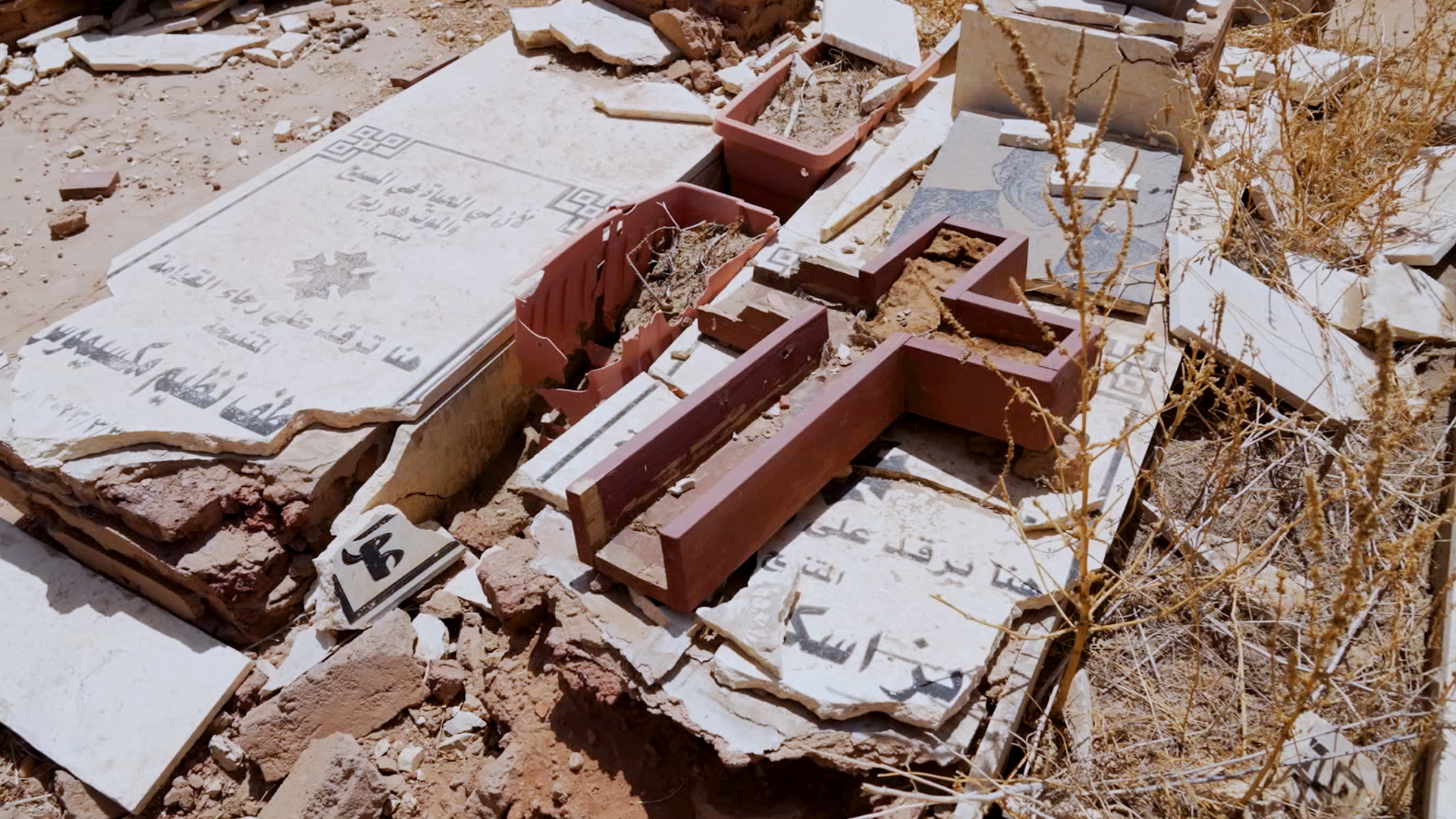
In Omdurman, visible scars of the war remain etched into the walls of Mar Mina Church — now riddled with bullet holes. The church is part of Sudan’s ancient Coptic Christian community.
One month after fighting erupted in the capital of Khartoum, RSF fighters stormed the Church of the Martyrs during a prayer gathering, according to church officials.
“They smashed the doors and started beating everyone inside,” said Safein Nazer, a church deacon.
Nazer said the gunmen looted valuables, dug up graves in the churchyard searching for gold, and targeted girls living in the church orphanage, some as young as 11 years old.
“I confronted them,” Nazer recalled. “One of them hit me from behind and shot me in the leg.”
Though he survived and later recovered from his injuries, Nazer said the church narrowly avoided a far greater tragedy.
“They demanded one of our vehicles, because they wanted to take the orphans,” he told CBN News. “Thank God the car wouldn’t start, and they couldn’t take the girls.”
In the middle of the violent ordeal, Nazer said his faith endured. “God was present in the midst of war and suffering,” he said. “He strengthened our faith.”
Both the Sudanese military and RSF forces have been accused of targeting churches and seizing religious properties.
During a press tour with foreign journalists organized by the ONE Campaign, Sudanese Prime Minister Kamil Idris denied claims of religious intolerance.
“The strength of this nation depends on its diversity,” Idris said. “Sudan will insist that religious diversity is sacrosanct and protected by the constitution.”
Government officials have recently sought to project that message internationally, including Idris’s recent outreach to meet with Pope Leo at the Vatican.
Some members of the Sudanese Council of Churches, a nongovernmental umbrella organization representing Christian denominations, also reject claims of systematic persecution.
“We are really free, even before the war,” said Bishop William Sirdar Brown, a representative of the Sudanese Council of Churches.
Brown told CBN News the claims of persecution are overblown, suggesting that some pastors emphasizing persecution narratives are motivated by a desire to immigrate abroad to places like Europe. That characterization differs from what some watchdog groups have identified and CBN News has reported for decades.
Pastor Kuwa Shamal of the Sudan Church of Christ accused the council of churches of aligning too closely with the government and marginalizing denominations critical of the war.
“The SCC has links with the government,” Shamal said. “That is why they do not want to recruit us.”
Shamal said several churches were expelled from the council after publicly opposing the conflict.
He also described his own imprisonment under Sudan’s former government, where he spent years detained after authorities accused him of espionage because of connections to Christians outside Sudan. The charges were later dismissed.
Christians make up roughly five percent of Sudan’s population, and rights groups say they are often viewed with suspicion by authorities and among the Muslim majority population.
Even amid persecution and displacement, Christian organizations continue humanitarian work throughout the country.
World Vision, a Christian aid group, says it has assisted nearly five million Sudanese since the war began, focusing primarily on women and children.
Inos Mugabe, who serves as operations director of World Vision in Sudan, described the devastating realities facing survivors of sexual violence, including teenage girls raped by militia members.
“What does it mean for a 15-year-old girl to become pregnant in a place where there is no healthcare, no food, no education, no shelter, and no clean water?” Mugabe asked. “The stories are on and on like that.”
Despite the danger, many pastors and church leaders remain undeterred.
“They’re not asking us to remove them from persecution,” White said. “They’re asking us to stand with them so they do not falter in their faith or in the work they believe they are called to do.”
As foreign weapons and funding continue to fuel the military civil war, hopes for peace remain uncertain.
Faith McDonnell, who previously worked on peace efforts tied to Sudan’s earlier civil war and the creation of South Sudan, said the world risks abandoning Sudan at a critical moment.
“It’s a betrayal of people who want nothing more than a life not dominated by fleeing, violence, and loss,” McDonnell said. “And it’s also a betrayal of God, because God has plans for Sudan and South Sudan.”
MORE: Sudan’s Forgotten War: CBN’s Rare Access Inside the World’s Worst Humanitarian Crisis
