


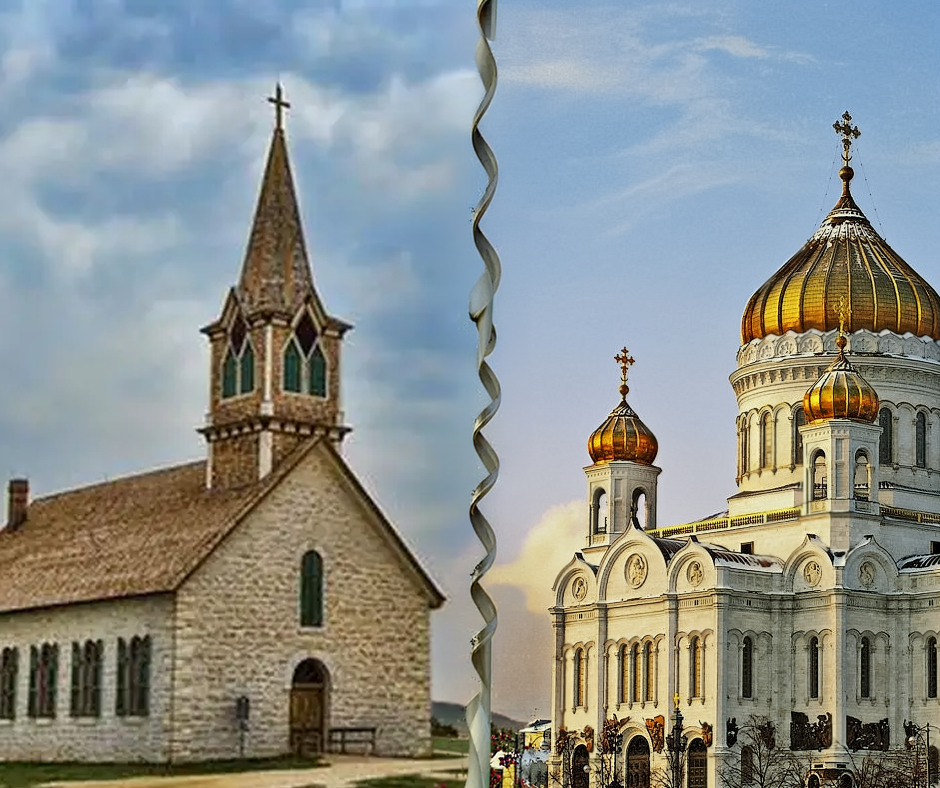
Summary: This exploration delves into the diverse interpretations of “salvation” (soteriology) across major Christian traditions, specifically focusing on Lutheranism (ELCA and LCMS), Methodism, Calvinism, Pentecostalism (Assemblies of God), and Eastern Orthodoxy. While sharing a core belief in Jesus Christ, these denominations diverge significantly on the mechanics of grace, the role of human works, the nature of the Holy Spirit, and the process of sanctification.
Introduction: The Great Divergence
To understand the modern landscape of Christianity, one must first understand the concept of Soteriology—the study of religious doctrines of salvation. For centuries, the central question of the faith has been: How is a human being made right with God?
While the Roman Catholic Church historically emphasized a synergy of faith and works, the 16th-century Protestant Reformation, sparked by Martin Luther, fundamentally shifted the trajectory of Western Christianity. This shift wasn’t merely academic; it was a social and political revolution that redefined the relationship between the individual and the Divine. From the “Sola” doctrines of the Lutherans to the “Total Depravity” of the Calvinists and the “Theosis” of the Orthodox, the answer to how one is saved varies by denomination, creating a rich, albeit complex, theological tapestry.
Luther Rose in Stained Glass
The Lutheran Tradition: Grace Alone
The Lutheran tradition is anchored in the teachings of Martin Luther, a former monk whose 1517 challenge to the Catholic Church centered on the nature of justification. Within the United States, this tradition is primarily represented by the Evangelical Lutheran Church in America (ELCA) and the Lutheran Church-Missouri Synod (LCMS).
Key Concept: Justification by Faith
At the heart of Lutheranism is the belief in Justification. In an academic sense, justification is the legal act of God declaring a sinner righteous. The ELCA and LCMS both maintain that humans are justified by faith in Jesus Christ alone (Brenner, 2017). This is a direct contrast to the belief that “good works” (charitable acts, rituals, or moral living) can earn a place in heaven.
The “Three Alones” (Solae)
Lutheranism is often summarized by the “three alones,” which serve as the guardrails for their doctrine:
- Sola Gratia (Grace Alone): Salvation is a free gift from God, given without merit.
- Sola Fide (Faith Alone): This gift is received solely through faith, defined as a radical trust in God.
- Sola Scriptura (Scripture Alone): The Bible is the final authority on all matters of faith, superseding church tradition (Brenner, 2017).
The Book of Concord
For Lutherans, the Book of Concord acts as a confessional document. A Confessional Document is a formal statement of belief that ensures the church remains unified in its interpretation of scripture. The Augsburg Confession (Article IV) explicitly states that humans cannot be justified by their own strength or works, but are freely justified for Christ’s sake (Brenner, 2017).
Internal Divergence: ELCA vs. LCMS
While they share a core soteriology, the ELCA and LCMS differ in application. The ELCA tends to view the Book of Concord through a historical lens, allowing for more liberal interpretations of scripture regarding gender and sexuality. The LCMS, conversely, adheres strictly to the literal word of the Confessions and the Bible, leading to more conservative stances on women’s ordination and homosexuality (Brenner, 2017).
The Methodist Approach: Justification and Sanctification
Methodism, originating from the teachings of John and Charles Wesley, introduces a nuanced distinction between the start of salvation and the process of spiritual growth.
The Moment of Conversion (Justification)
Like Lutherans, Methodists believe salvation is a gift of grace. However, they emphasize the “moment of conversion.” This is the point where an individual repents of their sins and accepts Christ’s sacrifice. According to the United Methodist Church (UMC), this moment provides the assurance of salvation (Medina, 2017).
The Process of Sanctification
Where Methodists diverge most sharply from traditional Lutheranism is in the concept of Sanctification.
- Definition: Sanctification is the ongoing process of being “perfected in love.”
- While justification is an instantaneous event, sanctification is a lifelong journey. Methodists believe that through the work of the Holy Spirit, a believer can actually increase in holiness and eventually be “cleansed from sin” during their earthly life (Medina, 2017).
The Role of Works
In Methodist theology, good works do not earn salvation, but they are the “natural effect” of it. A person is not saved by doing good things, but a saved person will do good things as evidence of their faith (Medina, 2017).
Calvinism: The Sovereignty of God
Calvinism, based on the writings of John Calvin, presents a more rigorous and deterministic view of salvation known as Reformed Theology. This system is often summarized by the “TULIP” acronym, reflecting five key points:
- Total Depravity: Because of the “Fall of Man” (Adam and Eve), humans are spiritually dead. They are not just “prone” to sin; they are incapable of choosing God on their own (Peterson, 2017).
- Unconditional Election: Since humans cannot choose God, God must choose them. He selects a group—the “Elect”—for salvation based solely on His own will, not on any merit the person possesses.
- Limited Atonement: In a controversial departure from other views, some Calvinists believe Christ died specifically for the Elect, rather than for every single human being (Peterson, 2017).
- Irresistible Grace: When God calls a person to be saved, that person cannot resist. The Holy Spirit effectively draws the Elect toward faith.
- Perseverance of the Saints: Once a person is chosen and saved, they cannot “lose” their salvation. This is based on the absolute sovereignty of God; if God chose you, no human error can overturn that decree (Peterson, 2017).
Pentecostalism and the Assemblies of God
The Assemblies of God represents a 20th-century movement focusing on the experiential aspect of faith. While they agree with the general Protestant view of grace, they emphasize the “Baptism in the Holy Spirit.”
The “Born Again” Experience
Unlike Lutherans, who may see the “new birth” as occurring at baptism, Pentecostals emphasize a conscious, internal conversion experience—being “born again” (Markey, 2017).
Charismata and Spiritual Gifts
A defining feature of this tradition is the belief in Charismata (spiritual gifts). This includes:
- Glossolalia: Speaking in tongues, which is viewed as the primary evidence of the Holy Spirit’s baptism.
- Divine Healing and Prophecy: The belief that the supernatural gifts seen in the Book of Acts are still active and necessary for the church today (Markey, 2017).
The Eastern Orthodox Perspective: Theosis
The Eastern Orthodox Church offers a stark contrast to the Western legal framework of “justification.” Their approach is more organic and therapeutic.
Theosis (Divinization)
Orthodox Christians do not view salvation as a legal transaction (where Christ pays a debt). Instead, they pursue Theosis—the process of becoming more like God and uniting with Him. This is not about “earning” heaven, but about the restoration of the human image to its original, divine likeness.
Sacramentalism and the Spirit
The Orthodox faith emphasizes the Divine Liturgy and the use of icons to facilitate a connection with the divine. They view the Holy Spirit as the force by which God communicates with people, guiding them through a temporary trial on Earth toward a state of paradise (Classroom, 2017).
Comparative Analysis: A Summary of Key Differences
Lutheranism (ELCA and LCMS), Methodism, Calvinism, Pentecostalism (Assemblies of God), and Eastern Orthodoxy
Faith points to Sanctification
Limited (Synergy with grace)
Part of the spiritual journey
Present in Word/ Sacraments
Deep Dive: The Historical Conflict (Catholicism vs. Protestantism)
To understand why these differences exist, we must look back at the 16th century. The Roman Catholic Church of the time emphasized the Sacramental System and the concept of Indulgences (payments to the church to reduce punishment for sins).
Martin Luther’s 95 Theses were not just about money; they were about authority. He argued that the Pope did not have the authority to grant salvation. He shifted the focus from the Institution (the Church) to the Individual (the believer) and the Source (the Bible). This democratization of faith allowed different interpretations to bloom, leading to the various sects we see today—from the high-structure of the Lutherans to the high-emotion of the Pentecostals (Rashid, 2017).
The Role of Human Agency in the Architecture
A critical point of divergence is how each system handles the “human element.”
- The Protestantity of Faith: Faith is the instrument. It is the hand that receives the gift. The emphasis is on the sovereignty of God to provide the faith necessary for salvation.
- The Orthodoxy of Effort: While grace is primary, the “effort” of the believer (fasting, prayer, sacraments) is not a means of earning salvation, but a means of removing the obstacles (passions) that prevent the grace of God from transforming the person.
Frequently Asked Questions
1. Is theosis the same as becoming a god?
No. In Orthodox theology, theosis means becoming “god-like” by grace, not by nature. Humans remain creatures, but they are permeated by the “uncreated energies” of God.
2. Does “Justification by Faith” mean works don’t matter?
In Protestant theology, works are not the cause of salvation, but they are the inevitable evidence of it. A “living faith” naturally produces good works.
3. How does the view of sin differ between the two?
Protestants often view sin as a transgression of a law (legal). Orthodox view sin as a missing of the mark or a sickness that leads to death (ontological).
4. Which system is more focused on the afterlife?
Both are focused on eternity, but Protestantism often emphasizes the “moment of entry” into heaven, while Orthodoxy emphasizes a continuous growth in God even after death.
5. Can someone be both “justified” and “deified”?
Many modern theologians seek a synthesis, arguing that justification (being made right) is the necessary starting point for theosis (becoming like God).
6. What is the role of the sacraments in these architectures?
In Orthodoxy, sacraments (Mysteries) are the primary vehicles of theosis. In many Protestant traditions, they are symbolic reminders of the grace already received.
Scriptural Foundations (KJV)
The various interpretations above are all attempts to reconcile different biblical passages.
On Grace and Faith (The Lutheran/Methodist view):
“For by grace are ye saved through faith; and not of yourselves: it is the gift of God: Not of works, lest any man should boast” (Ephesians 2:8-9).
On Election and Sovereignty (The Calvinist view):
“For he did not choose us because we were many or good, but because he loved us…” (Paraphrased from Romans 9:11-16). “You did not choose me, but I chose you…” (John 15:16).
On the Process of Growth (The Methodist/Orthodox view):
“And this is the hope that we have as an anchor of the soul, both sure and steadfast…” (Hebrews 6:19). “Be holy, for I am holy” (1 Peter 1:16).
On the Holy Spirit (The Pentecostal view):
“And they were all with one accord in one place… and they were all filled with the Holy Ghost, and began to speak with other tongues, as the Spirit gave them utterance” (Acts 2:1-4).
Conclusion: The Unified Goal
Despite the vast differences in “how” one is saved—whether through a legal declaration of righteousness, a lifelong process of sanctification, an eternal decree of election, or a mystical union with the Divine—all these traditions share a fundamental anchor: the belief that humanity is incapable of reaching the Divine on its own. Whether by “Grace Alone” or “Theosis,” the central narrative of the Christian faith remains the necessity of a Mediator to bridge the gap between the finite human and the infinite God.
Source Bibliography
Primary Sources (from classroom.synonym.com):
- Brenner, M. (2017, September 28). ELCA Lutheran Beliefs Regarding Salvation. Synonym Classroom.
- Gabriel, B. (2017, September 28). Comparison of Methodist & Lutheran Religions. Synonym Classroom.
- Markey, D. (2017, September 28). Assembly of God Vs. Lutheranism. Synonym Classroom.
- Medina, E. (2017, September 28). The Theology of the United Methodist Church Regarding Salvation. Synonym Classroom.
- Peterson, S. (2017, September 28). Beliefs & Doctrine of Calvinism. Synonym Classroom.
- Rashid, A. (2017, September 28). What Is the Difference Between the Ideas of the Protestant Reformation & the Roman Catholic Church? Synonym Classroom.
Extended Research Sources:
- The Book of Concord. (Standard Lutheran Confessional Text).
- The Articles of Religion of the Methodist Church.
- The Institutes of the Christian Religion by John Calvin.
- The Orthodox Church (General Theological Guidelines on Theosis).
- The Holy Bible (KJV/NIV/ESV translations referenced for doctrine).
