


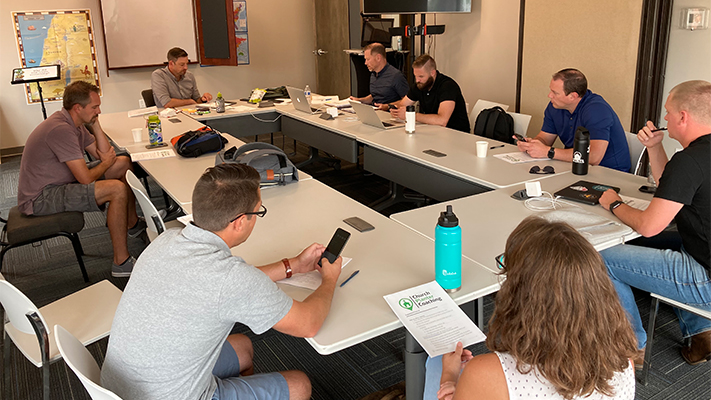
What is being a new mission pastor like? Well, that’s a question that I pondered a lot in the beginning stages of our mission in Brandon, South Dakota. (Hopefully I have a better answer to that now.) In some ways, a new mission pastor does a lot of the stuff that all pastors do—preach, teach, visit, and reach out. But one big difference that became clear very quickly was the necessity to work on the church and not just work in the church. (These are terms that I learned through our Church Planter Intensive program.)
Here’s the distinction: an established church has a culture, lots of systems, and general practices that have been in place for a long while, but a new mission has none of those things. Culture, systems, and practices need to be developed for this new congregation. This takes some dedicated time and forethought.
Now, maybe you hear those words, and your eyes are already starting to glaze over because this is not the exciting stuff, right? Who doesn’t love to hear the stories of people getting connected to the gospel for the first time? Who doesn’t yearn to hear the stories of someone having their entire life transformed by the gospel? But do you really want to take time to hear about developing a system to make sure new prospects are added into a people management system?
Probably not. But the truth is that a big part of the beginning stages of a mission includes this vital but seemingly less exciting work of formulating ways to build a culture, systems to govern the work, and practices that fit your context.
Think of it like lifting weights in the gym for the first time. You could put in all the effort in the world, but if you have poor form as you are doing the lifts, you are likely to either be injured along the way or not accomplish your stated goals. But if someone takes the time to walk you through proper form and you learn it, all of your energy and effort will go toward making you healthier, growing stronger, and moving closer to your goals.
This is the value of taking time to formulate ways to build a culture, develop systems to govern the work, and think through practices that fit your context. By working on these aspects, we are developing proper form so that (from an earthly perspective) we can move in a cohesive and worthwhile direction.
What’s the “so what”? Here’s one: Don’t be afraid to slow down and invest in the unglamorous work of building proper form (and give your pastor time and encouragement to do this work). Culture, systems, and practices put in place now can be very beneficial in the long-term ministry and overall health of the congregation.
Here’s another “so what”: Keep praying for the stories of changed lives and new believers, but don’t stop there. Pray for the unseen work that will shape congregations for years to come. That work may never make it onto the front page of publications, but it’s a big part of what keeps the exciting work going.
Written by Craig Wilke, home missionary at Sure Foundation in Brandon, South Dakota.
Learn about the ministry work of WELS Missions.
Support the ministry work of WELS Missions.
