


JERUSALEM, Israel – Jerusalem is a city of history, activity, and sometimes, chaos. For nearly 20 years, it was also a divided city.
Following Israel’s War of Independence in 1948, Jerusalem was split in two. Israel controlled western Jerusalem while Jordan controlled the east, including the Old City. What became known as the Green Line separated the two sides until Israel reunified the city during the Six-Day War in 1967.
“On the map there’s a marker of the border between Israel, western Jerusalem and Jordan, eastern Jerusalem,” Israeli historian Oren Sapir said. “But in reality, it wasn’t really marked in any way.”
“You can walk down an alley and cross the border without noticing,” Sapir added. “It took a while into the ’50s till there really was a wall or a fence or something more solid.”
The invisible boundary could also be deadly.
“You’d be walking down the street from the Israeli side, and then you’ll have a concrete wall on it with a sign in Hebrew saying, ‘Beware, snipers ahead,’” Sapir said.
Jews were barred from visiting the Temple Mount during those years, and walking near the border often meant exposing yourself to Jordanian snipers overlooking the city.
“So walking down the street just here, totally open to the Jordanian army posts on the walls, more than once there was shooting and fighting,” Sapir remarked.
The border itself was drawn by Israeli and Jordanian negotiators using wax pencils during armistice talks, giving birth to the term, “Green Line.”
“These were drawn with two wax pencils, actually,” Sapir explained. “One done by the Israeli side, one done by the Jordanian side. A wax pencil makes a good wide marker, and you’re sometimes not sure who holds what and where that ends.”
Throughout divided Jerusalem, military outposts lined both sides of the border while a United Nations-controlled “No Man’s Land” separated Israeli and Jordanian positions.
“In the news at the time there were all sorts of jokes,” Sapir recalled. “Kids play soccer and they kick the ball and it rolls into No Man’s Land. I need to call the U.N. to be able to retrieve it.”
Just north of the Old City sits Ammunition Hill, the site of one of the fiercest battles of the Six-Day War. Israeli citizen Uri Goldflam remembers playing there as a child before it became one of the war’s most significant battlegrounds.
“It’s a site of a very important, difficult and famous battle of 1967, the Six-Day War, which enabled the Israeli paratroopers to open the road to get to Jerusalem and eventually capture the city and the Temple Mount,” Goldflam noted.
Before the war, however, children simply saw it as a playground.
“One half gets this side of the hill, the other that side of the hill,” Goldflam said. “We each have our own flag, and we have to run through the trenches, evade each other and capture each other’s flag.”
Perhaps no story better captures the absurd reality of divided Jerusalem than one from 1954.
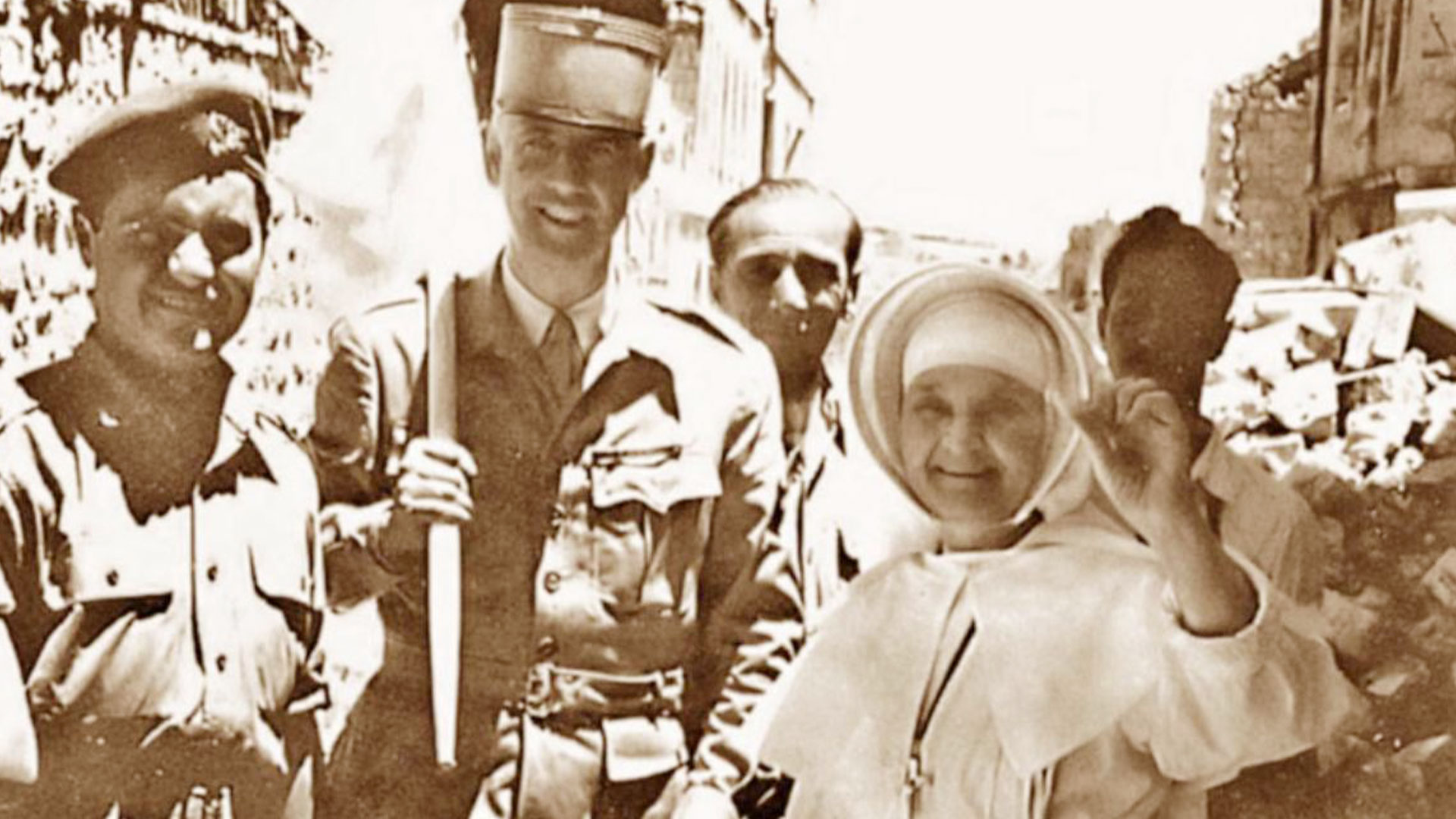
A patient at the St. Louis French Hospital accidentally dropped her false teeth into No Man’s Land while looking out a window.
“From the upper window, a woman wanted to see the city,” Israeli tour guide Zahi Shaked said. “She was so happy. I don’t know what happened, but her false teeth fell into the ground.”
Retrieving them required an extraordinary diplomatic effort. The nuns who operated the hospital contacted the United Nations, which coordinated with both Jordanian and Israeli officials.
“The United Nations had to call someone from Jordan. Israel was supposed to be here, too,” Shaked explained. “Because if someone is touching that not holy ground, it’s supposed to be the Jordanian, the Israeli and the United Nations together with a few nuns.”
Under a temporary ceasefire marked by a white flag, the woman’s false teeth were safely recovered and returned before the fragile status quo resumed.
“It is crazy,” Shaked said with a laugh. “But who says that Israel is not a crazy place? Let’s face it. We love it!”
