


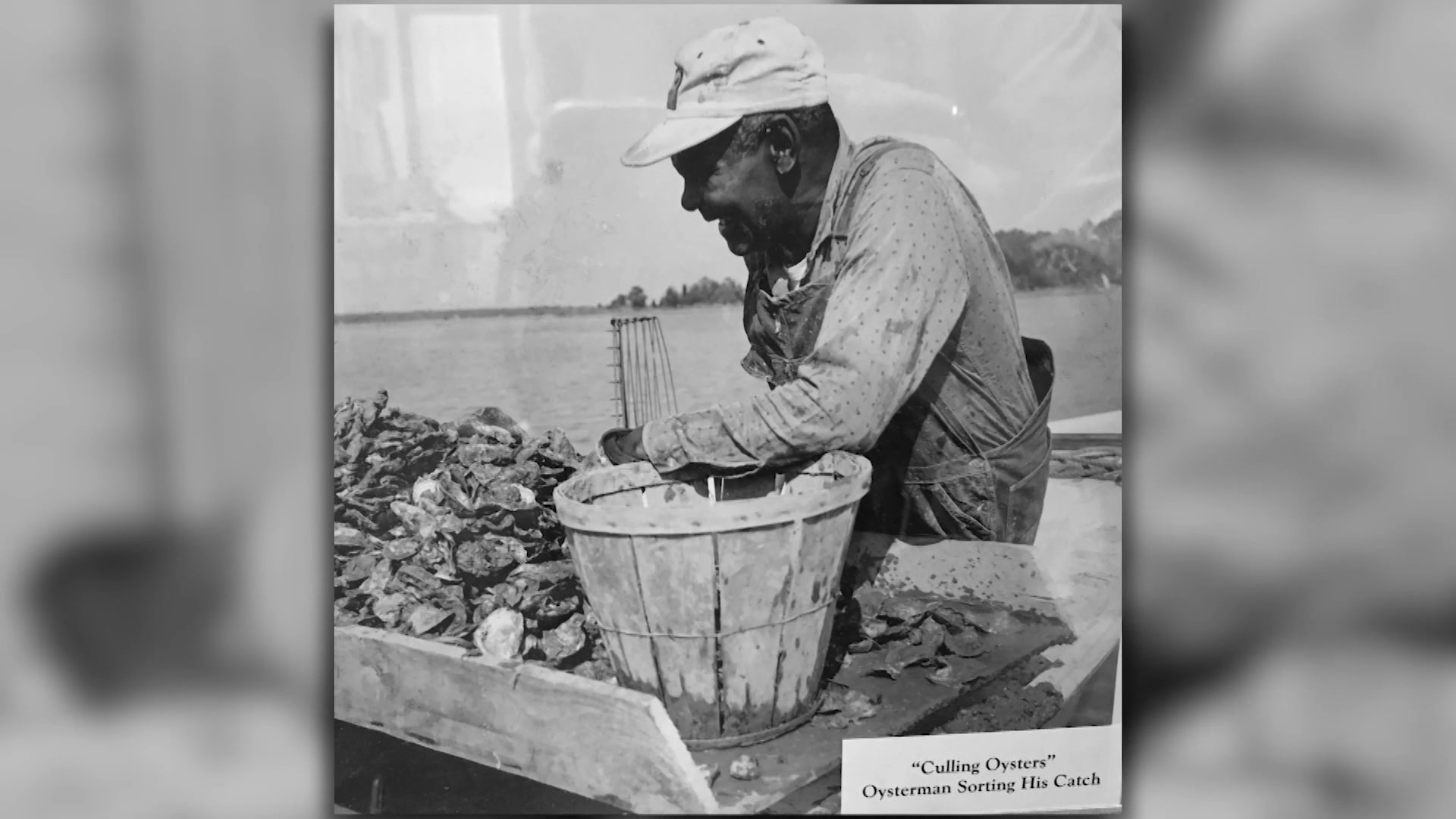
In 1910, Gwynn’s Island, off the coast of Gloucester, VA, in Matthews County, was home to about 135 black residents – 17 percent of the island’s population.
“I had heard about it since I was a little girl,” Maria Giddens, an ancestor of the island, told CBN News. “I knew that that’s where my mother’s father’s family was from, but it was always like, we just don’t go back.”
Some say that for more than a century the quiet shores of Gwynn’s Island held a dark secret. Between 1916 and 1920, racial hatred forced dozens of black families from the island. That history is being recognized and is paving the way for healing.
Maria wanted to learn more about her family’s roots on the island and the reasons they couldn’t return. That curiosity led her on a genealogical and historical search for answers.
“They were thriving,” Maria learned about her Gwynn’s Island ancestors. “They were not a community that was struggling. They got land grants when they mustered out of the military because a lot of the men joined the Navy or the Army when they were liberated from the island by the Union soldiers. And they used that money along with their pensions and just saving and hard work. They built the businesses.”
That prosperity reportedly changed on Christmas Eve 1915. An altercation broke out at a local store between a black man named James Henry Smith and two white teenagers. Smith narrowly escaped a lynching that night.
“James Smith ended up running out of the establishment, running down the street,” said Maria. “He ended up at what’s called Grimstead store. That was the general store. And Mr. Grimstead, he took his rifle out, and he knew that the crowd was coming to catch him, and he said, ‘No, we’re not going to do that. If you want him arrested, we’ll call the sheriff.'”
It turned out that James Smith was Maria’s great-grandfather.
Her search led her to Allison Thomas, a filmmaker and historian who had also been researching her ancestral ties to Gwynn’s Island.
Allison discovered her family owned a plantation and enslaved people there. Her third great-grandmother’s diary listed the names of those owned, including members of Maria’s family.
“I posted this information on Ancestry, and Maria messaged me,” Allison said in an interview with CBN News. “She said, ‘I believe that your family enslaved my family and I would like to get any kind of personal records, probate records or estate appraisals that you have so I can learn more about my ancestors.'”
Maria and Allison joined forces, learning that in early 1916, an all-white jury convicted Smith of assault.
What followed, the women said, was a swift, terrifying campaign of intimidation against black families on the island.
“The tensions just went really high. It became very contentious, and they decided that wasn’t enough. That wasn’t enough justice for them,” said Maria.
According to the women, white residents threatened violence if blacks didn’t leave.
Terrified for their safety, families reportedly fled Gwynn’s Island, and by 1921 every black resident was gone.
“I tracked down some descendants of people who were on that island,” said Allison. “So, there’s a granddaughter of one of the younger men who owned land on the island, and she said her grandfather told her that he was told if he didn’t leave, they would kill him.”
“My grandfather mentioned it somehow at the dinner table. The conversation came up about the fight in 1915,” said Tom Edwards, who spent summers on Gwynn’s Island with his grandparents. “I have to tell you from my memory, my grandfather Thomas L. Edwards was not proud of what happened. He was disappointed that anything like this would have happened on this island.”
According to Maria and Allison’s research, blacks were forced to sell their prime land at a loss.
“The land was sold legally but not ethically. It was at pennies on the dollar,” said Maria. “They went from owning businesses and having a school and building this church and this community to renting in Norfolk and Hampton, working in the coal yards.”
Unearthing this history has been painful. Some claim the exodus was due to economic reasons, not racial.
“Economic factors were in play that drove departure of both black and white islanders, in order to secure employment for workers and their families,” said Roxy Gwynn, whose family ties date back to Gwynn’s Island.
It is a narrative Allison and Maria have been working to correct, starting with a display at the Gwynn’s Island Museum.
“We worked hard with them to change that narrative,” said Allison. “We haven’t eliminated the old narrative, but our narrative sits side by side.”
Edwards serves as the director at the museum.
“It was very important to capture this history to me,” said Edwards. “I’m not speaking for everyone that lives on Gwynn’s Island. Some folks don’t want this kind of history to be displayed and brought to light. But for me, my feelings are that once you let this kind of information out, you prevent these incidents and trouble from happening again.”
A state historical marker commemorating the black exodus was recently unveiled. A portion of which reads:
“The primary cause of the exodus was racial tension that followed a Dec. 1915 fight among black and white men. Subsequent threats against black residents led them to fear for their safety. They left, selling their property under pressure and losing their community and the institutions they had had built.”
Descendants of enslaved people and those who owned them witnessed the marker’s dedication.
“It’s hard to describe the feeling and the exhilaration that I experienced to see it actually be unveiled,” said descendant Elsie Jones Williams. “For generations, those who drive by will see the marker and know about the history of the black descendants of Gwynn’s Island.”
Cheryl Good told CBN News, “It feels great that this part of history is now going to be something that people are not aware of, will now be able to come take a look at.”
Gwynn, who declined CBN News’ request for an interview, opposed the erection of the marker, along with several others, saying, “With the exception of Census data and the fact that there was a scuffle on Christmas Eve 1915, the wording on the marker as approved is completely based on hearsay. The statements on this marker take the limited amount of available information out of context.”
In a statement to CBN News, the Virginia Department of Historic Resources said:
“DHR staff thoroughly researched the events presented in the application to develop the final marker text. Our objective is to share important stories about Virginia’s past in the very landscapes where they took place, even when those stories are difficult, challenging, or uncomfortable.”
It is a truth both Maria and Allison hope will heal the pain of the past while offering hope for the future.
“Excavating that shame and confronting it, which I’ve had to do around my ancestors, I think is part of our job in order to be able to move forward,” said Allison. “I find that very powerful and healing.”
“My faith has given me the strength to kind of hear it, all the things that hurt, to know that I can heal from that, that grace covers a lot of things, and that means I have to have the grace as well. I have to show that grace,” Maria said.
