


SAN DIEGO – Illegal crossings at the U.S. southern border have plummeted under the second Trump administration. Still, an unknown number called “gotaways” escape from border agents, making it across undetected.
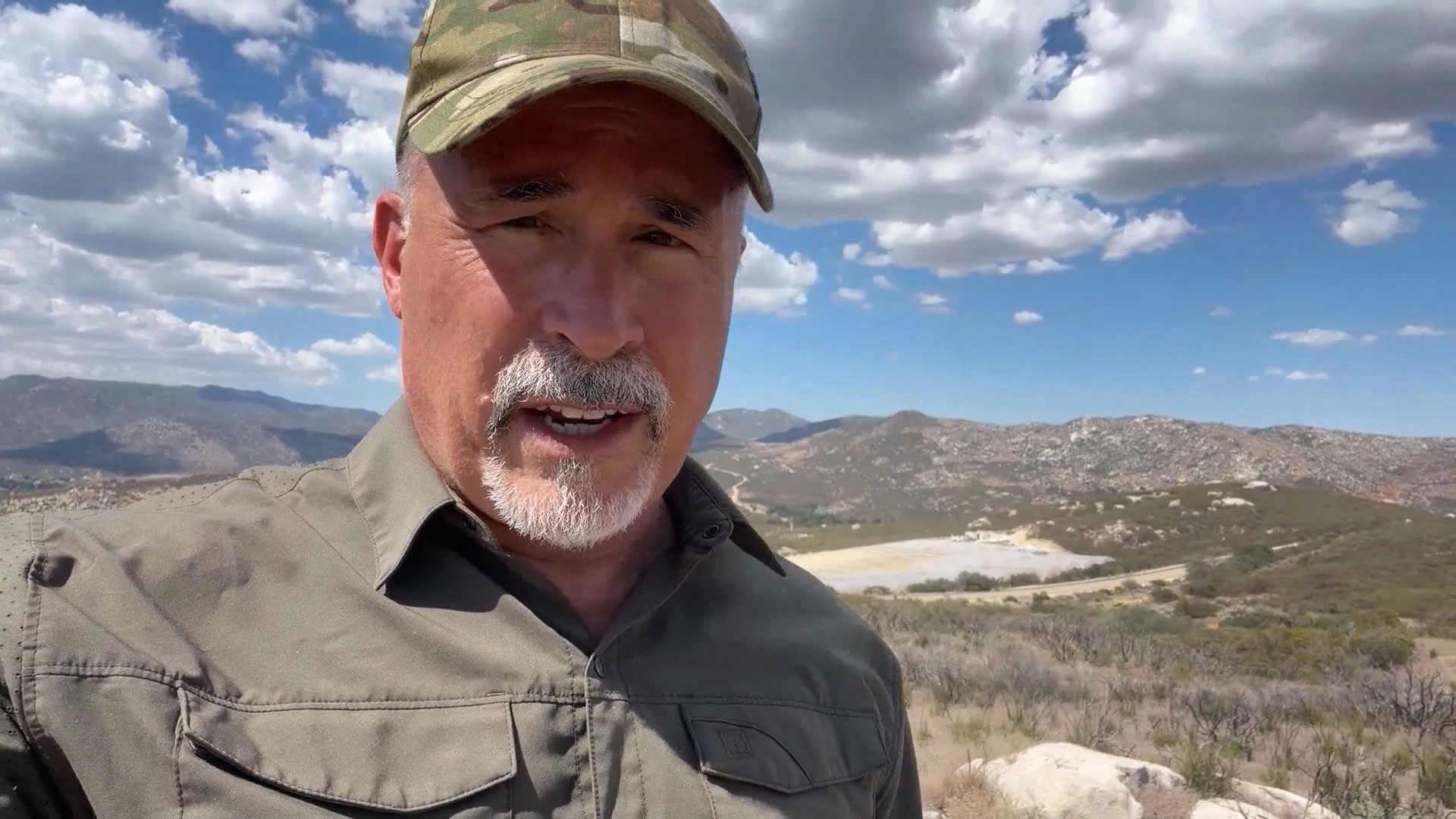
In the backcountry of eastern San Diego County, Army veteran Cory Gautereaux found evidence of a crisis scattered across the desert floor.
“Get back there, and I’m seeing these IDs all over the place,” said Gautereaux, founder of The GOAT Initiative. “They’re literally just laying in piles like this right on the ground on the interior of the United States.”
Discarded passports, ID cards, and cell phones — dropped by migrants the moment they cross. Gautereaux has spent four years collecting them.
“We have no good way of knowing what the gotaway number is,” he said. “I need the federal government to do a gotaway study because how can we solve a problem if we don’t know what the problem is?”
The phones may be the biggest clue of all. One of the first opened with a single guess.
“You get a new phone, what’s the default password? And it’s one, two, three, four, five, six, and opens right up. That was it. The whole phone,” Gautereaux said. “It’s a Chinese guy’s phone from the Darien to, well, from China, from Wuhan, Turkey, Darien. It shows everything, his entire trip.”
***Please sign up for CBN Newsletters and download the CBN News app to ensure you receive the latest news from a Christian perspective.***
It’s a treasure trove of intelligence that Gautereaux says federal agencies have ignored. Meanwhile, the cartels are going underground. Authorities recently found a mile-and-a-quarter-long tunnel under the Otay Mesa port of entry, and pulled out roughly two tons of cocaine.
James Nunnellee, DEA Special Agent in Charge in San Diego, said, “With this more secure border, with the decrease in the number of illegal migrants crossing, cartels are looking for new ways, new innovative ways to get their poison into the country, and the tunnel is just one example of that.”
Here at the Otay Mesa border crossing, it can take up to four hours to get across into the U.S. A lot of that has to do with the need for additional security.
So far this year, the U.S. Customs and Border Protection has picked up more than 100 million lethal doses of fentanyl alone coming across the border, and that means they obviously need more security. So they’re investing over a billion dollars in this border crossing to rebuild it, make it more efficient, and use some high-tech methods to be able to detect those drugs more easily.
“Since January, the DEA and our partners here in San Diego have seized more than 13 million deadly doses of fentanyl. And just to put that number in perspective, that’s about three to four times our population here in San Diego,” Nunnellee said.
The threat isn’t only at the border. In Gautereaux’s own neighborhood, California’s lax marijuana laws have sparked a gold rush of foreign buyers snapping up remote land.
Gautereaux explained, “In this area there are illegal marijuana grows that are just constantly popping up everywhere. This has been happening for a while now, so the sheriff actually started a marijuana enforcement team.”
CBN News visited the San Diego desert where Chinese companies and people coming to the U.S. are buying up property. What we saw in this area of Eastern San Diego County is more and more of those plastic hoop houses popping up everywhere, and many of them, as it turns out, are being used for illegal marijuana growing.
“They go in and hit this place, and there’s 85,000 plants, 30 Chinese illegal aliens, an up-armored GMC Yukon vehicle, about $50,000 in cash, firearms,” Gautereaux said. “Then they peel out of there, cut the guys loose. That was it.”
Because California is a sanctuary state, authorities released all 30 Chinese nationals — even though Border Patrol was just down the road. The farm already appears to be rebuilding.
Give to CBN News – Because Truth Matters® – News You Can Trust
“And then you let them all go? What this is creating, this is creating a place where the locals will never work with you because they don’t trust you,” Gautereaux said.
So Gautereaux keeps walking the desert, hoping Washington will finally want to know what he’s finding.
