


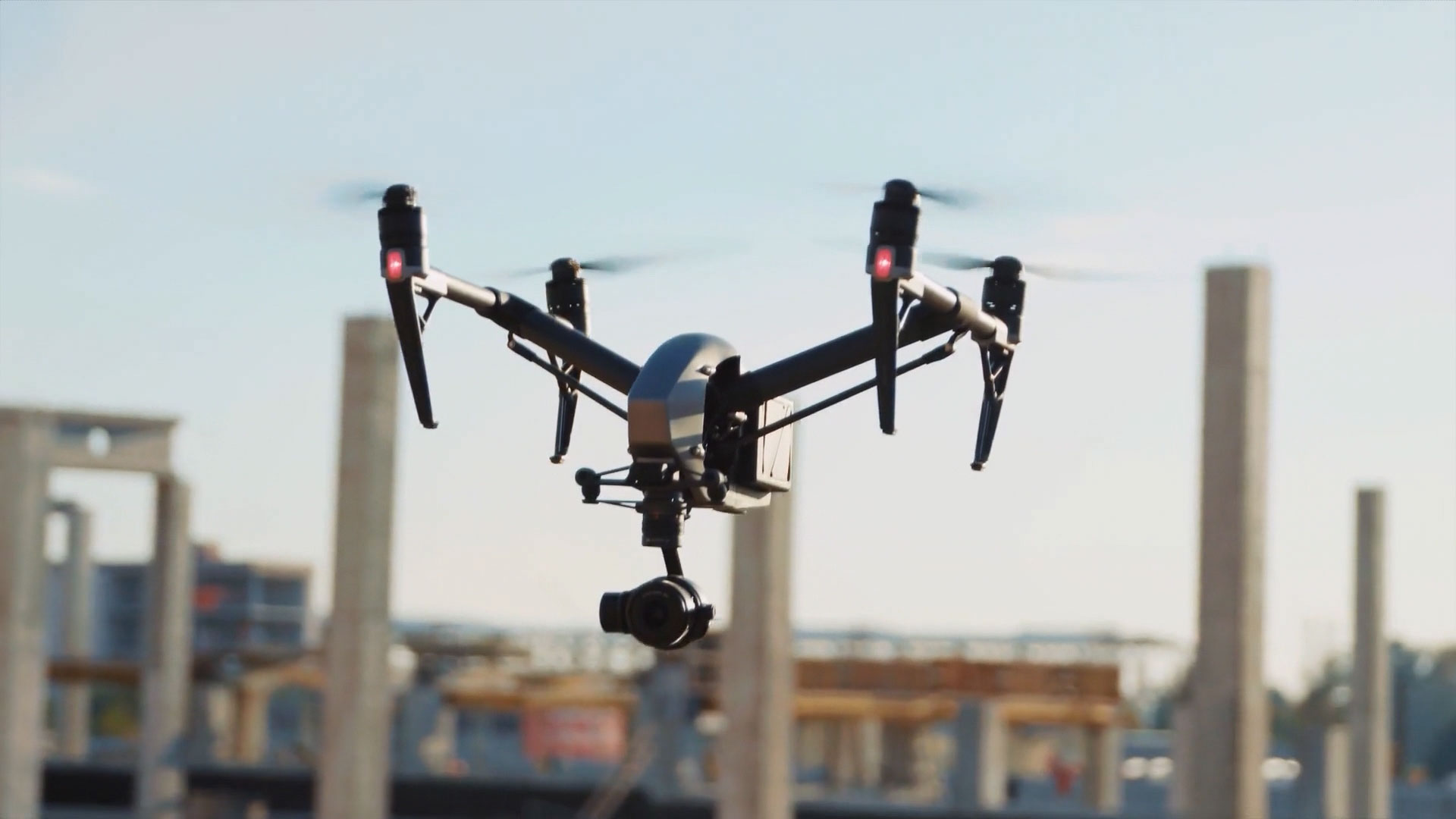
Many drones operating domestically are small, easily modified, and accessible to almost anyone. They could be used as cameras, a hobby, or in the wrong hands, a weapon. From stadiums to critical infrastructure, federal and local agencies are now expanding their ability to detect and stop potential drone threats to the U.S. homeland.
“Drones can come from any height, any azimuth, and so it makes it a little bit more challenging to plan for the safety of that because you have to protect from all directions and all angles,” explained FBI Supervisory Special Agent Aaron Snyder, who heads up the agency’s Counter UAS Operations Unit.
We saw the scale of that challenge on display during the World Cup. Federal, state, and local authorities seized more than 700 drones across 11 host cities.
While officials say none were weaponized, each unknown drone had to be treated as a potential threat. Agent Snyder tells CBN News that the worst-case scenario is a drone equipped with an explosive device, although they can be used maliciously in many other ways.
“This could be for something that would look very similar to a military-type attack, or it could be something more low-key for, say, an intelligence gathering activity, or it could be something for a more traditional criminal use where they’re getting more creative with the use of drones, say for the transportation of narcotics and other contraband,” Snyder explained.
Their devastating effect has already been demonstrated on international battlefields. Snyder says defending against the smaller, cheaper drones commonly used here in the U.S. is complicated, mainly because no single system exists that can handle every drone threat scenario.
Counter-drone operations require a layered solution because the range of threats is so great. Currently, some of those layers involve long-range detection, active radar, and cameras for identifying and tracking drones, plus a way to stop them.
“You can try to use energy-based systems to confuse the drone and either shoo it away or maybe try to cyber-take it over. But then when that fails, you have to have a physical way to remove the drone from the airspace, and that’s where we come in. So, we have drones that go up and hunt other drones and move them out of the airspace,” said Fortem Technologies CEO Jon Gruen.
Fortem was part of the counter-drone security operation for the World Cup. Their Drone Hunter system is a drone itself, equipped with a net that can bring other drones down in a safe and controlled manner. This approach is important in urban settings, where shooting a drone out of the sky could create other danger on the ground below.
Gruen says this security need is here to stay, and he’s talking with federal law enforcement agencies on how to expand it.
“In the future, you don’t just protect the stadium and the parking lot. You’ve got to protect all of the transport hubs. So, you have to protect the metro station, the airport, the railways, the freeways…all the gatherings, the watch parties… If they figure out that the stadium itself is too hard to target, they’re going to go after the softer targets,” Gruen told CBN News.
In preparation for the World Cup, federal agencies were allowed to train state and local law enforcement teams in the counter-drone mission. Snyder’s unit trains those officers, not just to use the technology, but to determine when a drone actually poses a threat.
“That really is our number one counter-UAS tool, is to get officers and agents over to talk with the pilot. That’s how we can really determine what the intent of that pilot is,” he explained.
While most domestic drone activity remains harmless, the threat is evolving. Last year, the Pentagon created Joint Interagency Task Force 401 (JIATF401), with the mission of getting better technology into the hands of law enforcement and U.S. forces faster.
In a statement to CBN News, Task Force Spokesman Lt. Col. Adam Scher said: “Systems need to be able to get updated over the air the same way your iPhone does. We need to be able to buy a piece of equipment today that can be upgraded with the latest software six months from now, instead of having to buy an entirely new iPhone every time there is an iOS patch.”
Meanwhile, Homeland Security is selecting Fortem as one of several companies that can provide counter-drone technology under a five-year program with more than a billion dollars available for purchases.
“The U.S. is mobilizing. It started probably two years ago in a real way, and now we’re really, really ramping up. We were behind the threat. We’re now getting out ahead of the threat, and we’re just going to have to stay there,” Gruen said.
Staying ahead of the threat may become harder as the skies get more crowded. Delivery drones, commercial drones, and eventually even air taxis could all share this airspace. So, the next challenge isn’t simply spotting a drone; it’s distinguishing between those that belong there and those that don’t.
