


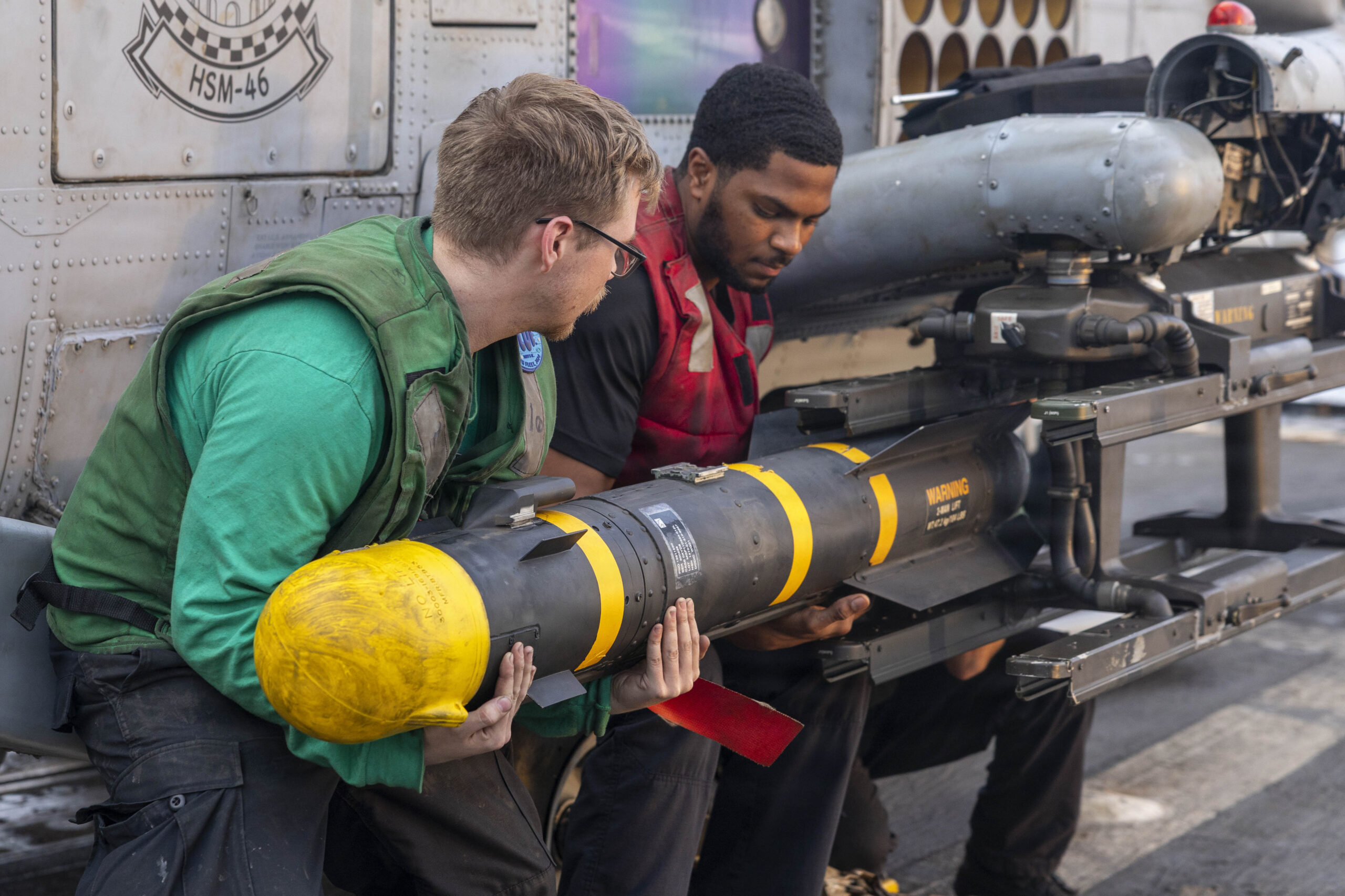
WASHINGTON – The war with Iran has demonstrated the extraordinary firepower of the U.S. military, but it’s also exposed a problem years in the making.
After decades of buying some of America’s most advanced weapons in relatively small numbers, those stockpiles and the industrial base that replaces them, are now being put to the test.
The U.S. military has the weapons it needs to fight today. But U.S. operations, especially the last six months spent in Iran, have significantly depleted critical stockpiles.
“I think the United States confronts a serious munitions crisis. Politicians on both sides of various debates are trying to make more or less of it, but you know, where I come from at a nonpartisan think tank, I try to focus on the truth. And the truth is the United States confronts a genuine munitions crisis. Full stop,” said Bradley Bowman, who heads up the Foundation for Defense of Democracies Center on Military and Political Power.
Consider the Tomahawk Missile. The Pentagon bought an average of 86 Tomahawks per year over the last decade. In the first 39 days of the Iran War, the U.S. is estimated to have fired more than 1,000 of them.
This doesn’t just affect offensive weapons. During last year’s “12-Day War” with Iran, the U.S. reportedly fired around 150 THAAD Missile Defense Interceptors. The Pentagon’s budget requests called for just 11 of those in fiscal year 2024, and only 12 in 2025.
Bowman tells CBN News this is a problem decades in the making.
“How does the United States of America get into a position where we fire one quarter of our THAAD interceptors in a 12-day war against the Islamic Republic of Iran. Answer: you guessed it, insufficient defense spending, insufficient requests,” he explained.
The Pentagon does not disclose munitions inventories, and Secretary of War Pete Hegseth says the military is not running out of weapons.
“Our stockpiles are great, and they’ll only get stronger,” he said earlier this summer on CBS’ Face the Nation.
Bowman says, although he sees valid national security reasons for not discussing specific numbers, he argues that America’s adversaries are already aware.
“I understand the instinct to not discuss those kinds of details if you’re an official in the Pentagon or in the National Security Council or the White House. But here’s the problem: our adversaries know the truth already. We’re not revealing anything to them that they don’t already know, both because of espionage and collection efforts that they undertake, and because of information that’s already available, legitimate, unclassified information,” he said.
For years, relatively small orders meant industry had little incentive to maintain the people, suppliers, and production lines needed to build these weapons at wartime speed. The current administration is trying to reverse that by striking new agreements with defense companies to expand production.
“We’re supercharging our arsenal of freedom. Building more, building faster, opening up the Pentagon…ripping through the Pentagon bureaucracy to force industry to move faster,” Hegseth explained on Face the Nation.
Still, analysis from the Center for Strategic and International Studies (CSIS), estimates replacing key munitions will take years to return to pre-war levels, and Bowman says Beijing is taking note.
“It’s really good for deterrence that China saw a willingness to throw punches. That’s going to make them think twice. ‘Oh, if we roll the dice and go for a blockade or D-Day-style invasion of Taiwan, America may show up, and that could be really painful.’ So…that increases deterrence. But if we expend 40 to 60 percent of relevant munitions, they’re gonna think, ‘Okay, they may show up…and they might make a good show of it for a few weeks, but then they’re gonna run out of munitions,'” Bowman said.
