


Reading Time: 4 minutes
The holidays are over, and our representatives in Congress are getting back to work. As they return from vacation, however, they have a number of pressing concerns awaiting them.
This content is supported by your donations.
Give today.
In an article published yesterday, The Epoch Times broke down the five items sure to be at the top of lawmakers’ agendas.
Impending Shutdown
Last year, America endured the longest shutdown in the history of our nation. Now, we stand on the cusp of yet another funding lapse.
The government is currently funded through Jan. 30, and funding will need to be extended before then to avert a government shutdown.
…
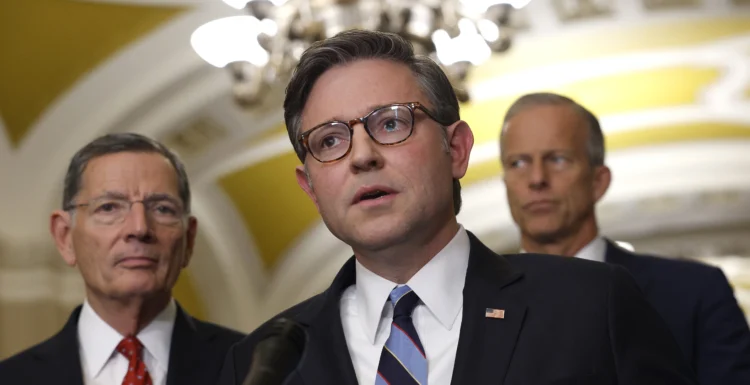
House Speaker Mike Johnson (R-La.) has repeatedly said that the short-term funding bill was to allow appropriators to finish their work on year-long appropriations bills. With three passed, nine remain to be considered by Congress.
In late September, Senate Democrats, in a bid to protect then-expiring Affordable Care Act (ACA) subsidies, triggered a government shutdown. This time, however, it doesn’t seem like that will happen. Senate Minority Leader Chuck Schumer said that his party isn’t looking to force another government shutdown. It remains to be seen, however, whether they’ll be able to agree with Republicans on the necessary funding in time.
ACA Subsidies
The ACA subsidies Democrats fought so hard to protect expired on December 31 last year. Now, however, the House plans to vote on whether to resurrect these subsidies.
The House will vote on a bill to extend the COVID-era ACA subsidies for three years with no strings attached.
The vote is due to a handful of Republicans signing onto a discharge petition organized by House Minority Leader Hakeem Jeffries (D-N.Y.), going around House GOP leadership and forcing a vote.
Lawmakers have already attempted to extend these subsidies, although the measure failed in the Senate. If this particular measure manages to pass the House, it could meet the same fate as its predecessor in the upper chamber.
Venezuela
Over the weekend, the U.S. military took action in Venezuela, striking several targets and capturing the dictator Nicolás Maduro and his wife. As lawmakers return to Washington, some have already planned a response.
Specifically, the Senate is set to consider a resolution under the War Powers Act introduced by Schumer and Sens. Tim Kaine (D-Va.), Rand Paul (R-Ky.), and Adam Schiff (D-Calif.).
The measure would block the administration from engaging in further military action in Venezuela without congressional approval.
The Times notes that the resolution is privileged, meaning Senate Majority Leader Thune can’t block it. It would need a simple majority to pass, which would require three Republicans in addition to Senator Paul to vote in favor.
It is also important to note that the Trump administration does not intend to engage in any further military action in Venezuela. According to an article published by the White House, Secretary of State Marco Rubio has said as much. Speaking to reporters over the weekend, he said, “We don’t have U.S. forces on the ground in Venezuela. They were on the ground for about two hours when they went to capture Maduro,” adding that, “This was not an action that required congressional approval. In fact, it couldn’t require congressional approval because this was not an invasion. This is not an extended military operation.”
Congressional Stock Trading Ban
Lawmakers have been trying for years now to ban stock trading for members of Congress. And, while a ban seems closer than ever to passes, the Times notes that multiple competing proposals and issues remain unsolved.
Rep. Anna Paulina Luna (R-Fla.), a longtime proponent of the ban, is expected to pursue a discharge petition to force a vote on her own version of the bill. Currently, that push has 74 backers—well short of the 218 it needs to bypass Johnson.
According to a post on X by Luna, the House leadership has committed to a vote on “comprehensive legislation to address congressional stock trading,” but she plans to leave her discharge petition open until that promise is met.
The Times also notes that Democrats are pushing to include the President in a potential ban, something Republicans have pushed against.
Executive Nominations
Finally, the Senate in particular is coming back to hundreds of executive nominees put forth by President Trump. While confirmations would usually be much faster, the Times notes that Democrats have been gumming up the process.
Historically, the president’s picks for lower executive branch positions have been confirmed by the upper chamber through unanimous voice votes, allowing dozens or hundreds of nominees to be quickly confirmed in minimal time.
Since Trump reclaimed the White House, however, Democrats have broken from this precedent, using a variety of Senate parliamentary measures and traditions to slow the confirmation of lower-level appointees to a crawl.
Lawmakers have refused to support unanimous consent nominations, instead using the max amount of allotted time to debate each and every nominee. According to the Times, this has led to nominations, which used to be confirmed by the dozens, sometimes taking entire days to work through.
With so much to take care of, our lawmakers are in dire need of prayer. Let’s pray for them!
Share your prayers and scriptures for our lawmakers below.
(Excerpt from The Epoch Times. Photo Credit: Kevin Dietsch/Getty Images)
