


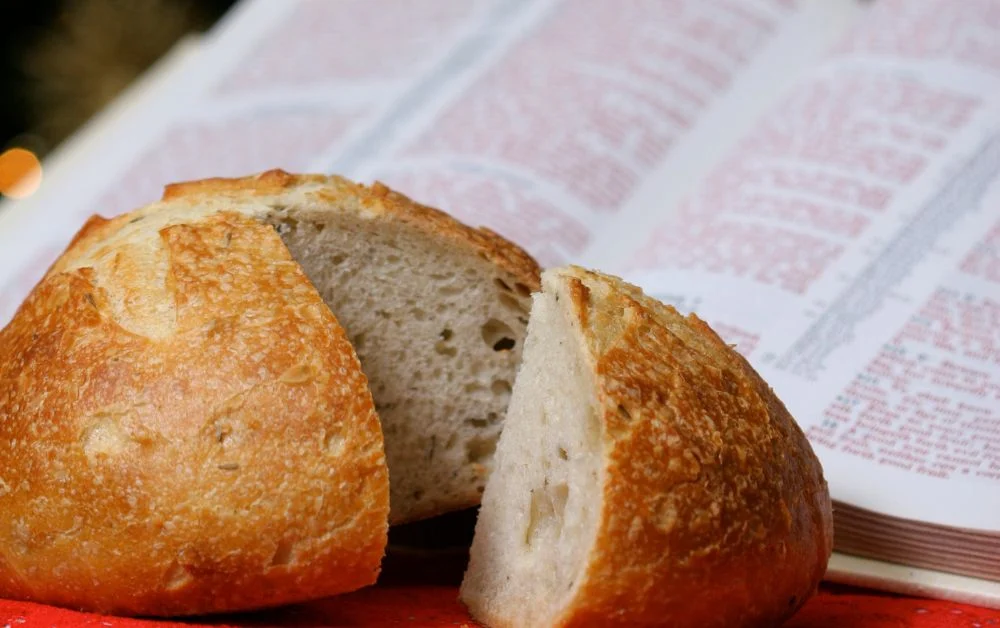
There is a reason Jesus warned His disciples to beware of leaven. Not because leaven is loud, but because it is subtle. Not because it explodes, but because it spreads. Leaven doesn’t announce itself. It works quietly, invisibly, until the entire loaf has changed. By the time you taste it, it’s too late to pretend nothing happened.
When Jesus warned about the leaven of the Pharisees, the Sadducees, and Herod, He wasn’t offering a theology lesson. He was diagnosing a system. A religious ecosystem. A way faith rots when it stops serving God and starts serving power.
And two thousand years later, His warning is no less precise. In fact, it may be more relevant now than ever—because the modern church has perfected the art of baptizing leaven and calling it faithfulness.
Let’s say this plainly: the crisis of the American church is not unbelief. It is misbelief. It is not ignorance of Scripture. It is selective obedience to it. And it is not that we failed to hear Jesus. It is that we heard Him clearly—and decided He was inconvenient.
Jesus named three leavens because three corruptions were already at work in His day. They did not die with the Temple. They did not disappear with Rome. They simply learned to speak in modern accents, wear modern suits, and livestream their righteousness.
The first leaven Jesus names is the leaven of the Pharisees, which He explicitly calls hypocrisy. This is not hypocrisy as moral failure. Everyone fails. Hypocrisy, in Jesus’ usage, is something far worse. It is the construction of a religious identity that performs righteousness while blocking others from access to God. It is gatekeeping holiness rather than cultivating mercy. It is measuring, managing, and monitoring people while never lifting a finger to help them heal.
The Pharisees were not villains because they loved the law. They were villains because they loved control. They created a culture where belonging depended on compliance, and compliance depended on proximity to power. They cleaned the outside of the cup while the inside stayed rotten, and then congratulated themselves for the shine.
This leaven did not vanish. It metastasized.
Today it shows up as whitewashed Christianity—clean language, curated beliefs, and a thousand unspoken rules about who is acceptable and who is suspect. It polices tone before it ever listens to pain. It obsesses over sexual behavior while ignoring economic violence. It demands purity from the wounded while excusing cruelty from the powerful. It knows how to quote Scripture but not how to bind up the broken.
Jesus’ accusation still stands: you shut the kingdom of heaven in people’s faces. You do not enter yourselves, and you prevent others from entering.
The second leaven Jesus names is the leaven of the Sadducees. This one is quieter, more respectable, and often praised as “mature.” The Sadducees did not deny God outright. They denied anything about God that threatened order. They denied resurrection. They denied angels. They denied divine disruption. Their religion was carefully trimmed to fit the contours of power.
This leaven lives on wherever Christianity is reduced to “values” instead of power, respectability instead of risk, and metaphor instead of liberation. It is the faith that speaks endlessly about love but recoils from justice. It is the church that insists Jesus changes hearts but never systems. It is the theology that praises calm, moderation, and civility while the poor remain crushed and the captives remain bound.
Sadducee leaven produces a God who never interrupts, never confronts, never overturns tables. A God who is safe for donors, safe for politicians, safe for empire. A God who asks nothing costly and demands no repentance beyond polite regret.
Jesus was not impressed.
“You do not know the Scriptures or the power of God,” He told them. Not because they lacked education, but because they had stripped faith of expectation. Resurrection power was inconvenient. Liberation was destabilizing. So they redefined faith until it could no longer threaten anything that mattered.
The third leaven Jesus names is the leaven of Herod. This is the most overt, and the most lethal. Herod represents the fusion of religion and political power. He represents the calculation that faith is useful if it can be harnessed, weaponized, and aimed at the right enemies.
Herodian leaven asks a simple question: will this help us win?
It does not ask whether it is true. It does not ask whether it is just. It asks whether it is effective.
This leaven turns pulpits into platforms, congregations into voting blocs, and theology into propaganda. It teaches believers to fear the wrong people, hate the right targets, and call it faithfulness. It confuses patriotism with righteousness and dominance with blessing. And it always, always demands silence in the face of injustice—for the sake of access.
Herodian leaven kills prophets. It always has.
But here is the part we must stop pretending not to see. These leavens do not operate independently. They reinforce one another. The Pharisee leaven polices behavior and enforces conformity. The Sadducee leaven drains power and expectation so nothing ever truly changes. The Herodian leaven weaponizes what remains and points it outward.
Together, they produce a church that looks alive but cannot resurrect anything.
This is why Jesus was not crucified by atheists. He was crucified by religious systems protecting power. And this is why the modern church’s loudest outrage is so often aimed at the vulnerable rather than the violent. It is why moral scrutiny flows downhill while grace flows up. It is why the poor hear sermons about responsibility while the rich hear sermons about blessing.
We should not be surprised. Jesus warned us.
And yet, here we are, still defending the loaf instead of removing the leaven.
The call of Christ was never to manage corruption. It was to repent of it. Repentance, in the language of Jesus, does not mean feeling bad. It means turning around. It means abandoning the systems, incentives, and identities that keep reproducing death.
Jesus did not say, “Beware the leaven, but learn to use it wisely.” He said, “Beware.” Full stop.
Which means the modern church has a choice. It can continue performing righteousness while blocking access to mercy. It can continue offering a respectable faith stripped of power. It can continue fusing God-language to political dominance. Or it can repent.
Real repentance would look like relinquishing control over who belongs. It would look like returning expectation to faith—expectation that captives can be freed, debts can be forgiven, the poor can be lifted, and the dead can rise. It would look like refusing to trade truth for influence, even when the cost is high.
Repentance would look like choosing the cross over the throne.
This is not a call to abandon faith. It is a call to return to it. To the red letters that refuse to be domesticated. To the Jesus who blesses the poor, warns the rich, confronts the powerful, and stands with the discarded. To a faith that does not need empire to survive.
The leaven is already in the loaf. Pretending otherwise is no longer an option.
The question is not whether the church will change. The question is whether we will have the courage to admit why it must.
Repent. The kingdom of God is still at hand.
And it does not belong to gatekeepers.
It belongs to the wounded, the hungry, the honest, and the brave enough to walk away from a corrupted loaf and start again.
Let’s build something better.
