


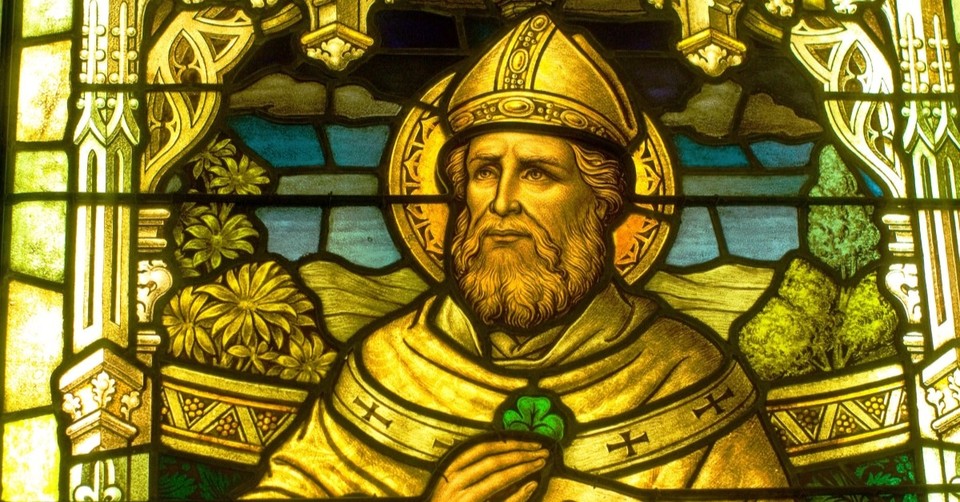
Here’s your first surprise: St. Patrick wasn’t actually Irish! Or, actually, born with the name Patrick.
His real name was Maewyn Succat, and he was born in Britain, probably around the 5th century, although the exact date is unknown. Even though his father and grandfather had been men of faith, Patrick had never believed in God. That all changed when he was kidnapped by Irish raiders and taken across the sea to be a slave in Ireland.
Far from home and being forced to work long hours herding sheep and pigs for no pay, Patrick began to pray for the first time.
For six years, he worked in poor conditions, until he had a dream of a ship in the harbor that had come to take him home. He ran away and stowed away on the ship, which returned to Britain, where he where he was reunited with his family. God delivered him from slavery and brought him home.
And that might have been the end of the story…except that Patrick had a vision of unreached people calling out to him to come preach the gospel. Which unreached people group? The Irish, of course.
It would have been easy for Patrick to say, “No way! I’m not going back there. Those people took me away from my family and made me eat scraps with the pigs. They don’t deserve to know about Jesus.”
But he didn’t.
After studying so he could teach the Bible, Patrick went back to Ireland to preach to the people who had once kidnapped him. Because he was so familiar with life on the Emerald Isle, he knew it would be important to convert the clan chiefs first, who could then help the gospel spread to the common people. According to tradition, one of his first converts was his former master.
The Celtic Druids, who worshipped pagan gods and had been the most powerful men on the island, didn’t like this new teaching that Patrick brought. Christianity would outlaw the Druid’s ancient traditions, including human sacrifice.
Several times, the Druids threatened and imprisoned him, but Patrick was always able to escape, sometimes by giving gifts to his captors. He was in constant danger, and so were the people who decided to put their faith in Jesus after listening to his message.
But even the Druids couldn’t keep the gospel from spreading, and soon there were churches and groups of believers all over the country.
After Patrick died, his life was mostly forgotten, but in the 1631, a feast day was established in his honor. The holiday became popular in America when Irish immigrants to big cities like New York and Boston began to celebrate the March festival with parades and feasting, making it into the holiday we know today.
Photo Credit: ©Timothy Dykes/Unsplash
