


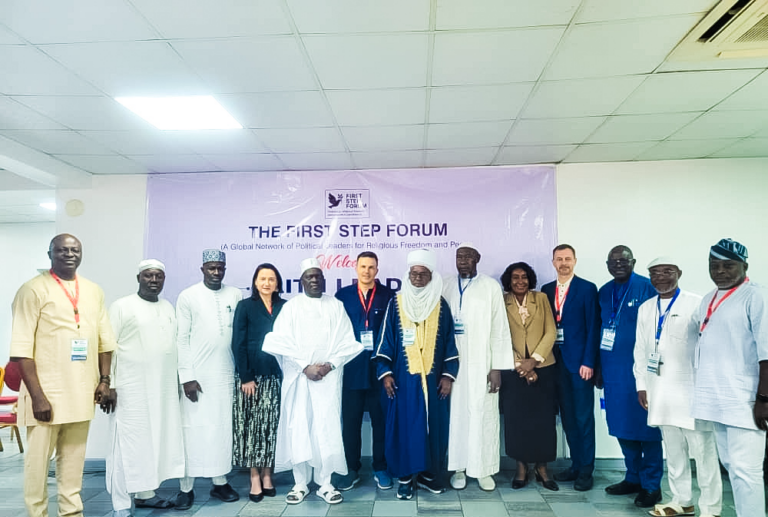
First Step Forum meeting in Nigeria (Photo: First Step Forum)
Christian and Muslim leaders in Nigeria have put their names to a new declaration calling for an end to religious violence and for greater interfaith understanding and reconciliation.
The Abuja Declaration for Sustainable Peace and Religious Harmony came about following a visit to the country by the First Step Forum (FSF), which describes itself as global network of political leaders who aim to promote religious freedom and peace.
The visit brought together local leaders from various communities and heard first hand about the challenges impacting some of the areas hardest hit by sectarian violence.
Despite being approximately 50 per cent Christian, Nigeria is currently ranked by Open Doors as the seventh worst country worldwide for anti-Christian persecution. Deadly raids, kidnappings and murders, either by Islamists, radicalized Fulani, or bandits mean that more Christians are killed for their faith in Nigeria than in all other countries combined.
Last year the government announced a state of emergency, although some have criticised the government for failing to recognise the religious dimensions of the violence. There have been countless incidents of Islamic violence against Christian communities, but almost no cases of Christian violence against Muslims.
Muslims have been victims of the violence, however the perpetrators tend to either be bandits or other Muslims attempting to enforce their more hardline views on their co-religionists.
The FSF meeting heard how competition for scarce resources combined with religious tension is the main driver for the ongoing violence.
With the Abuja Declaration, both Christian and Muslim leaders affirmed, “We unequivocally reject all forms of violence committed in the name of God or religion.”
The declaration also committed to greater efforts at reconciliation and interfaith communication at the local level, with the aim of defusing any local tension before it can spill over into violence.
Dawari George, a former Nigerian MP, who facilitated the FSF meeting, said, “The engagement with the faith leaders was touching. They kept referring to each other as brothers … even as they made practical suggestions on how to deal with the issues.”
