
WASHINGTON, D.C. – Military leaders say the historic mission to rescue a downed U.S. airman in Iran was one of the most complicated ever carried out. CBN News spoke with two retired special operators who explained why no other military could have pulled it off.
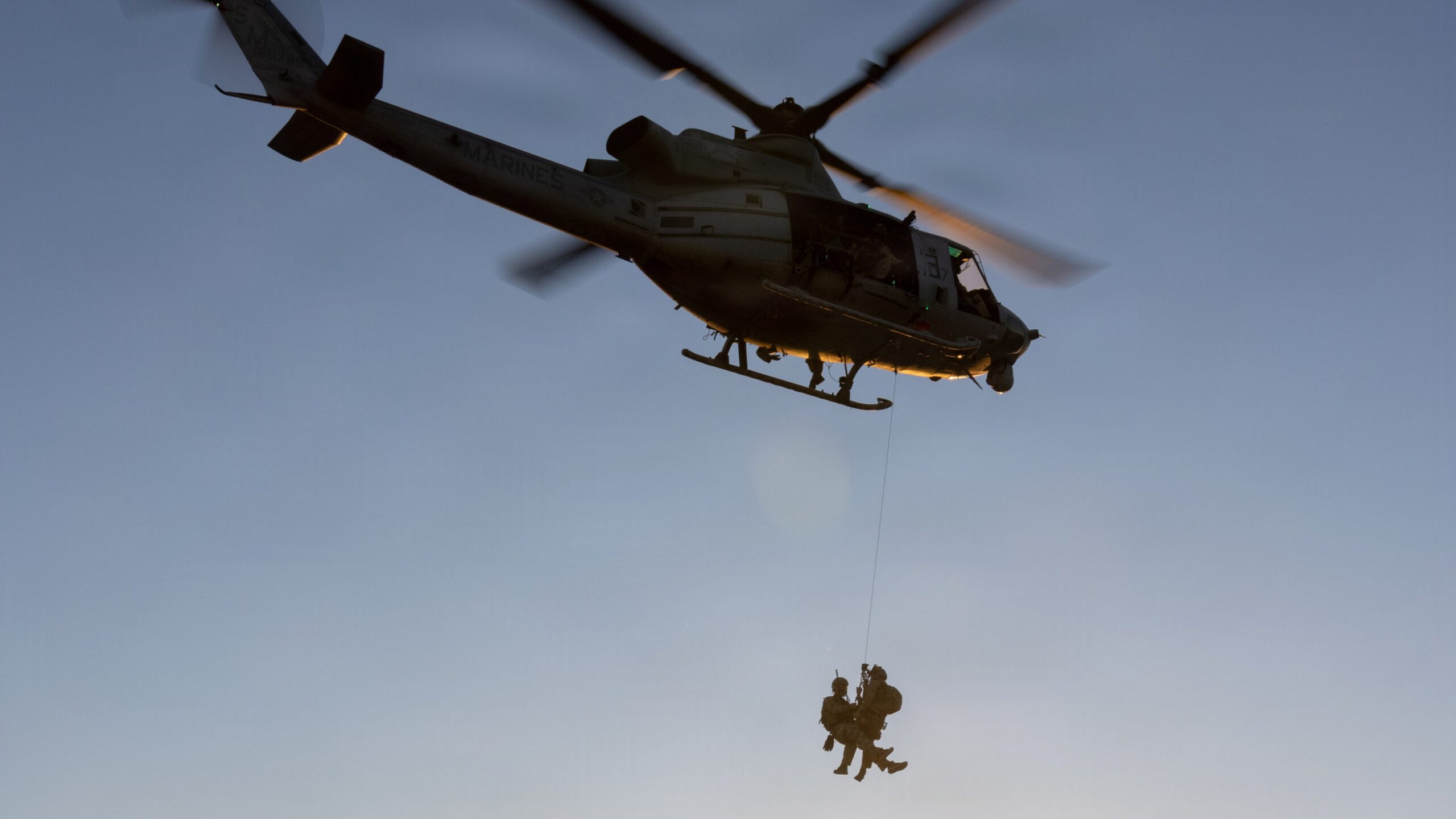
When a U.S. aircraft goes down in enemy territory, the clock starts immediately. In this case, rescue teams were in the air within an hour. Flying straight into the unknown, to keep an unbreakable promise: no man or woman left behind.
“You had two different teams go out there…those are the first ones that you saw on those videos flying over the land in the daytime,” explained retired Air Force Pararescue team leader Steven Nisbet, founder of Shields & Stripes.
The first wave was made up of a pararescue team (PJs) one of the military’s most elite rescue forces. They’re trained to go anywhere and bring anyone home.
“These folks, their sole mission is for that pilot…they’re assigned to an aircraft, and all they’re doing is waiting for something bad to go wrong, and then they’re going to go flying and go do it,” Nisbet explained.
He tells CBN News that, after the initial rescue, the team took heavy fire.
“They had been shot up so much that they couldn’t go back after the second one. Now, for the second one, you had to pivot to a team that typically doesn’t do these missions…they’re typically reserved for hostage rescues and high-value target assaults,” Nisbet said.
This team was made up of PJs, combat controllers, and SEAL Team 6, among others. Intelligence, air power, special operations, all working in real time.
“The complexity, I mean, 150 aircraft coordinated overhead, that is a, that is a coordination exercise that even the best of organizations would fail at,” explained retired Navy SEAL, Mike Sarraille, the Chief Talent Officer for Overwatch.
He recalls pararescue being attached to every mission he was on, and taking the lead on combat search in rescue.
“I’ll put you this way. SEALs have heroes too, and they’re known as the Air Force Pararescuemen,” Sarraille told CBN News.
“When we fly in on that helicopter, we take the attention off of the fighter on the ground…We become a bullet magnet,” said Nisbet.
Meanwhile, the actions taken by the downed Weapons Systems Officer after ejection from his F-15 were also pivotal to the success of the rescue mission.
“This individual, what I’m told or what I’m reading, is actually very in-tune and asked a lot of questions….when he was going through survival school, to ask for extra repetitions…He was able to conserve water, he was able to move to a specific area that he knew that the enemy wasn’t going to go, go to a really inconvenient place,” said Nisbet.
“I heard about the ‘God is good’ transmission well before it was released, and it fired the team up…knowing, ‘This individual has got a will to survive, and they’re willing to stick it out, and we, by God, we better get out there and save this person’s life,'” Nisbet continued.
***Sign up for CBN Newsletters and download the CBN News app to ensure you receive the latest updates from a Christian perspective.***
“We will throw the entire weight of the U.S. military to bring you home. That motto of, ‘No man or woman left behind,’ that’s not a bumper sticker, that is seared into our hearts,” Sarraille said.
“You would never see another organization or another military be able to get in there, execute the way we did, to the capacity that we did, and not get any injuries. I mean, I’ll always highlight that it was, it was a miracle nobody got hurt,” said Nisbet.
He points out that there has been no rescue mission even close to this in more than 20 years. Success came because training never stopped. Now, the lessons learned here will shape how operations are carried out for years to come.
