


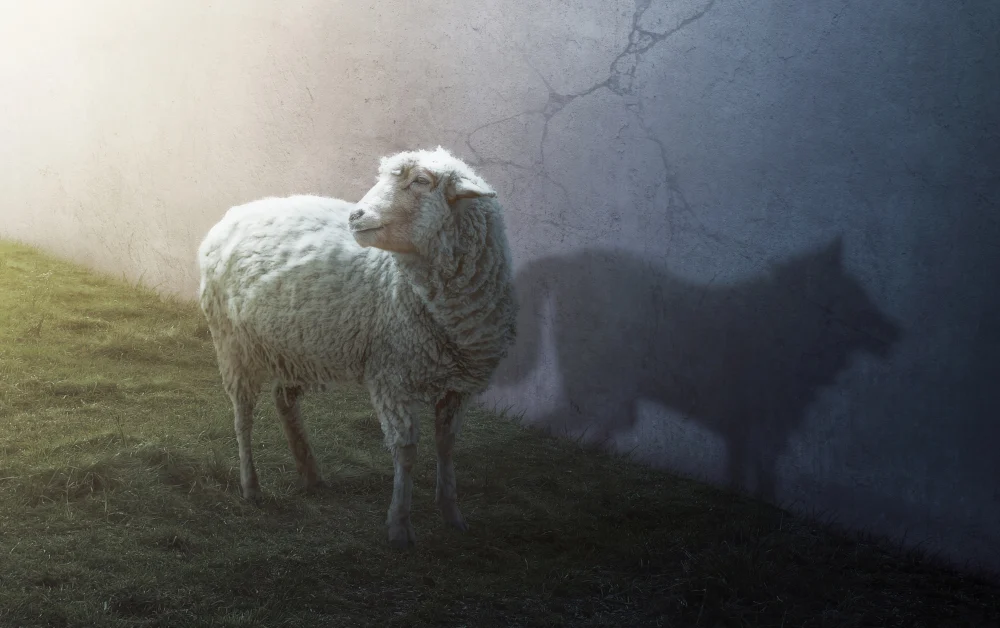
In today’s reading from the Gospel of Matthew, Jesus commissions the twelve and sends them out as sheep among wolves. That image is not sentimental. Sheep are not predators. They do not dominate. They do not devour. They are vulnerable, watchful, dependent on the Shepherd. Wolves move by instinct, by hunger, by force. Jesus does not send wolves to defeat wolves. He sends sheep. That should arrest us.
Because if we spend our days consuming outrage, mockery, humiliation, lust, fear, and constant agitation, what are we being formed into? If our ears are trained on hostility and our eyes feast on violence and contempt, how can we walk into the world with the spirit of a sheep?
We may confess Christ with our lips. We may claim allegiance to His name. But if our tone is cutting, our reactions reactive, our speech dehumanizing, we are not embodying the One who sends us. We are mirroring the wolves.
Jesus teaches that the eye is the lamp of the body. What fills the eye eventually fills the whole person. Out of the abundance of the heart the mouth speaks. Words are not accidents. They are overflow.
Garbage in and garbage out is not merely common sense. It is spiritual law. What we repeatedly allow into the soil of the heart will bear fruit. If bitterness is planted, bitterness will grow. If contempt is rehearsed, contempt will speak. If fear is constantly fed, fear will govern.
This is especially true in an age of constant scrolling. Division fuels attention. Outrage spreads quickly. We can find ourselves nursing an anger that feels righteous, absorbing a spirit we never consciously chose, shaped by what is loudest rather than what is true. The Kingdom widens vision. It calls us to step back, to see the person behind the argument, the image of God behind the enemy, to resist being formed by whatever is most inflamed.
And this does not stop with us. When homes are filled with yelling and instability, children absorb that rhythm as normal. They grow into quarrelsome adults not because they are evil, but because that is the air they learned to breathe. When roles reverse and strength gives way to frailty, the pattern often returns to its source. Cycles repeat when nothing interrupts them.
Jesus interrupts at the root. He does not wait for the wound to fester into violence, or the hunger to harden into cruelty. He addresses the anger before it becomes violence, desire before it becomes betrayal, anxiety before it becomes despair. He is after formation, not merely behavior. He wants to change what we are becoming, not only what we have done.
To be sheep in the midst of wolves requires more than right belief. It requires disciplined attention. It requires slowing down, guarding what we watch, what we rehearse, examining our reactions, asking honestly what spirit is forming us.
The world is loud. Outrage sells. Contempt entertains. Fear spreads quickly. The Shepherd speaks differently.
If Christ sends us as sheep, we must ask whether our daily consumption is shaping us into something else. Allegiance is lived. It is formed in what we allow to shape our hearts. We cannot serve two masters. And we cannot become sheep while feeding on what forms wolves.
The question is not simply what we believe.
The question is what we are becoming.
Editor’s Note: Previously published on Way of Realignment Substack on February 24, 2026.
RLC welcomes and encourages individuals who engage in critical thinking at the intersection of faith and justice to contribute to our blog. The views and opinions expressed by our blog authors are their own and do not necessarily reflect or represent the views and opinions of RLC, its staff, members, or officers.
