


Reading Time: 3 minutes
President Donald Trump’s announcement of a U.S. naval blockade in the Strait of Hormuz marks a dramatic escalation in tensions with Iran, with potentially far-reaching economic and geopolitical consequences. Iran has manipulated the U.S. and the world by seizing control of the Strait, but President Trump’s new plan may just turn the tables on the Islamic regime.
This content is supported by your donations.
Give today.
From the Daily Wire:
President Donald Trump announced on Sunday that the United States Navy would begin blockading the Strait of Hormuz, effectively sealing off Iran’s primary maritime artery, an action that will cripple the Iranian regime’s capacity to resist the United States.
“The meeting went well, most points were agreed to, but the only point that really mattered, NUCLEAR, was not,” President Trump stated. “Effective immediately, the United States Navy … will begin the process of BLOCKADING any and all ships trying to enter, or leave, the Strait of Hormuz.”
The president characterized Iran’s maritime behavior as “WORLD EXTORTION” and warned that any vessel paying an “illegal toll” to Iran would be denied safe passage. “Our Military will finish up the little that is left of Iran!” he added, noting that U.S. Central Command (CENTCOM) will begin full enforcement on Monday, April 13, at 10:00 a.m. ET.
This blockade represents one of the most aggressive economic pressure tactics seen in recent years. According to Miad Maleki, a senior fellow at the Foundation for Defense of Democracies, the financial consequences for Iran could be immediate and devastating. He estimates the regime could lose approximately $435 million per day, amounting to nearly $13 billion each month.
1/10 The U.S. naval blockade of the Strait of Hormuz would cost Iran approximately $276M/day in lost exports and disrupt $159M/day in imports, a combined economic damage of ~$435M/day, or $13B/month.
Over 90% of Iran’s $109.7B in annual trade transits the Persian Gulf. Oil/gas… https://t.co/fOwhRltQhv
— Miad Maleki (@miadmaleki) April 12, 2026
The reason for such a severe impact is simple: Iran’s economy is heavily dependent on maritime trade through the Persian Gulf. With more than 90% of its annual trade flowing through this region, shutting down the Strait effectively cuts off the regime’s primary economic lifeline. Oil and gas exports, which account for the majority of government revenue, would be halted almost entirely.
The consequences extend beyond energy exports. Iran’s petrochemical industry, non-oil exports, and critical imports would all face significant disruption. Key ports responsible for handling the majority of the nation’s goods would be rendered largely ineffective, and alternative routes lack the capacity to compensate for the loss.
Internally, the situation could deteriorate rapidly. Iran is already facing severe inflation and currency devaluation, and the loss of daily imports could accelerate economic instability. With limited storage capacity for oil, experts warn that production may soon have to shut down, potentially causing long-term damage to the country’s energy infrastructure.
This situation is critical not only because of its economic implications, but because of its potential to halt Iran’s manipulation of the Strait of Hormuz, something that has caused a great deal of pain around the world. Pray that truth, wisdom, and peace would prevail, and that leaders would act with discernment in a moment of heightened tension.
Leave a prayer below for our leaders and for peace in the region — and share this article to encourage others to intercede.
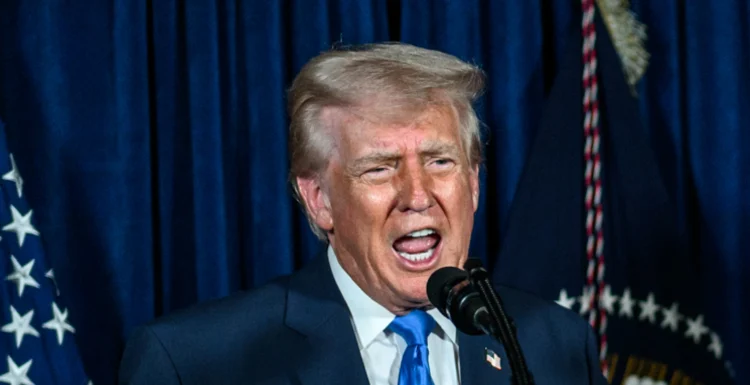
(Excerpt from the Daily Wire. Photo Credit: Official White House Photo by Daniel Torok)
