


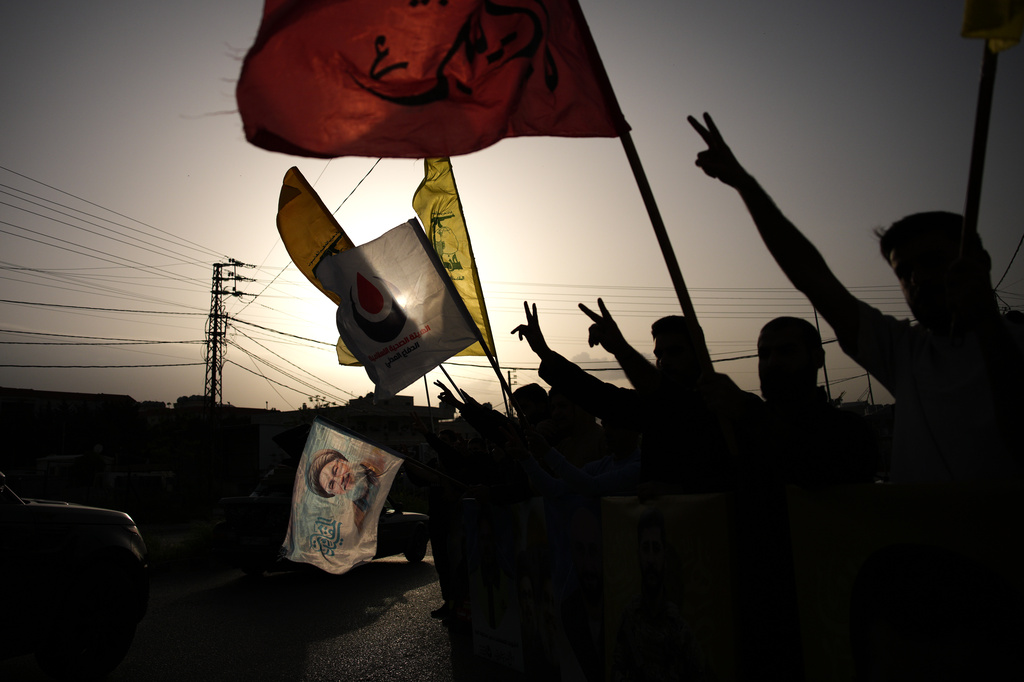
ISRAEL-LEBANON BORDER – A major diplomatic push is underway to ease tensions in the Middle East as President Donald Trump announced a ceasefire between Israel and Lebanon, while simultaneously trying to hold a fragile truce with Iran.
The president’s move is aimed at halting cross-border fighting and creating space for peace talks. Trump exchanged phone calls with Lebanese President Joseph Aoun and Israeli Prime Minister Benjamin Netanyahu.
“They’ll be meeting, probably coming to the White House, over the next four or five days,” Trump said on Thursday. “And that will be the first time they’ve met in 44 years.”
A top Israeli official told The Jerusalem Post that the U.S. intends to be heavily involved in the talks and lead Hezbollah’s disarmament.
Netanyahu remarked, “I agreed for a pause, or more precisely a temporary ceasefire, for 10 days.” He added, “We have an opportunity to make a historic peace agreement with Lebanon.”
However, there are clear divisions.
Netanyahu insists that the end goal is to dismantle Hezbollah and build a lasting peace. Israeli officials told Fox News that they’re optimistic that Lebanon may even join the Abraham Accords.
For his part, Lebanese President Aoun initially appeared to be focusing primarily on an end to Israeli military operations inside Lebanon, while the Iranian proxy Hezbollah is calling the talks “futile,” accusing the Lebanese government of becoming a tool for Israel.
In Beirut, gunfire marked the beginning of the ceasefire, as Israeli citizens who were forced out by the war with Hezbollah began to return home.
Here in northern Israel, the conflict is far from theoretical. Since the start of the war in early March, more than 8,000 rockets have been launched toward the Jewish state, damaging homes and sparking fires, and the proximity to Hezbollah terrorists can be frightening. On a nearby ridge, Hezbollah would fire rockets down on Kfar Giladi, a village we visited.
Israel Defense Forces International Spokesperson Nadav Shoshani told us, “So this is a terror organization that has their own interests in mind and the Iranian regime’s interests in mind, and they are sacrificing the Lebanese people and the state of Lebanon.”
***Sign up for CBN Newsletters and download the CBN News app to ensure you receive the latest updates from a Christian perspective.***
All this is unfolding alongside a separate ceasefire between the U.S. and Iran, with talks directed at the regime’s need to relinquish its nuclear ambitions gaining momentum.
“So, very important is that Iran does not have a nuclear weapon, and they’ve agreed to that. Iran’s agreed to that, and they’ve agreed to it very powerfully,” President Trump stated. “They’ve agreed to give us back the nuclear dust that’s way underground because of the attack we made with the B-2 bombers. So we have a lot of agreement with Iran, and I think something’s going to happen very positively.”
The U.S. is now enforcing a military blockade near the Strait of Hormuz, preventing vessels from reaching Iranian ports and creating an economic crisis for the Islamic Republic.
Analysts say the collapse of Iranian oil exports and the blocking of imports could drive Iran’s inflation rate even higher than the 50 percent figure reached before the war, which could threaten the Islamic Republic.
Pentagon leaders warn that if diplomacy fails, the U.S. is ready to strike again.
Secretary of War Pete Hegseth announced, “We’d rather not have to do it, but we’re ready to go at the command of our president, and at the push of a button.”
Back on the Israel-Lebanon front, Prime Minister Netanyahu says IDF troops will remain in the expanded security buffer zone in southern Lebanon throughout the ceasefire.
Shoshani explained, “Our mission is to push to push that (Hezbollah threat) away. And if there is a better solution and our politicians make decisions, obviously we will follow, and we’re waiting for directives.”
