


JERUSALEM, Israel – President Trump announced on Thursday that the ceasefire between Israel and Hezbollah in Lebanon is getting a three-week extension, and he insisted that Iran cannot finance the terror group. With new White House talks, warnings from Israel, and signs of a possible power struggle in Tehran, the region remains on edge.
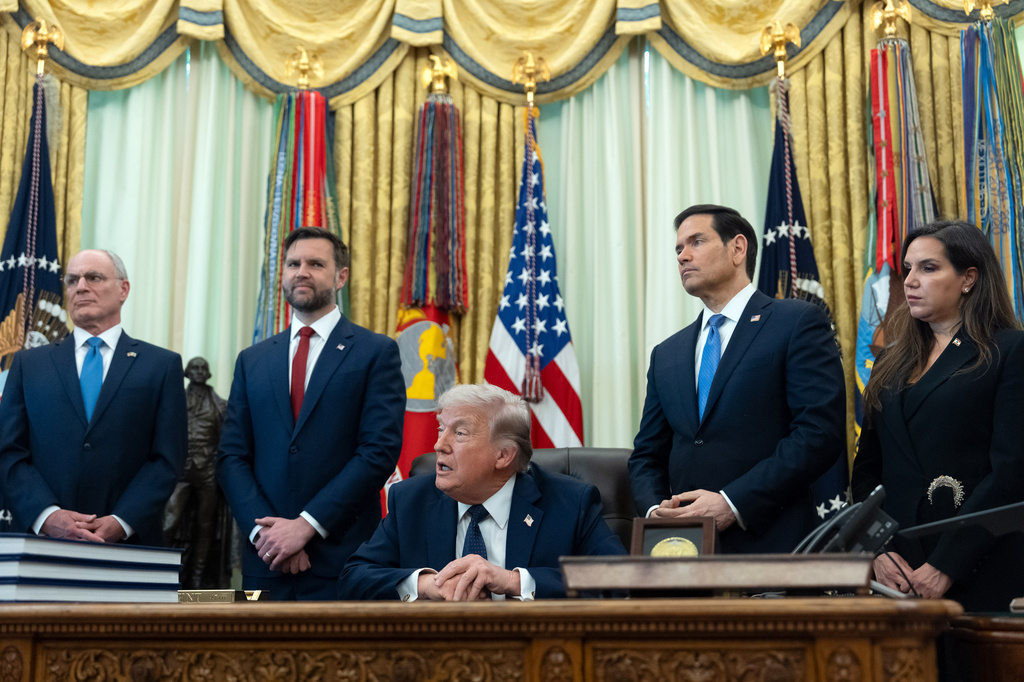
The president’s ceasefire extension was designed to buy time to prevent another full-scale war on Israel’s northern border. He made the announcement after what he called a “historic” second round of White House talks that included Lebanese Ambassador to the U.S. Nada Hamadeh Moawad, Israeli Ambassador to the U.S. Yechiel Leiter, Vice President JD Vance, Secretary of State Marco Rubio, U.S. Ambassador to Israel Mike Huckabee and U.S. Ambassador to Lebanon Michel Issa.
“They’ve agreed to an additional three weeks of, I guess, no firing, ceasefire,” Trump stated, and added, “We think that the president of Lebanon and the prime minister of Israel, over the next couple of weeks, will be coming here.”
He also noted, “They actually like each other, Lebanon and Israel.”
Trump indicated that the U.S. will work with Lebanon to help protect the Lebanese from Hezbollah, noting, “It’d be a wonderful thing to get this worked out simultaneously with what we’re doing in Iran.”
Israeli Foreign Minister Gideon Sa’ar acknowledged that peace between Israel and Lebanon is possible, but cautioned that it can only happen without Hezbollah.
“Hezbollah is a common enemy of Israel and Lebanon,” Sa’ar declared.
Trump made clear that Israel has the right to self-defense. However, he added a caution.
“They’re going to have to do it carefully, and they’ll be surgical.”
***Sign up for CBN Newsletters and download the CBN News app to ensure you receive the latest updates from a Christian perspective.***
The administration is also linking any permanent ceasefire to Iran’s role in the region.
The president repeated his demand that Iran stop its backing of proxy groups in the Middle East, including Hezbollah, as part of any deal between Washington and Tehran to end the Iran war.
Responding to a reporter’s question about aid to the Iranian proxy, Trump said, “Yeah, they’ll have to cut that. That’s a must.”
Meanwhile, the Iranian regime says it will not reopen the Strait of Hormuz as long as the U.S. continues its blockade of Iranian ports.
Iranian Speaker of Parliament Mohammad Bagher Ghalibaf declared, “A complete ceasefire only has meaning if it is not violated through a naval blockade,” and he added, “Reopening the Strait of Hormuz is not possible amid a blatant violation of the ceasefire.”
Reports from inside Iran suggest growing division at the top.
An unsourced television report indicated that Ghalibaf has stepped down from leading negotiations with the United States after pressure from Iranian Revolutionary Guard Corps (IRGC) commanders. Iranian officials deny the report.
The New York Times reports that Mojtaba Khamenei, the son of the late Supreme Leader Ali Khamenei, remains “mentally sharp and engaged.” However, Israeli and U.S. officials believe he’s not functioning as the country’s supreme leader, suggesting instead that the real power now rests with the IRGC, indicating that the military may be overseeing both diplomacy and war decisions.
Meanwhile, Israeli Defense Minister Israel Katz revealed that the Israel Defense Forces are ready for the possibility of renewed conflict.
He said on Thursday, “Israel is prepared for the resumption of war against Iran. The IDF is prepared both defensively and offensively, and the targets are marked. We are waiting for a green light from the United States.”
