


WARNING: Graphic images and accounts are included in this story.
BONDI BEACH, Sydney, Australia – The waves still roll in at Bondi Beach. Kids run along the sand. Surfers paddle out. Tourists snap photos. At first glance, it feels like any other day.
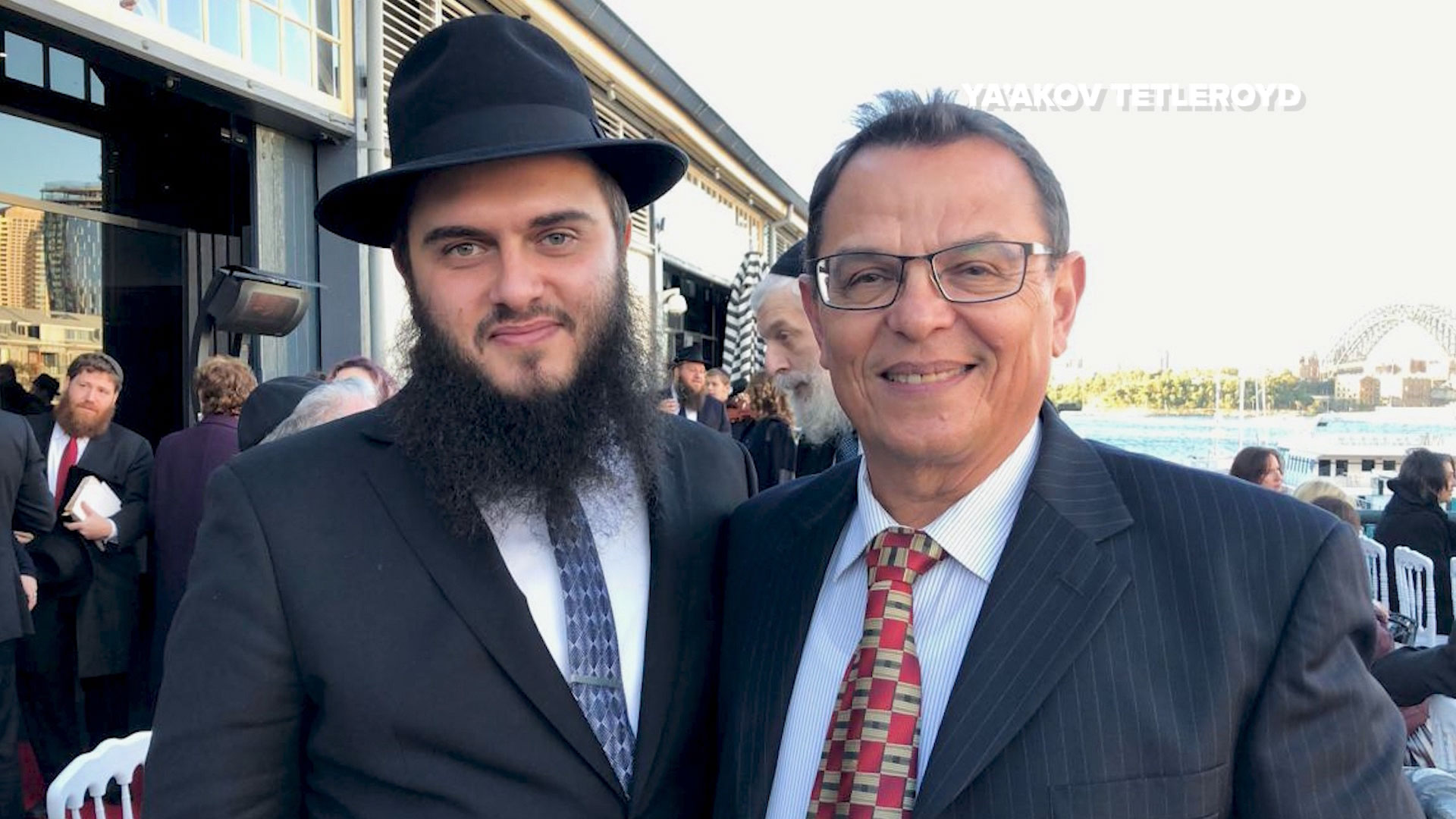
For Ya’akov Tetleroyd, however, this place will never be the same. “After I was shot, I was bleeding very heavily, very heavily,” he recalled.
He remembers the shock, blood, and confusion as a bullet tore through his elbow during the December 14 attack.
“I’m fortunate that the doctor saved my arm and my life, and I’m here today,” he told CBN News.
Sadly, his father, Borris Ya’akov Tetleroyd, is not.
“In this world we mourn, that’s the way of the world, we mourn, and it’s a sad thing, and it’s a tragic thing,” said Tetleroyd.
They had come to Bondi Beach together for a Hanukkah celebration, an evening that quickly turned into a nightmare when gunfire erupted. His father was shot and killed beside him.
Weeks after the massacre, something that stunned not only the Jewish community in Sydney but Australians at large was when Tetleroyd decided to forgive the men who murdered his father.
“Do I want to be full of rage? Do I want to be resentful? No. The answer to those questions is no. Because it’s no way to live a life,” said Tetleroyd.
He credits his Jewish faith for teaching that responding to hatred with more hatred only deepens the wound. Instead, he prays, grieves, and speaks about love, not because the pain is gone, but because it isn’t.
“There’s an idea that says, ‘One who does not forgive burns the bridge that he himself must cross,'” remarked Tetleroyd.
***Please sign up for CBN Newsletters and download the CBN News app to ensure you receive the latest news from a Christian perspective.***
Just a short distance from where Tetleroyd lost his father, Arsen Ostrovsky almost lost his life.
“A miracle. In one word, a miracle. I probably shouldn’t be sitting here speaking to you,” said Ostrovsky, who leads the Australia-Israel Jewish Affairs Council.
Only weeks before, he had moved his family back to Australia after 13 years in Israel, believing it would be safer. He told his oldest daughter they were going somewhere free from violence.
“‘Abba, Daddy, does that mean no more boomies, meaning no more rockets, no more missiles, no more running back and forth to the bomb shelter?’ And I said, ‘Of course not, sweetie. We are going to Australia. That’s a long, long way away from the boomies.’ And I was wrong,” recalled Ostrovsky.
On December 14, he was at Bondi Beach with his wife and two daughters when the attack began.
“When the attack started, I was just over there toward that bench,” Ostrovsky pointed in the direction of where the gunmen stood. “One gunman was on the bridge over there, and the other one would have been on the street side over there.”
Authorities say the two gunmen, a father and son inspired by ISIS, were indiscriminately targeting what was meant to be a family celebration of Hanukkah.
In the chaos, Ostrovsky was separated from his family.
“I stood up to start to run toward my family when I got hit,” Ostrovsky remembered.
A bullet grazed his head. Not knowing if he would survive, he sent his wife a selfie with two words: “Love you.”
“The doctors told me afterwards that my survival is a miracle, that it was mere millimeters between life and death,” said Ostrovsky.
He survived. Fifteen others did not.
Jewish leaders say the attack did not come out of nowhere. Alex Ryvchin, with the Executive Council of Australian Jewry, says antisemitic incidents have surged since the October 7 Hamas attack in Israel.
“We saw this surge in extreme Islam, in imams saying the most horrific, ghastly, dehumanizing things about the Jewish community,” Ryvchin told CBN News. “We called publicly for action by the police, by the government. The laws were being seen as ineffective. Nothing could be done.”
More than 3,700 anti-Jewish incidents have been recorded nationwide in the two years following October 7.
At Central Synagogue in Sydney, Rabbi Levi Wolff says history offers a warning.
“The reality is that we know very well from our history as Jews that words transform to actions, and actions eventually can transform into the worst atrocities,” said Wolff, who leads Australia’s largest Jewish synagogue.
At the same time, Wolff says many are rediscovering their faith.
“People are asking themselves, ‘Hold on a second. What is my Judaism? What is my faith about? If they want to kill me because I’m Jewish, let me understand what it means to live like a Jew,'” said Wolff.
For more than two years, Mark Leach, a Sydney Anglican minister of Jewish heritage, has warned about rising hostility.
“People are afraid to go out in public wearing, you know, a Magen David like I do when I walk on the streets. When I wear this in public, my wife worries about my safety,” Leach told CBN News.
After witnessing growing tensions, he co-founded the movement “Never Again Is Now,” urging Christians to stand publicly with the Jewish community.
“It became clear to me after that day that we had to mobilize, particularly Christians in Australia, to stand up against this hatred so that we didn’t repeat the mistakes of Christians in Germany in the 1930s, where 20 percent opposed Hitler, 20 percent supported Hitler, but the middle 60 percent just didn’t want to get involved,” said Leach.
He now travels across the country organizing rallies against antisemitism.
“And I’ll tell you why it’s important for Christians to fight this battle: it’s because we fight in the way of Jesus. We love our enemies. We pray for those who persecute us. We don’t hate people. We don’t seek revenge. We just do what is right for the good of those who cannot defend themselves,” Leach said.
Jenny Roytur, Tetleroyd’s cousin and the niece of Borris Tetleroyd, has become a leading voice for victims’ families. She says not enough is being done to confront hate, especially online.
“The social media accounts are still saying and writing the most disgusting things I’ve ever read. There are still protests. There are still hateful slogans,” Roytur told CBN News.
Reflecting on history, she says the warning signs are clear, that antisemitism is becoming normalized here and around the world.
“Shortly after October 7th, I never understood how people allowed 1939 to happen, how they just sat there idly, complacent, and let it happen. And I actually don’t have to wonder anymore, because I’m seeing it,” worries Roytur.
As life settles back into something that looks like normal at Bondi Beach, Tetleroyd keeps coming back. Not because the pain is gone, but because this is where his father’s life ended, and where his own, somehow, continues.
He says he refuses to let hatred write the final chapter. “God wants me to live, and I believe God wants me to be happy, joyous and free.”
