


Reading Time: 6 minutes
While Election Day is six months away, a series of primary elections took place Tuesday night that could have implications for control of both chambers of Congress in this year’s midterms as well as elections in years to come.
This content is supported by your donations.
Give today.
President Donald Trump loomed large in Tuesday’s election results as his preferred candidates performed very well in the Republican primaries.
Here are five highlights from Tuesday’s primaries.
1. Most opponents of Indiana redistricting lose their primaries
The U.S. is in a mid-decade redistricting battle that began with Texas redrawing five Democrat-held congressional districts to make them more favorable to Republicans. California voters responded by approving a map that made five Republican-held congressional districts more favorable to Democrats. In Utah, a court ruling ordered the creation of a new congressional district more favorable to Democrats.
Throughout the past year, additional redistricting took place in Missouri, North Carolina and Ohio, with those states implementing new congressional maps designed to give Republicans 3-4 additional seats. Most recently, Virginia voters narrowly approved a map that would make four Republican-held congressional districts more favorable to Democrats, while Florida just implemented a new congressional map that would make four Democrat-held districts more favorable to Republicans.
Additional redistricting is expected following the U.S. Supreme Court’s decision in Louisiana v. Callais, which ruled that Louisiana’s current congressional map consisting of two majority-black congressional districts held by Democrats and four majority-white congressional districts represented by Republicans was unconstitutional. Several southern states that have majority-black districts are expected to draw new maps, including Alabama and Louisiana.
One state where attempts to draw new congressional districts did not pan out was Indiana. While the Republican-controlled Indiana House of Representatives passed new congressional districts in a 57-41 vote late last year, the map designed to eliminate the two remaining Democrats in the state’s congressional delegation failed 19-31 in the Republican-controlled Indiana Senate.
President Donald Trump endorsed primary challengers to seven senators who voted against the new maps: Jim Buck, Dan Dernulc, Spencer Deery, Greg Goode, Travis Holdman, Linda Rogers and Greg Walker. Unofficial results show all but Goode have lost renomination to Trump-endorsed opponents with Deery holding onto a lead of just three votes.
An eighth redistricting opponent in the Indiana Senate, Eric Bassler, opted not to run for re-election and was replaced by a Trump-backed opponent. The impending replacement of at least six and potentially seven redistricting opponents with redistricting proponents makes it more likely that Indiana will implement a new congressional map ahead of the 2028 election.
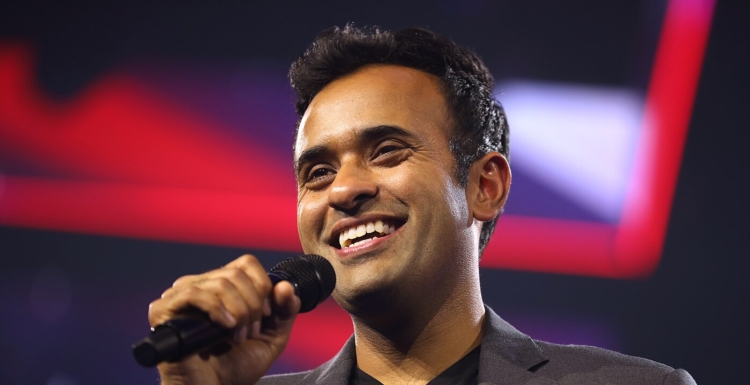
2. Ohio Republicans nominate Vivek Ramaswamy for governor
Two years after his presidential bid failed to gain traction, entrepreneur Vivek Ramaswamy has won the Republican nomination for governor of Ohio. The state’s current governor, Republican Mike Dewine, is term-limited and cannot seek re-election.
Unofficial results from Tuesday’s primary show Ramaswamy winning with 82.5% of the vote and carrying every county in the state. Meanwhile, Amy Acton won the Democratic primary for governor of Ohio unopposed.
The RealClearPolitics average of polls taken in the Ohio gubernatorial race since Dec. 6 shows Acton capturing 46.3% of the vote to Ramaswamy’s 46%, a lead of 0.3 percentage points. In addition to marking the first time a Democrat has won the Ohio governorship since 2006, a victory by Acton would mark a significant shift to the left in Ohio. Trump carried the state by about 11 points in the 2024 presidential election.
In his victory speech Tuesday, Ramaswamy insisted that “we have a moral duty to use those blessings, to use those gifts that we have been given to leave this state and this country better than we found it.” If elected, Ramaswamy would become the first Hindu governor in U.S. history.
3. Ohio Democrats nominate Sherrod Brown for US Senate
With Republicans currently controlling 53 seats in the U.S. Senate, Democrats must flip at least four seats currently held by Republicans in order to take control of the chamber. Maine and North Carolina are seen as the best pickup opportunities for Democrats as Democrat Kamala Harris won the former state by about 7 percentage points in the 2024 presidential election while Trump carried the latter state by about 3 percentage points.
All other seats currently held by Republicans are in seats that Trump carried by double digits. Even though it voted for Trump by 11, Democrats see Ohio as one of their best pickup opportunities because former Sen. Sherrod Brown, D-Ohio, is seeking a comeback bid. Brown won three U.S. Senate races in Ohio, most recently in 2018, but lost re-election in 2024 to now-Sen. Bernie Moreno. Unofficial results show Brown winning the Democratic primary with 89.5% of the vote, carrying every county in the state.
Brown will face off against Republican Sen. Jon Husted, who was appointed to the seat following J.D. Vance’s resignation to become vice president of the United States. The winner of the election will complete the remaining two years of Vance’s unexpired term and then run again for a full six-year term in 2028.
The RealClearPolitics average of polls of the Ohio Senate race taken since Dec. 6 shows Husted capturing 48.3% of the vote to Brown’s 45.7%.
4. Ohio Attorney General candidate who fantasized about killing Trump loses
While the high-profile primaries for the Ohio governor’s race as well as the state’s U.S. Senate race resulted in landslide or unanimous victories for the winners, the Democratic primary for Ohio Attorney General was comparatively closer. Unofficial results show John Kulewicz winning the Democratic primary with 63.2% of the vote against Elliot Forhan, who captured 36.8% of the vote. Kulewicz won all but nine counties in the state.
Forhan drew pushback for a social media post he made in January suggesting that he wanted to see Trump executed. “I want to tell you what I mean when I say I am going to kill Trump,” Forhan said in a video posted to Facebook on Jan. 27. “I mean I’m going to obtain a conviction rendered by a jury of his peers at a standard of proof beyond a reasonable doubt based on evidence presented at a trial conducted in accordance with the requirements of due process, resulting in a sentence, duly executed, of capital punishment.”
Kulewicz condemned Forhan’s comments as “disgraceful” in a Jan. 27 X post. According to Kulewicz, “The AG is the chief law officer of our state, a serious responsibility, not a political game. The AG must take the law and judicial process seriously.”
Kulewicz elaborated on his opposition to Forhan’s rhetoric in an op-ed published by The Toledo Blade in late January. “Whoever holds the office has a responsibility to the people of Ohio to respect the law and the judiciary… not a place for playing politics with people’s lives or wasting time and tax dollars on political stunts.”
5. Trump’s endorsements hold up well in Indiana and Ohio
As voters headed to the polls Tuesday, Trump reminded his supporters to vote for his preferred candidates in Indiana and Ohio in a series of posts on Truth Social. In addition to Ramaswamy and Husted, all Republican U.S. House of Representatives candidates endorsed by Trump in Ohio won their primaries. Reps. Troy Balderson, Mike Carey, Warren Davidson, Jim Jordan, Dave Joyce, Bob Latta, Max Miller, Mike Rulli, Dave Taylor and Mike Turner either won renomination unopposed or easily defeated their primary opponents.
Trump also endorsed Eric Conroy in the race for Ohio’s 1st Congressional District, currently held by Democrat Greg Landsman. Ohio’s 1st Congressional District became more favorable to Republicans in the mid-decade redistricting in the state, transforming from a seat Harris carried by about 6.5 percentage points in the 2024 election to a district that would have supported Trump by about 2.6 percentage points. Unofficial results from Tuesday’s primaries show Conroy easily defeating his opponents for the right to take on Landsman in November.
In a series of Truth Social posts Tuesday, Trump highlighted how all seven Republican members of Indiana’s congressional delegation, whom he endorsed, won renomination. Reps. Jim Baird, Eric Houchin, Mark Messmer, Jefferson Shreve, Victoria Spartz, Marlin Stutzman and Rudy Yakym all advanced to the general election by winning their respective primaries.
Both Democrats in Indiana’s congressional delegation as well as all five Democrats in Ohio’s congressional delegation won re-election. In addition to Landsman, Rep. Marcy Kaptur, D-Ohio, saw her district become more favorable to Republicans in mid-decade redistricting. Under the old map, Trump won her district by about 6.5 percentage points. That margin increased to about 10.5 percentage points in the new district.
Pray for discernment for voters and for godly leadership to emerge in America’s local, state, and national elections in the comments.
This article was originally published at The Christian Post. Photo Credit: Gage Skidmore from Surprise, AZ, United States of America – Vivek Ramaswamy, CC BY-SA 2.0, https://commons.wikimedia.org/w/index.php?curid=142946129.
