


For those who serve on the front lines, there’s a common belief that coming home means the fight is over. But for many veterans, it’s actually where a new battle begins.
“I was always preparing for the next thing, I was always getting ready, ‘What’s the next deployment’, or contending with the things that I just dealt with,” Retired Pararescueman Steven Nisbet told CBN News.
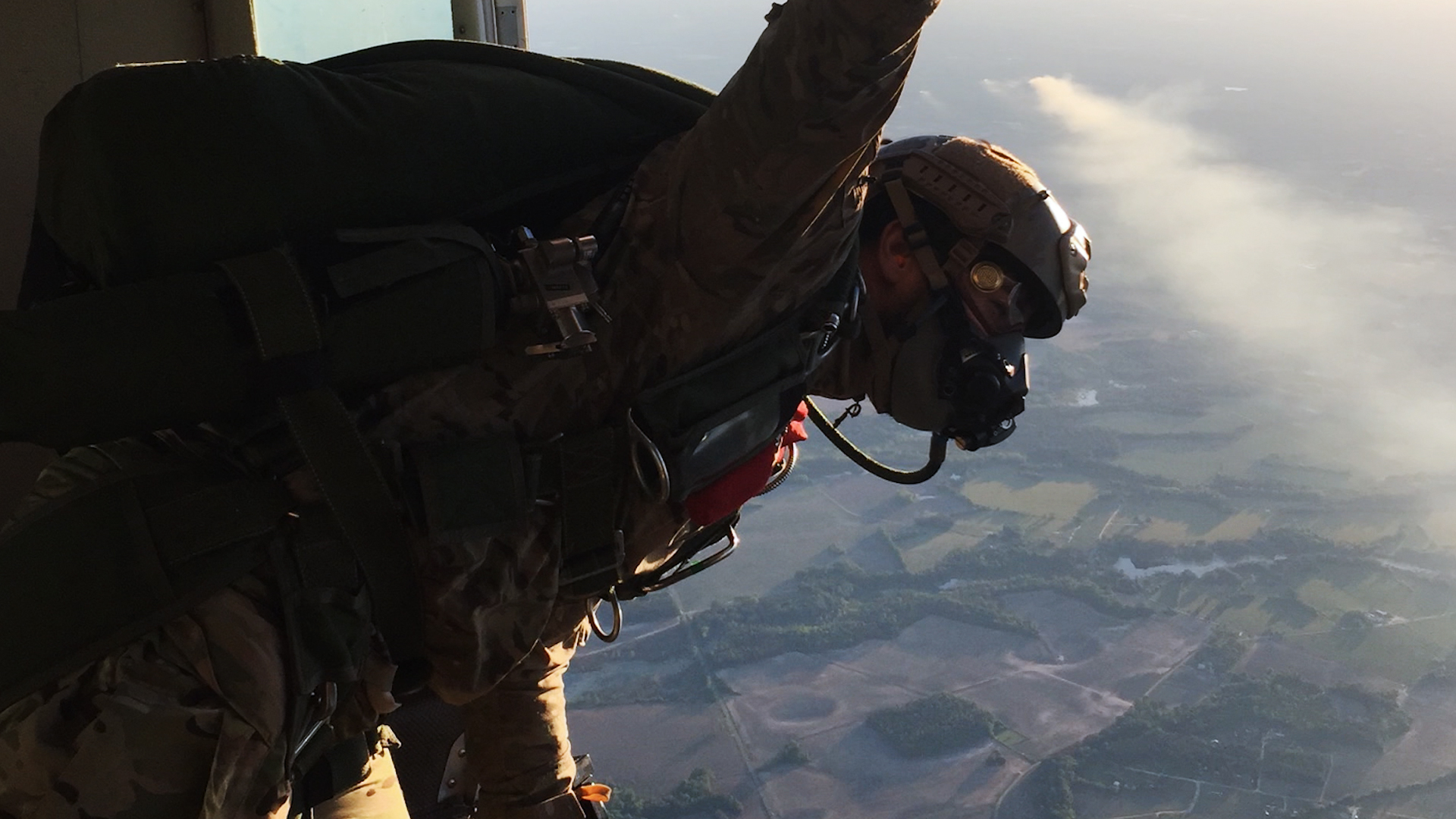
For over a decade, Nisbet was the one others called in their most critical moments.
“The Special Operations need to call 911 in some regard; we are that 911 service for them,” he explained.
As he risked his life to save others, however, the loss that came with the job piled up, and those effects surfaced each time he went home.
“I was okay getting shot. I could manage that. I can control my actions. What I could not control was my kids screaming and fighting with each other, and dealing with death all the time, I was always afraid that one of them was gonna get hurt so bad that they were gonna die, and because the other one was causing that,” Nisbet said.
His response was to lash out. That combined with other concerning behaviors led his wife Ashley to take action.
“After one particular evening of my kids screaming, me getting loud and aggressive, and coming downstairs feeling serious shame about what I just did, my wife came down and told me that, ‘Hey, I love you but…your boys are afraid of you,'” Nisbet shared.
“You don’t want to ever be scared of the person you love…I didn’t know how to have that conversation. How do you tell your husband, ‘You’re children are afraid of you?'” his wife Ashley explained.
Her courage to speak up, led Nisbet to realize it was time to seek help.
“Fortunately, we have those embedded resources within the squadron. So I was able to see the psychologist, ask some questions, do that cognitive test, and then sit with the therapist and talk about all the other things that piled up,” said Nisbet.
Access to that kind of support made all the difference. He began to see improvement, without having to give up his pararescue career. Then, in October 2019, a training mission ended in tragedy.
“The guy that was on the rope fell, probably he got about halfway down, so he fell about 30 or so feet. But Peter was doing what he was trained to do, and was tied into that anchor system itself. He was totally hooked in. So the weight of one of the guys falling pulled him off of the very top. And so I watched him slide by me and fly over,” Nisbet recalled.
After several resuscitation attempts, including Nisbet and first responders, his teammate Peter was pronounced dead.
“There was a police officer there, and he had been in the service before, he’d been a veteran himself. He said, ‘Hey, I have an American flag in my cruiser. Would you guys like to pin it on his body?’ And I said, ‘Yep,’ and I pinned on his body, and we saluted him as he was placed the ambulance. And I said, ‘This is the last flag I’m gonna put on my friend,'” Nisbet said.
“One of the most gut wrenching experiences I’ve ever had is being next to Steve when they brought Peter’s body home…I can’t hear taps anymore, because it brings me back to that day,” Ashley told CBN News.
For Steven, the grief turned inward.
“How do I get myself not feeling like the biggest failure on the planet, not feeling this depression, this guilt, this shame, this blame, everything you could possibly think of was what was going through my mind,” he said.
Nisbet pulled himself off the team and again took advantage of support services. Then, at Peter’s funeral, he saw something he couldn’t explain.
“Peter was a very well known Christian…seeing his family and the way they carried themselves…they have peace, and I don’t have peace. How do I get that peace…So one of my good friends who had retired out of that unit that I was at, he was a pastor, and I went up to him the next day and I said, ‘Will you teach me what Peter believed, help me believe, you have this one opportunity,'” Steven said.
Those interactions led to a turning point, bringing him back to a faith he’d walked away from. As Nisbet emerged from his shame and guilt, a new purpose emerged.
“I had the psychologist, the strength coaches, the dietitians, the physical therapist, anybody, any, any bit of care that I wanted…I started to realize, not everybody gets that…Those things, those tools, really gave me resources to prevent me from becoming a statistic, from taking my own life, and I knew that the first responder community didn’t get it, and I knew that the regular veteran, conventional veteran folks, didn’t get it,” he explained.
In 2021, after medically retiring from the Air Force with a Post Traumatic Stress Diagnosis, Nisbet launched Shields & Stripes. It’s a program providing veterans and first responders the kind of specialized care he’d received as an elite operator, while also including a spiritual component.
“So shields and stripes…on a biblical perspective…the ‘Shield’ represents the shield of faith, in protecting those around us. And then the ‘Stripes,’ represents, ‘by His stripes, we are healed,'” Nisbet said.
Participants accepted to the program receive three months of on-site treatment free of charge. They’re then discharged to continue working from home, while still having access to the program’s network. It’s a model Nisbet believes will save lives.
“If Peter’s accident didn’t take place, I wouldn’t, this organization would have never been found. This, I believe this, was our mission,” he said.
For Nisbet, the mission is different now but the focus remains the same, ‘That others may live.’
