


Reading Time: 3 minutes
A legal challenge to Virginia’s proposed abortion amendment is raising new questions about how abortion-related ballot measures are presented to voters. Pro-life organizations and medical groups argue that the amendment’s language obscures its full implications and could dramatically reshape abortion policy in the Commonwealth if approved this November.
This content is supported by your donations.
Give today.
From The Federalist:
Physicians and citizens are challenging the so-called “Right to Reproductive Freedom Amendment” through a lawsuit filed in Tazewell County Court, the same court that overturned Democrats’ attempt to illegally gerrymander this spring. The plaintiffs, the Association of American Physicians and Surgeons, Virginia Medical Freedom Alliance, and Meagan Kade, a councilwoman from Bluefield, Va., cite manipulative language and procedural issues, requesting the court void the results of the special election.
Considered one of the most extreme in the nation, the expansive amendment would effectively remove parental notification prior to a minor’s abortion, allow unlicensed “persons” to perform abortions without penalty, eliminate basic health and safety requirements at abortion facilities, and legalize abortion until birth in the Commonwealth.
…
The ballot measure asks whether the state’s Constitution should be amended to “protect the freedom to make personal decisions about prenatal care, childbirth, postpartum care, birth control, abortion, miscarriage management, and fertility care,” “protect doctors, nurses, and patients from being punished for these decisions,” and “allow for restrictions on access to abortion during the third trimester of pregnancy except when the patient’s health is at risk or the pregnancy cannot survive?”
The lawsuit centers on both procedural concerns and the wording voters will see on the ballot. Opponents argue that the amendment’s language fails to clearly communicate the breadth of the proposed constitutional change. Critics contend that terms such as “reproductive freedom” and “health” are left undefined, potentially creating broad legal interpretations that extend far beyond what many voters may assume from reading the ballot question.
The amendment became a top priority for Virginia Democrats after they secured control of the state legislature. Because Virginia requires constitutional amendments to pass in two separate legislative sessions before appearing on the ballot, Republicans were unable to stop the measure once Democrats gained unified control of the legislative process. The proposal is now headed toward a statewide vote unless legal challenges succeed in delaying or overturning it.
Supporters of the lawsuit point to a recent victory in the same Tazewell County court, where a judge blocked a Democrat-backed redistricting amendment over procedural concerns. That ruling was ultimately upheld after a series of appeals, leading some pro-life advocates to believe the abortion amendment could face similar scrutiny. Others, however, caution that overturning a ballot measure remains a difficult legal challenge, especially given the national trend of voters approving abortion-related amendments since the overturning of Roe v. Wade.
The outcome of this case could have implications far beyond Virginia. Across the nation, abortion advocates and pro-life organizations continue to battle over state constitutions, ballot initiatives, and the future of abortion law. This legal fight underscores the importance of praying for truth, clarity, and wisdom as voters consider issues involving the sanctity of life and the protection of both women and unborn children. Let’s pray that this amendment will be defeated in the courts!
Share your prayers for the unborn in Virginia below.
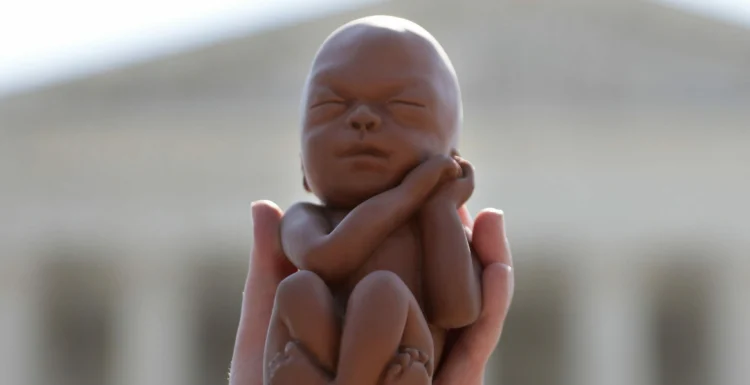
(Excerpt from The Federalist. Photo Credit: Alex Wong/Getty Images)
