


JERUSALEM, Israel
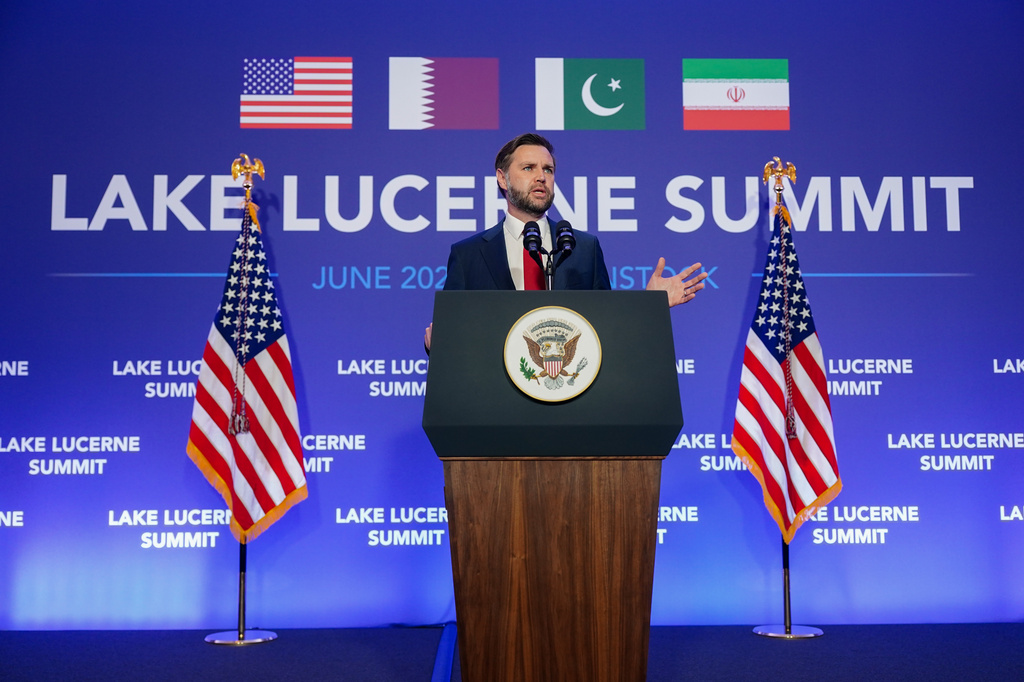
Vice President JD Vance headed home to the U.S. after the first round of talks with Iran seemed to end on a positive note, even as the issue of Hezbollah in Lebanon remains a sticking point.
Vance exuded optimism after meeting with Iranian negotiators on Monday.
“So, all in all, a very productive 36 hours,” Vance remarked. “We’re going to have to keep working on it…this is laying a foundation for what could be a truly transformed Middle East. But we haven’t built a house yet. We’re going to have to keep on building, and that’s what we’ll do.”
Vance emphasized the progress in the talks, saying, “Number one, we set up the mechanism to ensure, not only (that) the Straits of Hormuz are open, but will stay open. Number two, we actually set up the right mechanism to ensure the regional ceasefire, to manage the inevitable conflicts that will come up.
The vice president continued, “We have the Iranians allowing weapons inspectors, nuclear inspectors into their country for the first time in a long time. We’re obviously going to bolster those inspections, that inspection regime, to make sure they can never have a nuclear weapon.”
He noted that the Iranians are “confusing as negotiators.” Vance left team members behind to continue working on the technical negotiations.
Iran’s state media said on Tuesday that the technical talks had ended. Earlier, Iran’s foreign ministry spokesman claimed that Iran did not negotiate on its nuclear program or make any new commitments.
“Whether good faith or bad faith, you can’t trust anybody’s words. You have to trust what they actually do,” Vance observed. “And what the president has asked us to do is verify what they’re doing, focus less on what they’re saying.”
When asked, President Trump indicated that he’s more concerned with Iran not having a nuclear weapon than he is afraid of the effect on the economy.
“Well, nuclear weapon supersedes (a) depression,” the president declared. “Depression is real bad. Nuclear weapon will cause depression much more quickly. The way we’re doing it, we have the opposite of a depression. if Iran doesn’t live up to their agreement or if they’re not behaving, I will, I will do what I have to do.”
Canadian-Israeli billionaire businessman Sylvan Adams believes there is very little in the U.S.-Iranian memorandum that makes sense.
Speaking with CBN News, he asked, “And why would Trump capitulate on all of his prewar conditions? Why didn’t he prevent the bombing of Iran by agreeing to those Iranian terms?”
At the JNS International Policy Summit in Jerusalem, Adams told us his theory is that Trump had a busy summer ahead with his 80th birthday, celebrations for the 250th birthday of the United States, hosting the World Cup, and later, planning for the midterm elections in November.
“Trump clearly wants the price of oil to go down,” Adams said. “I think the idea is not to go into the midterms with economic turmoil. As we know, U.S. elections are decided on domestic things. So they’re not going to vote on foreign policy issues.”
He continued, “My theory is (he’s) taking a pause, taking his foot off the gas pedal, going into neutral, so that he can get through the midterms.”
Israeli President Isaac Herzog also spoke at the JNS Summit. He explained that from Iran to Lebanon to Gaza, Israel’s enemies are “seeking to rebuild,” and recent developments are generating serious concerns because Israel is in the line of fire.
“We are the ones being targeted by Iran’s empire of evil and its proxies,” Herzog told his audience. “Iran has been threatening to annihilate Israel for decades. Iran’s desire to become a nuclear threshold state is therefore a tangible threat to Israel and world peace and cannot be enabled.”
For Israel, the most immediate concern is Lebanon.
“The conflict in Lebanon should be resolved through negotiations between Israel and Lebanon, and not by Iranian extortion,” Herzog insisted.
*** Please sign up for CBN Newsletters to ensure you receive the latest news from a distinctly Christian perspective.***
Israeli and Lebanese delegations are scheduled to meet in Washington today to discuss the disarmament of Hezbollah and the possibility of normalization between the two countries.
One controversy is a de-confliction cell that the U.S. and Iran agreed would include Iranian, but not Israeli, participation. Israel refuses to leave southern Lebanon until the Lebanese government proves it can take control and disarm Hezbollah.
Prime Minister Benjamin Netanyahu issued a statement saying that Israeli soldiers have “full freedom” to thwart emerging threats to themselves or the residents of Israel.
He announced, “I stand firm that we will remain in the security zone in southern Lebanon for as long as necessary to protect the residents of the north and all citizens of the country.”
