


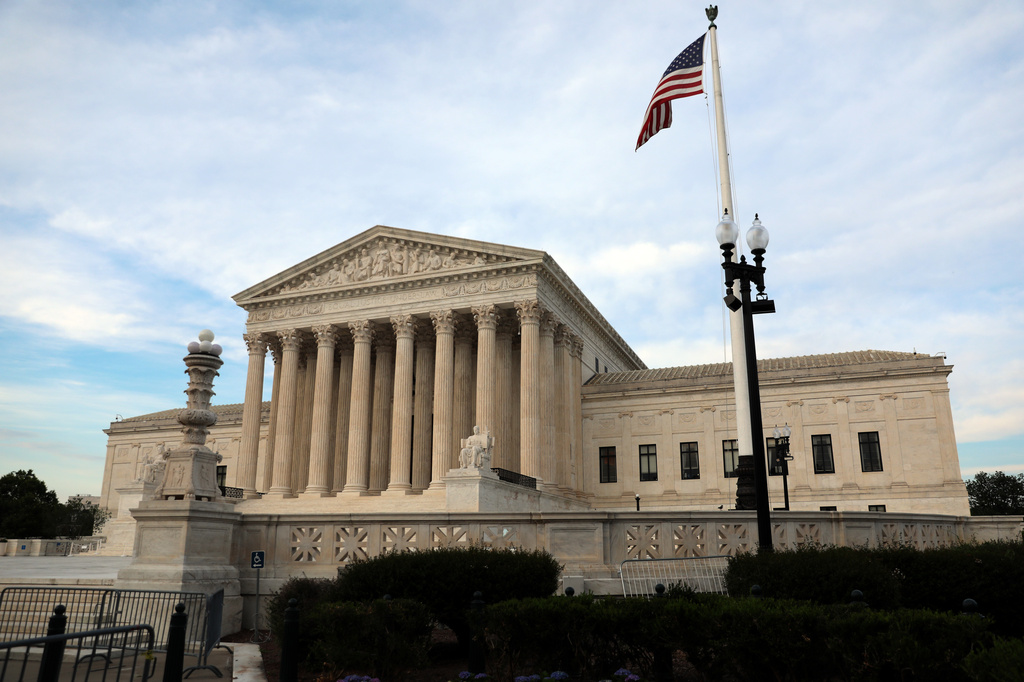
WASHINGTON – The Supreme Court issued a key decision on the issue of immigration on Thursday, ruling that the Trump administration has the authority to end Temporary Protected Status (TPS) for certain refugees living in the U.S.
The immigrants affected by this case were granted Temporary Protected Status under a law passed by Congress in 1990. The program allows the Homeland Security Secretary to let people from certain countries remain and work in the U.S. when conditions back home make it unsafe to return. That same law also gives the secretary the authority to end those protections.
“It gives people protection while the country’s in turmoil or after they suffer a hurricane,” explained Border Czar Tom Homan during a press briefing Thursday.
The Trump administration first announced its plans to end TPS for Haitians in the summer of last year, and for Syrians in the fall. Those decisions were put on hold by lower courts until Thursday’s Supreme Court ruling.
“The decision creates the type of panic, in a sense, that people in our community are wondering what the best action to do now,” said Viles Dorsainvil, who runs a support center for Haitians in Springfield, Ohio.
He and his wife are also now at risk of deportation.
“We are just TPS holders and asylum seekers. So, we’ll be relying on our asylum. We have our permit in the asylum, that we will continue to work. We will continue to do what we gotta do, but we don’t know how long,” Dorsainvil said.
Thursday’s ruling was 6-3, the majority saying Congress gave the Homeland Security Secretary broad discretion over TPS, including the authority to decide when to end it.
Justice Sonia Sotomayor strongly disagreed with the ruling, taking the unusual step of reading her dissent aloud from the bench. “The consequences of today’s decision are predictable,” said Justice Sotomayor. “More people will die.”
“More people will turn back and be subjected to violence because of something they cannot or should not have to change about themselves, such as their race, religion, nationality, or political opinion.”
Following her comments, Justice Samuel Alito, who read the majority decision, remarked that, had he known she planned to read her dissent from the bench, he would have said more in defense of the majority decision.
In a separate immigration case, the high court also ruled Thursday to allow the Trump administration to continue turning away some asylum seekers at the U.S.-Mexico border. A policy that has been used under both Democratic and Republican administrations.
