


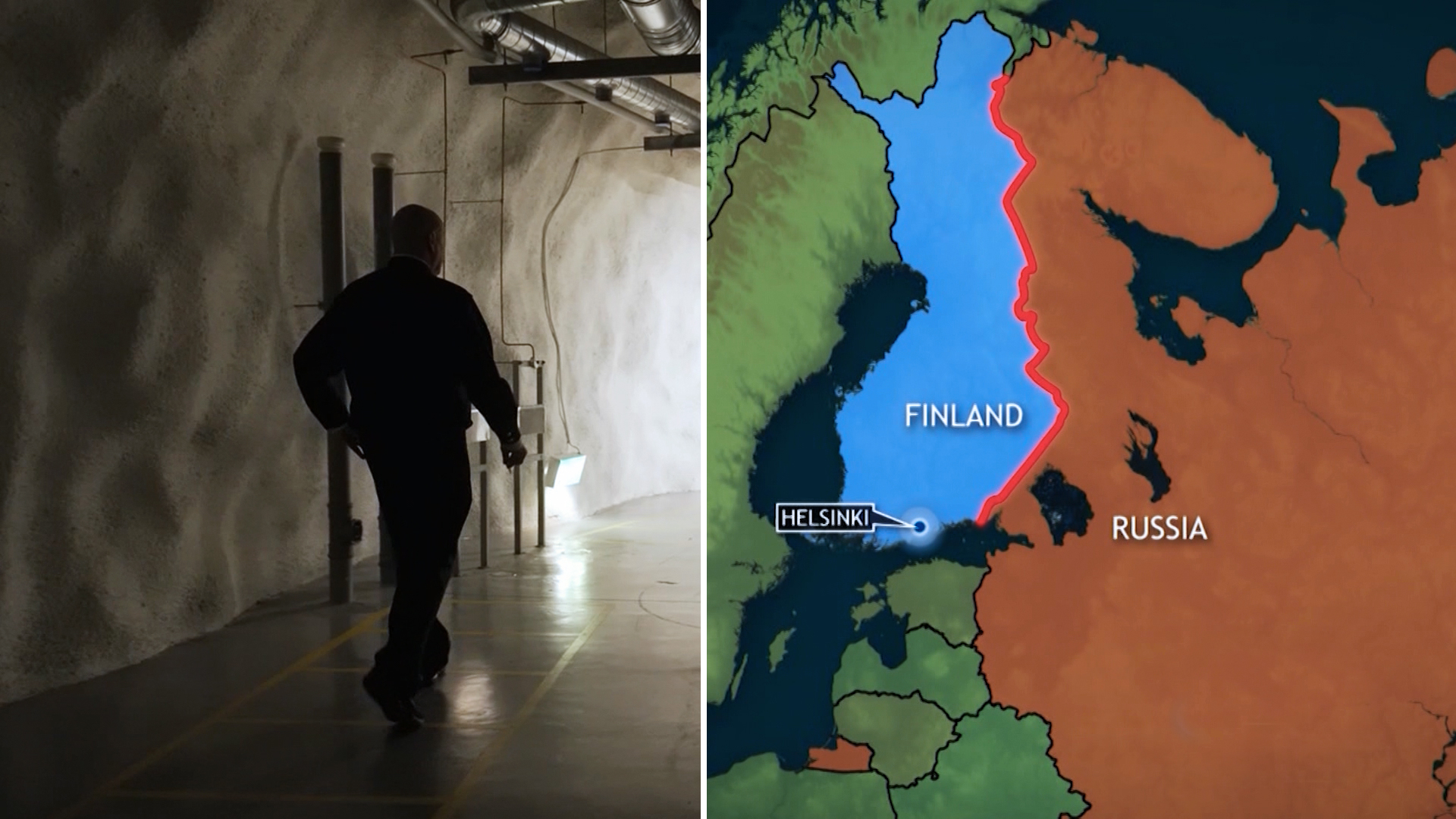
Given an 800-mile border with Russia and a history shaped by war, Finland has spent decades designing a culture to withstand crisis.
Beneath the streets of Helsinki, there’s an entire second city. Infrastructure currently used for daily life was built for the possibility of war. What, on the surface, may look like a metro station entrance actually leads to a bunker capable of housing thousands of people in case of emergency.
Until then, it’s put to use daily.
“People have learned to use also the underground premises and they know where the civil defense shelter in their own apartment building is, and people got used to it, so there is nothing traumatic about it,” explained Anna Lehtiranta, with the Helsinki City Rescue Department.
Finland is famous for the dual-use design of its emergency shelters. In peacetime, many operate as gyms, sports arenas, and even playgrounds.
“Preparedness is something that comes as a normal thing, it is in our genes, so we continue preparing ourselves for emergencies, even during the years of peacetime,” Lehtiranta told a CBN News team in Finland as a part of a recent media study tour sponsored by several NATO eastern flank countries.
This need to be prepared results from a long history with a difficult neighbor.
“We have (a) 1,200-kilometer-long border with Russia, and the Finnish history is about war. So, there’s been at least two wars during the century already, for as long as we can remember. So, Finland has learned to live and develop resilience in that kind of environment,” Lehtiranta explained.
Civil shelters are part of a much larger comprehensive security plan. One that calls for total involvement in the nation’s security and defense.
“We are a small nation, we need a strong defense, defense forces, but that’s not enough. So, what we decided is to have all the walks of society, all the sectors of the government, actually, joining the building of comprehensive security. It, for example, means we have civil society organizing, providing, defense training or defense understanding,” said Sari Rautio, Director General of the Euro-Atlantic Department at Finland’s Ministry for Foreign Affairs.
This approach reaches into each corner of society, including the classroom. Crisis preparedness, emotional resilience, and media literacy are built into Finnish grade school curriculum.
“(The) strongest part of our education is that you must generate your own opinion. So don’t rely on others’ opinion, you must generate your own opinion, and I think from young ages we focus on that,” a teacher from the Kivi Comprehensive School told CBN News.
Finns also contribute through military service. Under Finland’s conscription system, all men are required to serve, while women have the option to volunteer. The result is one of Europe’s largest reserve forces, with about 80 percent of the population ready to defend the country if needed.
Finland’s front line isn’t just on land; it also stretches across the critical waterways of the Baltic Sea. Along Finland’s southern coast, border guards monitor some of Europe’s busiest and most strategic waters.
Officials say the security environment has changed dramatically since Russia’s full-scale invasion of Ukraine. GPS interference, shadow fleet activity, and threats to critical undersea infrastructure have all become growing concerns.
“Whenever our boat units go for a mission, we need to be prepared that even during one single task, we might need to jump from a safety operation to use of law enforcement powers, like law enforcement operation or even for using military force,” Finnish Coast Guard Commander, Capt. Mikko Simola told CBN News.
For Finland, that quick adaptability is part of the broader defense philosophy. While officials see all of these efforts as important to national security, a key goal is a resilient population.
“You can see it in Ukraine, if people understand what they can do to improve their safety and security, and not only wait for the government to come in there, in their service, we can trust that the society as a whole can survive,” Rautio said.
As other countries look for ways to strengthen their own security, many are now studying Finland’s approach. Finland’s leaders say the lesson is simple: a country that prepares its people is better equipped to handle crises. And they believe that readiness, not only makes Finland more secure but it also makes NATO stronger as well.
