


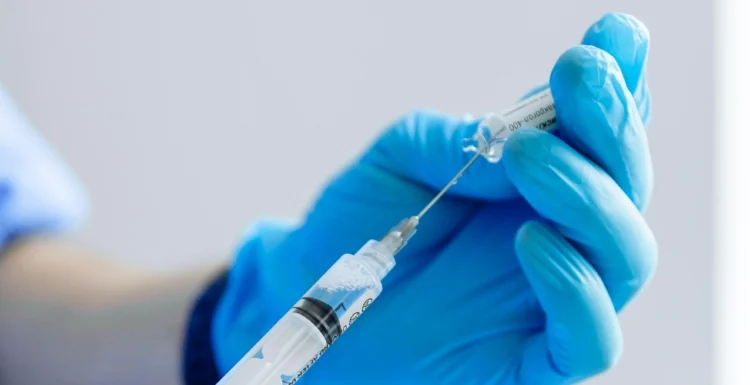
The Food and Drug Administration has approved the first-ever mRNA-based flu vaccine for adults aged 50 and older, despite trial data showing it produces severe, incapacitating side effects at more than six times the rate of traditional flu shots while preventing only one additional hospitalization per 5,000 doses. The approval has sparked fierce debate about whether pharmaceutical companies have recaptured regulatory control after the recent departures of officials who had demanded more rigorous evidence.
Visit your state page to pray.
Moderna announced the approval of mFLUSIVA late Wednesday, marking a controversial expansion of mRNA technology beyond COVID-19 vaccines. The decision comes six months after regulators initially refused to review the application, citing what they called substandard trial design. Critics argue the reversal signals a return to rubber-stamp approvals at an agency that briefly raised its standards earlier this year.
From Just the News:
MFlusiva, as Moderna calls the new product, requires 5,000 jabs to prevent one additional hospitalization over the old technology, based on an absolute difference of four hospitalizations between matched groups of 20,000 patients. Its rate of severe adverse reactions – “Grade 3” – is 6.4%, compared to 1% for an old flu shot.
The company’s Omicron-specific COVID vaccine three years ago also had an unusually high rate of Grade 3 events, 25%, which the National Institutes of Health defines as “incapacitating; unable to perform usual activities; requires absenteeism or bed rest.”
The formal approval didn’t appear on the FDA website until late afternoon Thursday – Just the News checked throughout the day – with every media and industry report citing Moderna’s 10 p.m. Wednesday announcement. It authorizes mFlusiva under two indications, the first for ages 50 and up and the second under accelerated approval for ages 65 and up. The latter requires Moderna to conduct a “postmarketing” randomized study to evaluate mFlusiva’s relative effectiveness versus a high-dose flu vaccine, which the FDA had asked Moderna to use from the start. The FDA didn’t answer a query through its media portal to explain why it approved the mRNA jab despite the mediocre trial results.
One pharmacologist reviewing the trial results called them not breathtaking. While the agency acknowledged the higher rate of serious injury from mFLUSIVA in briefing documents, it characterized the injuries as predominantly mild to moderate in severity and emphasized no association with heart inflammation, a chronic problem with mRNA COVID vaccines.
However, FDA staff expressed significant concerns about the breadth of evidence Moderna provided. The trial was limited to circulating strains in a single flu season, and the vaccine was not studied in immunocompromised patients or very frail older adults, precisely the groups most at risk from both flu and mRNA-related complications. Though the vaccine showed relative efficacy of roughly 27 percent for influenza-like illness and 48 percent for higher-level care compared to traditional shots, Moderna notably did not oversell the safety profile in its announcement, simply calling it acceptable.
The approval comes six months after then-Center for Biologics Evaluation and Research Director Vinay Prasad refused to review the application based on what he called substandard trial design. Prasad, an epidemiologist by specialty, insisted Moderna use a high-dose comparator for adults 65 and older rather than a standard-dose vaccine. Massachusetts-based Moderna, which made billions from federal taxpayers with its mRNA COVID vaccine, responded by threatening to take jobs abroad. The FDA agreed to review the application just one week later after the company agreed to meet previously stated requirements.
Prasad left the agency in April, followed by FDA Commissioner Marty Makary the next month, removing the two biggest advocates for higher drug approval standards. Both had been targeted by what observers called factually challenged whisper campaigns laundered through the media, including a false sexual harassment claim The Wall Street Journal took three weeks to correct. Former New York Times drug industry reporter Alex Berenson wrote in his newsletter that the approval shows pharmaceutical companies have finished recapturing the FDA, adding that there was no chance the agency would say no to this vaccine once the administration reportedly forced Prasad out. Berenson had earlier flagged what he called the vaccine’s comically bad risk-benefit ratio when trial results were published, noting that had Moderna tested the shot against a placebo, the side effect profile would probably be even worse.
The approval arrives amid sweeping leadership changes at federal health agencies. Dr. Erica Schwartz was confirmed as the new Centers for Disease Control and Prevention director in a party-line vote, becoming the first permanent leader in nearly a year. All but three Republicans voted for Dr. Schwartz despite her role in threatening to have service members prosecuted for refusing vaccine mandates during the first Trump administration, while only one Democrat voted for her. Two Republicans voted absent on the confirmation: vaccine safety advocate Sen. Ron Johnson of Wisconsin and retiring Sen. Thom Tillis of North Carolina, while Sen. Mitch McConnell of Kentucky is away on medical leave. Dr. Schwartz replaced Susan Monarez, who was reportedly removed from her post following an alleged disagreement with Health and Human Services Secretary Robert F. Kennedy Jr. over vaccines.
Secretary Kennedy has redirected approximately $500 million designated for mRNA vaccine research toward traditional vaccine platforms, signaling a significant policy shift in vaccine development priorities. The Senate Permanent Committee on Investigations, led by Sen. Johnson, has previously exposed COVID-19 vaccine injuries that were allegedly masked in government surveillance databases at the behest of the Biden administration. The Trump administration’s health regulators have given the panel a new opportunity to investigate vaccine safety.
Recent weeks have brought several major vaccine-related developments into the public spotlight. In late July, Secretary Kennedy alleged that Dr. Anthony Fauci, the former Director of the National Institute of Allergy and Infectious Diseases and Chief Medical Advisor to former President Joe Biden, suffered an adverse event after receiving a COVID-19 vaccine in January 2021. Kennedy stated that Fauci experienced a pulmonary infarction five months after vaccination, which Kennedy described as one of the adverse events acknowledged by federal health agencies as expected from the vaccine. This allegation surfaced roughly a week before the Senate Homeland Security Committee voted to hold Fauci in contempt of Congress after he invoked the Fifth Amendment 111 times during testimony, refusing to answer even basic questions.
For Christians committed to stewarding their health and seeking wisdom in medical decisions, the approval of this new vaccine technology invites prayerful discernment. The tension between innovation and caution, between regulatory approval and public trust, and between scientific advancement and accountability reflects deeper questions about who holds authority over our bodies and how we navigate complex decisions in a fallen world. Scripture calls us to be wise as serpents and innocent as doves, to test all things and hold fast to what is good. As federal health agencies undergo leadership changes and policy shifts, believers have an opportunity to pray for leaders who will pursue truth, transparency, and the genuine well-being of the American people. The controversies surrounding vaccine development, adverse events, and accountability demand that we remain informed, ask hard questions, and seek the Lord’s guidance in decisions that affect our families and communities.
How are you praying for transparency and accountability in federal health agencies? Share your prayers and scripture in the comments below.
(Excerpt from The National Pulse and Just the News. Photo Credit: vaccine shot syringe by Elen Sher on Unsplash)
