


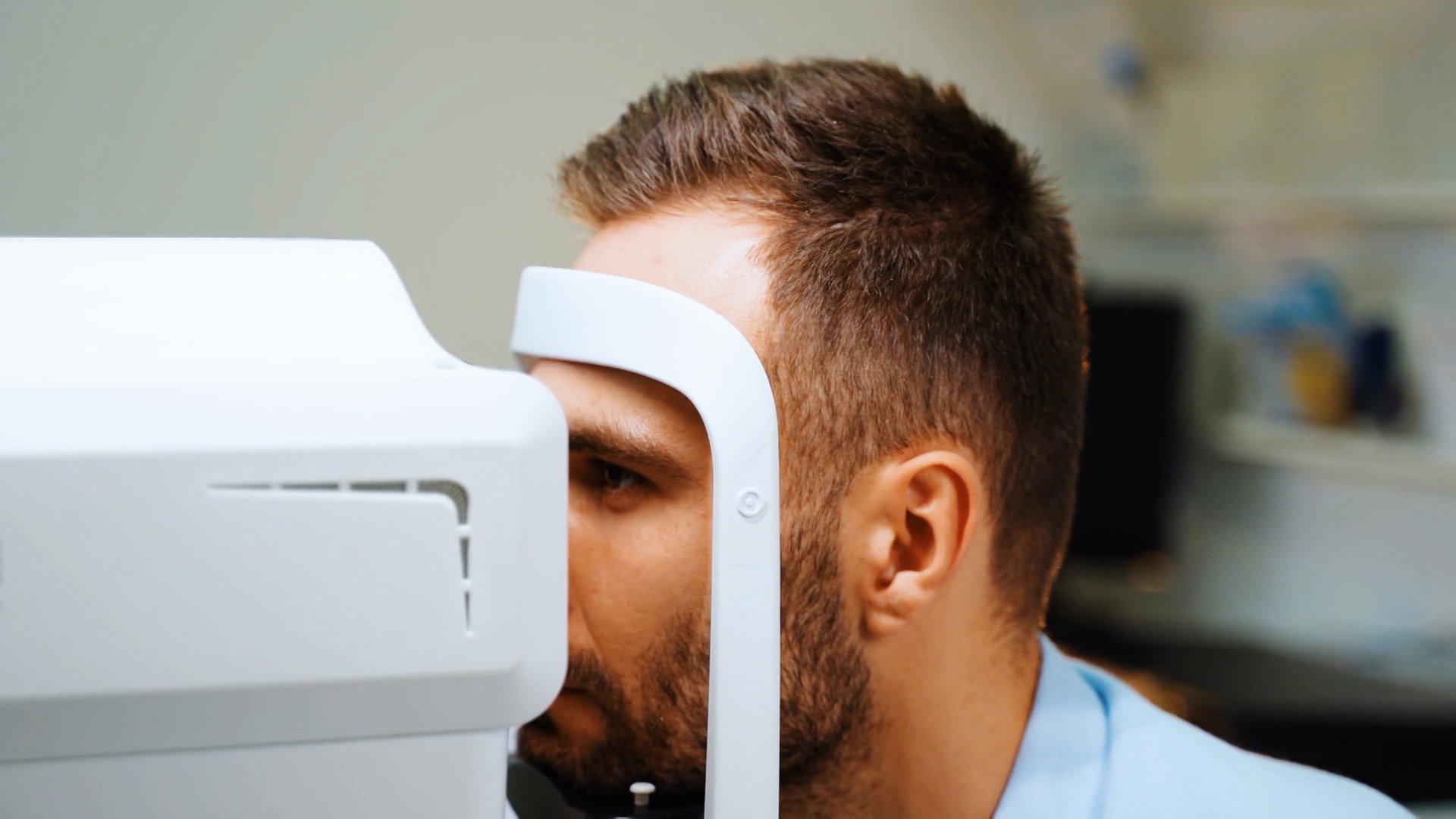
Of the nearly 40 million Americans diagnosed with diabetes, about half will develop diabetic retinopathy, which can lead to blindness and other eye injuries. But there are steps you can take to help prevent this outcome, if you act before it’s too late.
A big part of the problem is the silent nature of diabetic retinopathy. Often, by the time symptoms develop, significant damage has already been done. The good news is there are ways to detect it early, before symptoms arise, and treat it before it gets too bad.
Like millions diagnosed with diabetes, Kelsey Larson started noticing vision problems that worsened over time. “Well, it started out as floaters; it looked like I had a spider web floating in and out of my vision,” she said.
In addition to floaters, Kelsey experienced other common diabetic retinopathy symptoms like blurred vision, darkness in the field of vision, and worse.
“And then eventually I couldn’t see anything in my left eye. I still had vision in my right eye, but then I started having spider web floaters in my right eye,” he recalled.
Kelsey visited retina specialist Dr. Geoffrey Emerson.
“Diabetes injures the retina, and the retina is a very important light-sensitive tissue at the back of the eye,” Dr. Emerson said.
Chronic high blood sugar can weaken blood vessels, causing bleeding, lack of oxygen, and more. People diagnosed with type 1 and type 2 diabetes are at risk of developing diabetic retinopathy. That risk increases the longer people live with their diabetes.
“Thanks to research, there are a lot of great treatments. They fall into three main categories: there are eye injections where we put medicine into the eye, there’s also laser treatment, and there’s surgery,” the specialist explained.
Dr. Emerson treated Kelsey with all three and restored his vision. “I can work, I can ride my motorcycle, drive a car, do most of the things I normally did in life.”
Dr. Emerson continues to give Kelsey injections, using a local anesthetic, to help control the ongoing risk of his progressive condition.
“It’s humbling to be a retina specialist because we can’t fix everything. But it’s also quite a privilege to work with my patients who are scared in the beginning but we can really help them lead functional lives and see for their lifetime,” he said.
Doctors recommend early detection so treatment can potentially stop it.
So if you have diabetes, and you can’t remember your last eye exam, you should get one. And if you have diabetes and you’re starting to get vision problems, you should see a retina specialist.
In addition to medical interventions, controlling blood sugar, blood pressure, and cholesterol can also reduce the risk of vision loss.
