

For years, the words “pastor” and “political candidate” in the same sentence tended to describe a Republican. This year is different, with more than a dozen faith leaders running as Democrats for federal and state office, far more than in previous elections.
At least a half-dozen ordained clergy have made it through the primary onto congressional general-election ballots.
“I’m Lindsay James. I became a chaplain to serve people in their hardest moments,” said Democratic congressional candidate and Presbyterian Minister Lindsay James in one of her Iowa campaign ads.
“In scripture, it’s taught to be quick to listen and slow to speak. Well, Congress could stand to hear a verse or two,” said Democratic congressional candidate and Lutheran Minister Sarah Trone Garriott in her campaign ad in Iowa as well.
Two other specific Democrats stand out. The first: Texas Senate candidate James Talarico. While he’s not ordained, as a Presbyterian seminary student, he’s openly and frequently mixing his faith with politics.
“As Christians, we’re supposed to follow the two commandments that Jesus gave us. Love God and love neighbor,” he told a church congregation. “So many of my colleagues in the Texas Legislature are focused on the ten that they forget about the two.”
Another candidate, Pastor Adam Hamilton, is running for Senate in Kansas and surprisingly making it a close race in a very conservative state. Hamilton doesn’t shy away from the pastor label either.
“I pray for the Holy Spirit to fill me, for me and lead me,” he said on a recent podcast. “I read scripture every morning when I start the day and I say help me to live this and throughout the day I try to pay attention and try and follow Jesus as best I can as I see him in the gospels.”
The Democrat strategy seems pretty clear: reclaim some religious territory after decades in which conservative Christians — specifically white evangelicals — have voted overwhelmingly Republican. Nathan Gonzales with Inside Elections sees another factor at play.
“These candidates can portray themselves as outsiders,” Gonzales tells CBN News. “They are not typical politicians. That’s the framing. We’re in an environment where politicians and government, people are skeptical and don’t trust them. So if you have something on your resume that is not a typical politician, then Democrats want to highlight that.”
Tables have turned so much in Kansas that Republicans are using attack ads to go against the Democrat pastor. Hamilton’s opponent, Senator Roger Marshall, is calling Adam Hamilton a “woke mega-church CEO.”
“I don’t think I’ve ever seen mega-church used in an attack, and I know when I talk to Democrats, they are like, ‘yeah, make sure they know he’s a pastor connected to a church,'” Gonzales said.
There is another part of this story. The theology often preached produces quite different political positions than those of conservative evangelicals, especially on issues such as abortion, immigration and Israel.
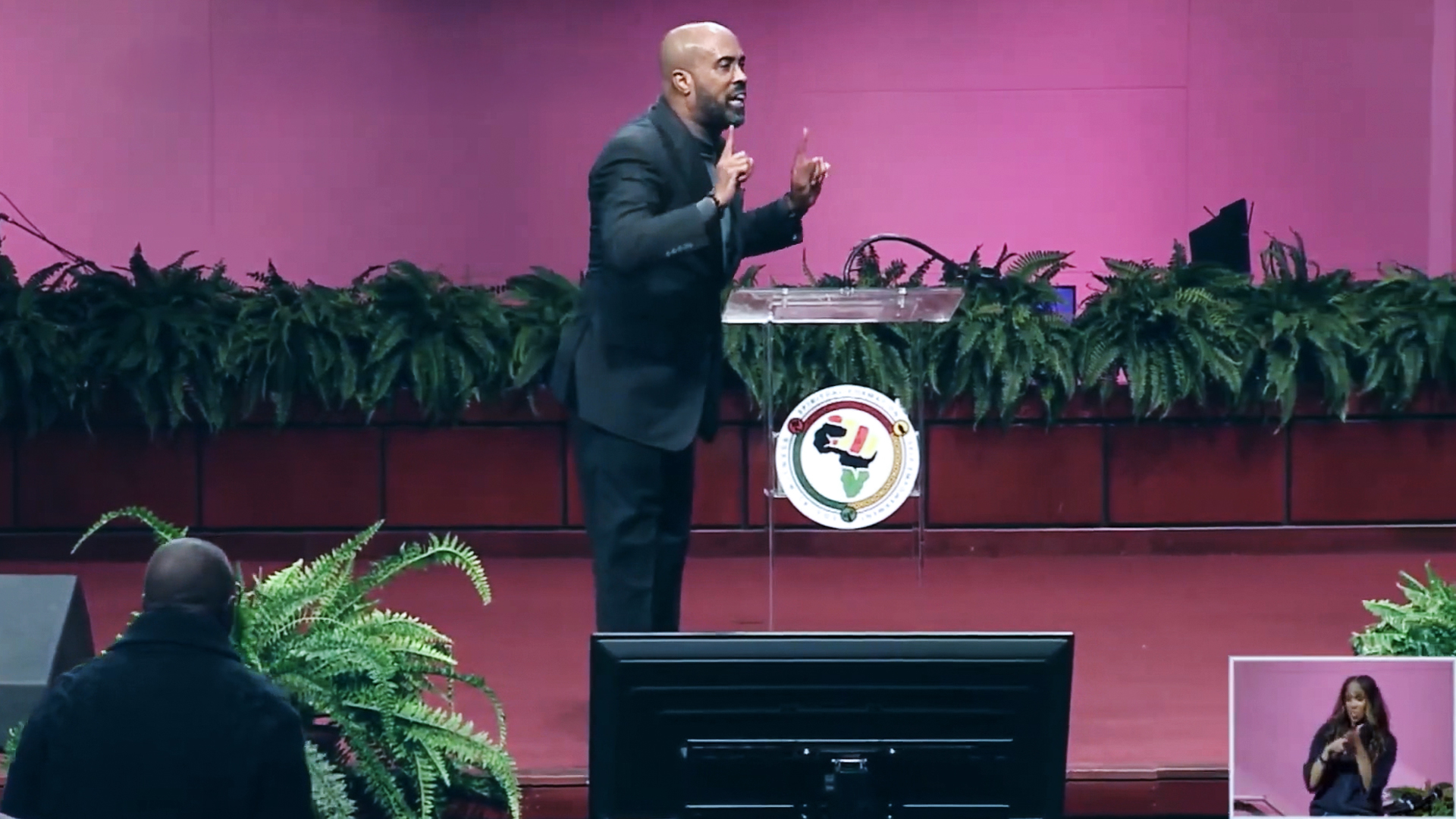
Dallas Pastor Frederick Haynes, the Democrat nominee in a heavily blue-leaning Texas House district, has been sharply critical of Israel. “Israel is engaging in apartheid with Palestinians,” said Haynes, pastor of Friendship-West Baptist Church.
So this clearly is not evangelical politics with a blue bumper sticker. It’s progressive Christianity, moving from the pulpit to the ballot box. In a way, it resembles former President Obama’s faith rhetoric from nearly twenty years ago when he won the 2008 election. This November, we’ll find out whether voters are ready to say amen to this approach.
Please sign up for CBN Newsletters and download the CBN News app to ensure you receive the latest news from a Christian perspective.
