


Week 4 Love
Children Behind the Walls: From Herod to ANAR
Bethlehem Is Not a Storybook: An Advent Journey Toward Peace
“A voice was heard in Ramah, weeping and great mourning, Rachel weeping for her children and refusing to be comforted, because they are no more.” Matthew 2:18
Bethlehem Then and Now: The Hidden Half of Christmas
Bethlehem. The name still sounds like music when spoken aloud, soft as a lullaby, ancient as stone. We picture the manger, the shepherds, and the newborn light resting in Mary’s arms. But if you walk through Bethlehem today, the air tells another story. The walls rise high now, concrete slabs lined with razor wire, crowned with watchtowers. Streets are choked with traffic, soldiers, and concrete barriers. The hills once open to shepherds are now split by fences and checkpoints.
And yet, in December, the lights still go up. Children still sing. The Star of Bethlehem still hangs above Manger Square. It all looks familiar until you drive toward the northern edge of the city and see the separation wall, that gray scar curling like a serpent around the town that gave the world peace.
Beneath the carols, there is another sound, the silence that fell when soldiers came for the children.
The massacre beneath the manger
The Gospel of Matthew tells it simply, almost quietly:
“When Herod saw that he had been tricked by the Magi, he was enraged, and he sent men to kill all the boys in Bethlehem and its vicinity who were two years old and under.” Matthew 2:16
We rarely linger on that verse. The page turns too quickly to Egypt and escape, to gold and myrrh, to light again. But Bethlehem’s story begins with blood. The angel’s “good news of great joy” was followed by the tramp of soldiers’ boots.
Imagine the narrow streets filled with shouts, the small houses broken open in the night. Mothers clutching children, fathers pleading, soldiers who had done this before, men hardened by orders, carrying out Herod’s rage with practiced precision. But this time was different. These were not rebels or bandits. These were babies.
Bethlehem was small, a village of perhaps a few hundred souls. Everyone would have known one another. The loss of even a few children would have touched every family, every field, every fire circle at night. The innkeeper who turned Mary and Joseph away would have lost someone too, perhaps his own grandchild. The shepherds who first heard the angels may have buried their sons. The wailing that followed was not the sound of one house, but of a whole town broken open.
Matthew tells us that this was the moment when an old prophecy came true:
“A voice was heard in Ramah, weeping and great mourning, Rachel weeping for her children and refusing to be comforted, because they are no more.” (Matthew 2:18)
Rachel’s cry is the sound of every mother who has ever waited for a child that will not return. It is the echo that still lingers in Bethlehem’s hills. But even Rachel’s cry is not beyond Love’s hearing. The God who entered her sorrow still listens through every mother who weeps today.
Herod’s shadow
Herod’s violence was not an accident of history; it was the logic of empire. Empire always fears the power of Love, for Love needs no army, and yet it topples thrones. The birth of a child who could grow to challenge authority was intolerable to a ruler who built his reign on control. Herod’s hands had long been stained with blood. He had executed his own sons and wife for threatening his throne. But in Bethlehem, his cruelty reached its purest form: the slaughter of the innocents.
This was the first act of state terror in the story of Jesus. And the Gospel does not flinch. It wants us to see that the kingdom of God was born in a world where children’s lives were expendable. Empire has always known that the surest way to break a people is to harm their young to cut off their future and seed their parents’ hearts with fear.
That is what Herod did to Bethlehem. It is what empires still do.
The forgotten verse of Christmas
Centuries later, English villagers wrote a song for the babies of Bethlehem, the Coventry Carol. It is a mother’s lullaby for the child she cannot save:
Lully, lullay, thou little tiny child,
By, by, lully, lullay.
It is one of the most haunting melodies in the Christian tradition, a lament hidden inside the season of joy. Few remember its words, fewer still sing them, but they belong beside “Silent Night.” They are the soundtrack of the other Christmas, the one that unfolds in shadows.
When we light candles and sing of peace on earth, we rarely remember that the first Christmas began in flight and fear. Joseph, Mary, and the infant Jesus fled by night to Egypt. They became refugees. And somewhere behind them, in the same hills where shepherds had once rejoiced, soldiers were still moving from house to house.
Bethlehem’s children died in the wake of Christ’s birth, and we cannot separate that grief from the glory. The Incarnation did not bypass human suffering; it entered straight into it. God did not appear in a palace, or even a safe neighborhood. God came as a child into a town under empire, into a world that responds to new life with fear and control.
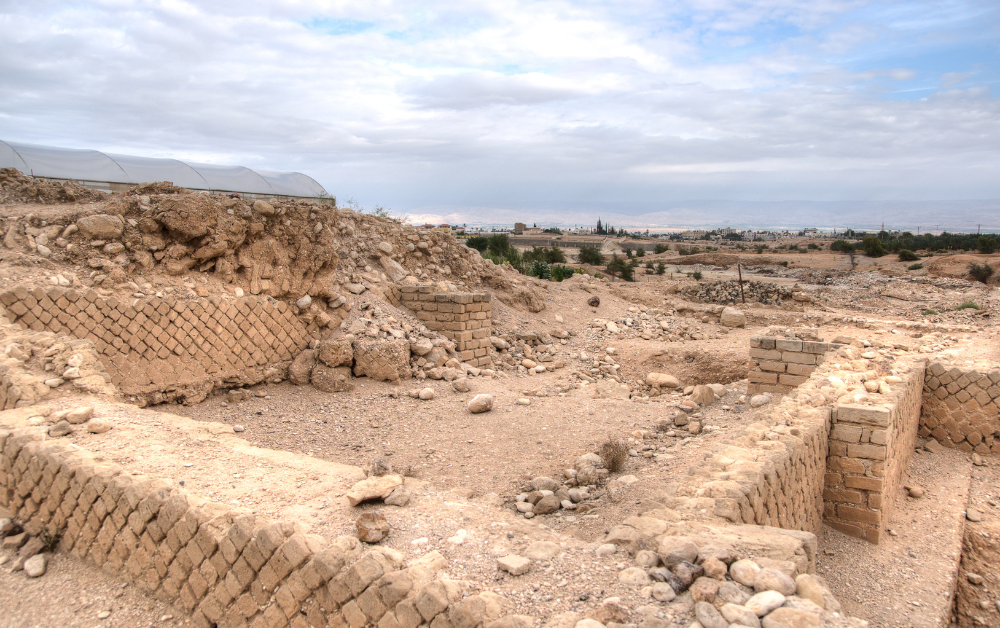
Two thousand years later, Herod’s fortress still stands in ruins on the Judean hills, but his logic endures. Bethlehem’s children still grow up under foreign control. The soldiers still come at night, now in armored jeeps instead of sandals, now carrying rifles instead of swords. Walls and checkpoints have replaced spears and chariots, but the purpose is the same: to maintain order through fear.
Every Christmas, the world looks toward Bethlehem to celebrate peace. But for those who live there, peace remains on the other side of the wall. And this is the miracle: the people still sing. They still light candles. They still teach their children to hope.
Bethlehem’s story begins in both cradle and cross. It is the place where joy and sorrow meet, where glory and grief share the same sky. To understand Christmas truthfully, we must hear not only the angels’ song, but also the mothers’ cry.
For if the Incarnation means anything, it is that God chose to be born where children die and where mothers weep.
Aida Refugee Camp: Life Between the Walls
I loved watching the children in Aida Camp. No grass, only broken blacktop and a trickle of sewage. Yet there they were laughing, selling bottles of water, chasing a ball between cars.
Above them, the wall towered gray concrete rising thirty feet high. Murals of children covered it, their faces tender and solemn, each with a name. These were the ones killed in raids, struck by tear gas canisters, shot on the way to school. The walls of Aida remember.
Huge iron gates puncture those muraled walls that open without warning when the army enters. Mothers count the seconds between the clang of metal and the shattering of glass. “They come for the boys,” one man told me. Children as young as twelve disappear into military vans.
And yet, amid the fear, Love paints murals where bullets once struck. It builds libraries in the shadow of watchtowers. Up a narrow staircase above a shop, a small library glows with rainbows and picture books. Volunteers greet visitors like sunlight. “Here,” one says, “the children can be children.”
Down the street, the theater center hums with life. Children write plays, paint scenery, build puppets. Their art is defiance, the resurrection of imagination in a world designed to suppress it.
This is what sumud looks like: steadfast Love that refuses to give up its humanity.
ANAR: Re-Childing as Resurrection
Just beyond the wall, in Beit Sahour, love has organized itself into healing. ANAR, Anar for Empowerment and Psychosocial Support, was founded by Rami Khader to restore what occupation steals: imagination, play, and community.
Through theater, storytelling, and art, ANAR helps children who have lived through raids, imprisonment, or loss to become children again. They call it re-childing: the practice of giving back what empire tried to take.
Their creative program invites children to write and perform their own stories. A teacher told me, “At first they draw soldiers. Then, after a while, they start drawing trees.” That is how healing begins.
Parents attend workshops. Teens mentor younger ones. Elders cook meals for everyone. Healing is communal. This is sumud, steadfast Love that stays.
One volunteer calls it the resurrection moment, the first time a traumatized child laughs out loud again. That sound is Easter breaking through the concrete.
Herod sent soldiers to kill the children. ANAR sends teachers to restore them. Where empire builds walls, sumud builds community. Where fear silences, Love listens.
Herod is gone. Love remains. And in ANAR’s classrooms, that Love has learned to draw and dance again.
The Gospel According to the Children
The story of Jesus begins and ends with children. It opens with a birth that terrified a king and ends with a command to welcome “the least of these.”
The first martyrs were children. Before crosses and creeds, there were the baby boys of Bethlehem, the first to die for the Christ they never met. Their only “crime” was existence. The soldiers who killed them were not monsters; they were obedient men.
When Jesus grew, He put a child in the midst of His disciples and said,
“Unless you change and become like little children, you will never enter the kingdom of heaven.” (Matthew 18:3)
He was not romanticizing innocence. He was revealing the heart of God. Children are what we lose when fear teaches us to control.
In Aida and Beit Sahour, I have seen the gospel rewritten in crayon. Blessed are the storytellers, for they will be heard. Blessed are the teachers of color, for they rebuild the rainbow. Blessed are those who dream while detained, for they will write new songs of freedom.
Re-childing is resurrection, Love returning to where it was crucified. Palestinian children are teaching us what incarnation means: not theory, but presence; not sentiment, but steadfast Love.
The Christ Child lives in Bethlehem still, behind the walls, laughing, drawing stars no checkpoint can erase.
An excerpt from the book, “Bethlehem is not a Storybook, Learning to Listen: A Journey Toward Peace” by Lani Lanchester to be published in 2026.
Advent Practices (Do one today)
- Stand with the Children. Support an organization like ANAR, Defense for Children International–Palestine, or Dar al-Kalima University that restores hope through art and education.
- Listen Before You Speak. Invite a story from someone whose suffering you’ve only seen from afar: a refugee, a neighbor, or a colleague carrying quiet pain. Love begins with listening.
- Light a Candle for the Unseen. When you light your Advent candle of Love, pray for mothers who grieve in Gaza, Bethlehem, Ukraine, and your own city. Love is the light that refuses to go out.
Advent Discussion Questions
- Where would Jesus be born today if the Incarnation happened again? Would we recognize Him behind a wall, in a tent, in a refugee mother’s arms? What might it mean for us to welcome Him there?
- How does our celebration of Christmas change when we remember Rachel’s cry? How can lament become a form of faith, a refusal to accept a world where children suffer for the sake of order?
- What does it mean to practice sumud, steadfast love, in our own context? Where are we being called to stay, to serve, to love without giving up until children everywhere can laugh without fear?
