


A French woman and an American have tested positive for the hantavirus as nations around the world begin repatriating and quarantining passengers from a cruise ship hit by a deadly outbreak.
The passengers who were on the Dutch cruise ship MV Hondius during the rare hantavirus outbreak are being monitored for now.
French Health Minister Stephanie Rist said Monday that one infected woman was among five French passengers repatriated to Paris on Sunday. The woman’s health worsened while she was cared for at a French hospital overnight. Rist said the patient reportedly didn’t develop symptoms until she was on the flight home to Paris.
One of the 17 American passengers evacuated from the ship and flown to Nebraska also tested positive for the hantavirus but is not showing any symptoms, and another had mild symptoms, U.S. health officials said late Sunday.
The Americans are first being taken to a federally funded quarantine facility at the University of Nebraska Medical Center.
The former MV Hondius passengers are returning home to more than 20 countries. The World Health Organization has recommended close monitoring, and many countries have already quarantined them.
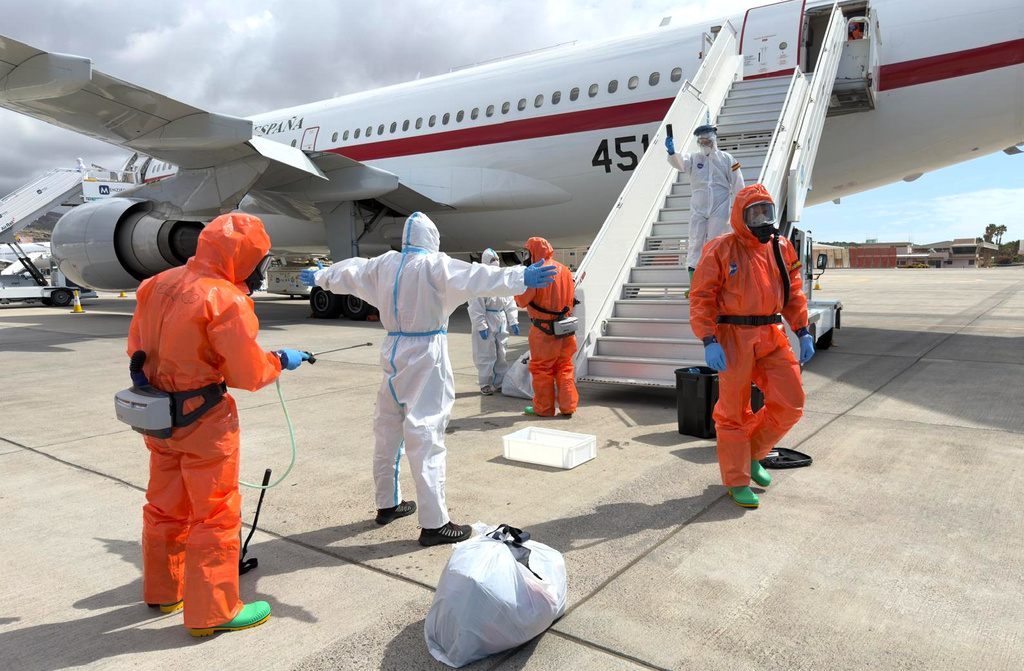
Passengers began flying home aboard military and government planes on Sunday after the ship was anchored in the Canary Islands, where they could be disinfected and monitored by personnel in full-body protective gear.
This is the first-ever outbreak of the rare hantavirus on a cruise ship. Three passengers have died, and six people have been infected, but health authorities stress that the risk to the broader public is low because it is not easily transmitted between humans.
WHO Director-General Tedros Adhanom Ghebreyesus said Sunday that the general public should not be worried about the outbreak. “This is not another COVID. And the risk to the public is low. So they shouldn’t be scared, and they shouldn’t panic.”
The Hondius left the southern Argentine port of Ushuaia on April 1, and a Dutch passenger died on board on April 11. It wasn’t until early May that the World Health Organization said it was reacting to a suspected hantavirus outbreak as the ship neared the West African island nation of Cape Verde.
Hantavirus usually spreads from rodent droppings, but the Andes virus detected in the cruise ship outbreak may be able to spread between people in rare cases. Symptoms – which can include fever, chills and muscle aches – usually show between one and eight weeks after exposure.
