
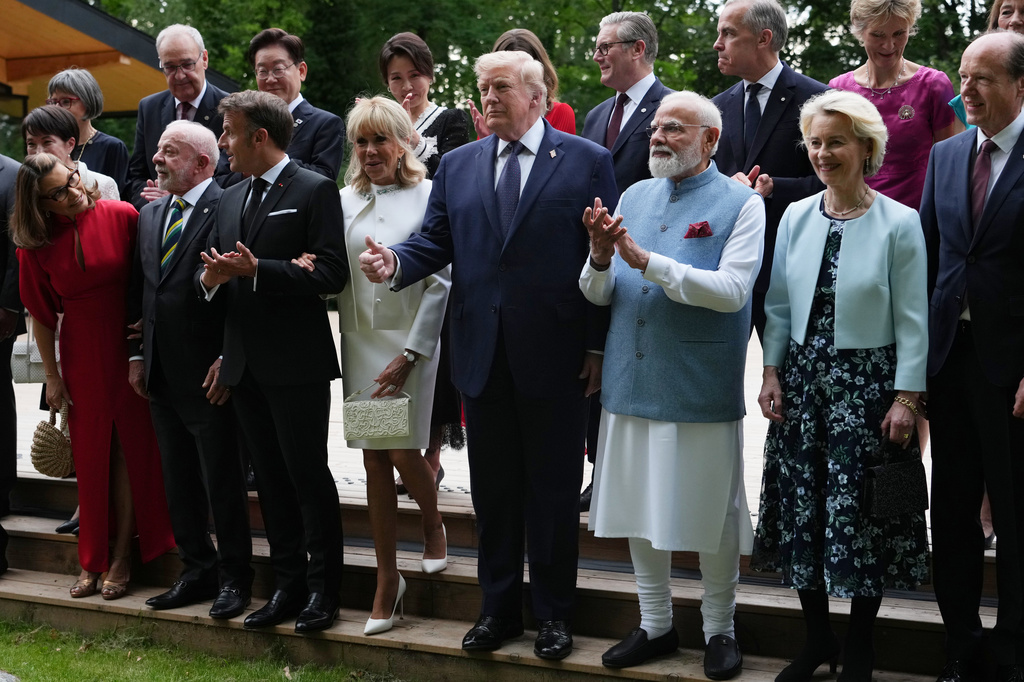
JERUSALEM, Israel – Questions are growing about President Trump’s newly announced agreement with Iran. While the White House claims the deal will reopen the Strait of Hormuz, critics are concerned about what exactly is contained in the Memorandum of Understanding.
Lawmakers are pressing for more details on the M.O.U. President Trump announced the strategic Hormuz waterway will reopen, and speaking alongside the president of the United Arab Emirates, he praised the Gulf ally and predicted a brighter future for the region, while promising the Strait of Hormuz would be fully operational by Friday.
“This country was very, very, a very powerful ally, and good things are happening. The ships are starting to move now. We’re going to have it fully open by Friday,” Trump declared.
However, despite the optimism, some senior administration officials remain skeptical. According to Axios, Secretary of State Marco Rubio, Secretary of War Pete Hegseth, and C.I.A. Director John Ratcliffe have all expressed concerns about the M.O.U.
The reported deal would require Iran to eliminate its nuclear program, but intelligence assessments reportedly raise doubts about whether Tehran will follow through. That skepticism is fueling calls to release the full text of the agreement.
Speaking on Fox News, Gen Jack Keane, U.S. Army (Ret.), stated, “Let’s release it and let people see what’s out there so we stop debating about something none of us has seen.”
President Trump now says he’s open to doing just that, sending the M.O.U. to Congress for lawmakers to review.
“I never thought about sending it. Never even thought about it, but I will. I will send it to Congress. I like the idea,” the president said.
On Capitol Hill, lawmakers expressed cautious optimism.
Sen. Lindsey Graham (R-South Carolina) remarked, “I’m confident that President Trump won’t sign a bad deal. … Once the M.O.U. has actually been released, we can all look at it. I think that will be helpful. … My skepticism is Iran itself. What would a good deal look like? ”
Yet, some in Congress remain unconvinced that Iran will keep its word.
Sen. John Kennedy (R-Louisiana) noted, “Iran is run by religious zealots. They learn to lie before they learn to talk, and you can’t trust them.”
***Sign up for CBN Newsletters and download the CBN News app to ensure you receive the latest updates from a Christian perspective.***
Meanwhile, Iran is offering its own view of what it will take to end the conflict, tying any lasting agreement to ending Israel’s campaign against Hezbollah in Lebanon.
Iranian Foreign Minister Abbas Araghchi announced, “From our point of view, one side is the United States and Israel. On the other side is Iran and Hezbollah. … Without the withdrawal of Israeli forces from the territories they occupied during this war, the war has not fully come to an end.”
U.S. Ambassador to Israel Mike Huckabee posted that “Israel doesn’t need Iran’s permission to defend itself.”
The Embassy of Israel has put out a booklet titled: “Manufacturing a Modern Blood Libel.” It addresses accusations against Israel of genocide and starvation in Gaza. The book is available HERE.
But President Trump also raised eyebrows this week by publicly criticizing Israel’s ongoing campaign against Hezbollah.
“And I’ll tell you what, Israel’s fighting Hezbollah too long and too many people are being killed. … And I suggest that to Israel to let Syria take care of Hezbollah because, to be honest with you, I think they do a better job of doing it.” he asserted.
As Congress awaits details of the M.O.U., the debate is likely to intensify over whether Iran can be trusted and whether the agreement strengthens regional stability or simply delays or even magnifies a future war.
