


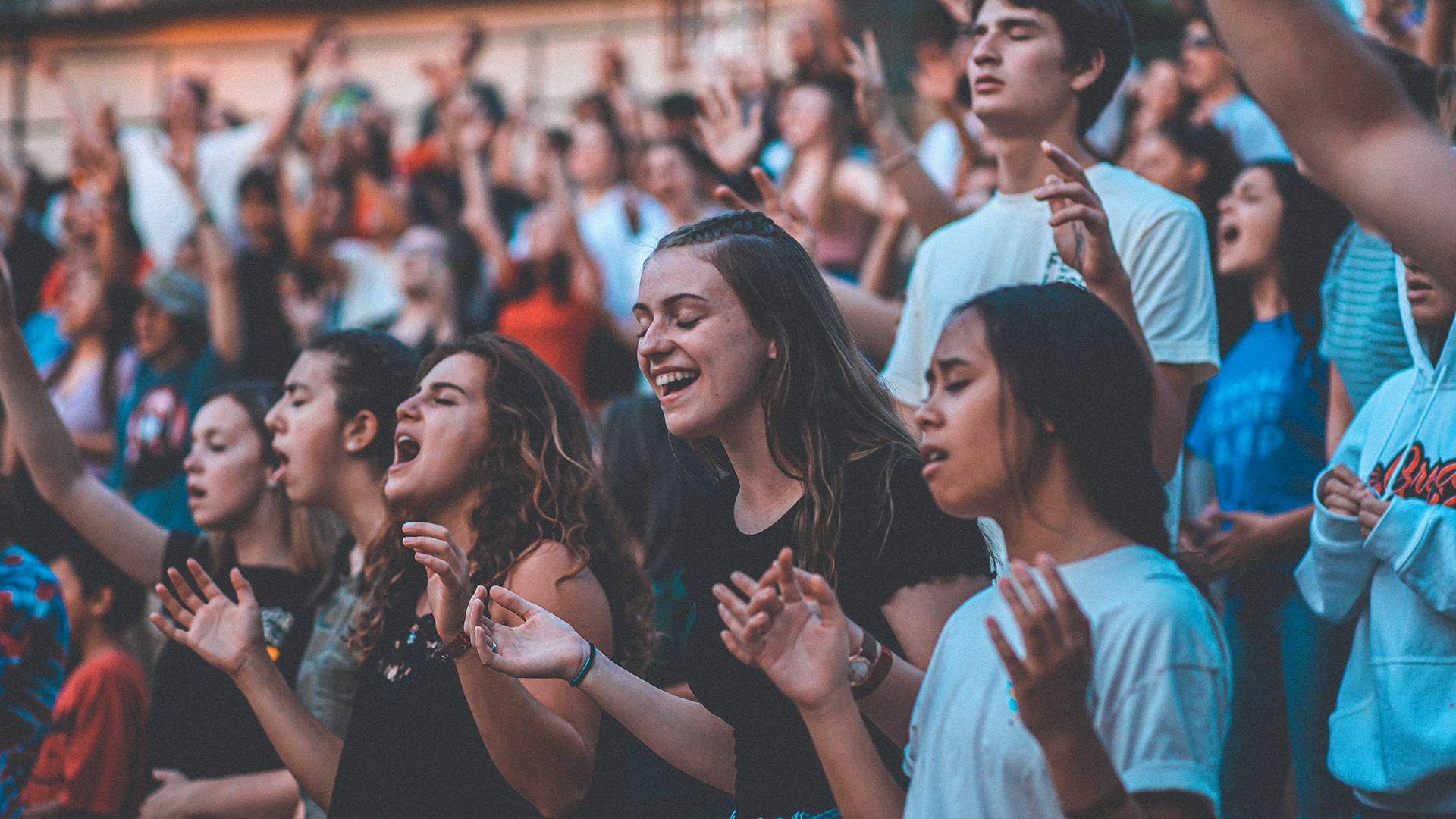
WASHINGTON — This May marked three years since health officials declared the COVID-19 pandemic over. But for churches across America, the effects have been lingering.
Now, a national study from the Hartford Institute for Religion Research shows some encouraging signs:
- In-person worship attendance is rising;
- Volunteering is increasing; and
- More congregations report financial stability.
Still, researchers caution the recovery is far from complete — and far from equal.
For many churches, the pandemic reshaped nearly every aspect of ministry. Some sanctuaries that were once filled with worshippers sat empty during lockdowns. Congregations moved services online almost overnight, forcing leaders to rethink how they connected with members and served their communities.
Now, more than five years after the pandemic began, researchers say some churches are regaining their footing.
Allison Norton, co-director of the Hartford Institute study, says the long-term trend for churches in America had been decline, long before COVID.
“If you look at the arc of what’s gone on in congregational life in the U.S., over the past decades we have seen a longer arc of decline,” Norton told CBN News. “The midpoint on attendance in congregations was 137 people coming to a weekly worship service in 2000 … and it hit a low of 45 in 2021. Why we say we’re cautiously optimistic is if we look at 2025, that has increased up to 70.”
The Hartford Institute tracked more than 7,000 congregations across dozens of denominations nationwide. Researchers found in-person worship attendance increasing for the first time in more than two decades.
“There is something happening,” Norton said. “Finances have increased, attendance has increased, volunteering has increased, congregational willingness to change has increased, clergy health and well-being — we also see an increase there.”
Still, researchers hesitate to describe the trend as a sweeping religious revival. Instead, they call it a “recalibration.”
Attendance remains well below what churches experienced decades ago, and not every congregation is recovering the same way.
“This is not shared evenly by all congregations,” Norton explained. “The net growth occurred mostly in evangelical or conservative Protestant churches.”
At Greater Friendship Missionary Baptist Church in Minneapolis, Pastor B. Charvez Russell says COVID accelerated trends that were already underway.
“Attendance in church was already trending in a negative direction,” Russell said. “When COVID came, COVID just pulled the curtain back and really just exposed it all.”
Rather than disappearing altogether, many churches adapted. Bible studies and worship services moved online, and congregations learned new ways to connect digitally.
“The way we embraced technology had to change,” Russell said. “The way the congregation responds to technology had to change.”
Russell says attendance at his church remained steady as more members connected online. He also sees renewed spiritual interest, especially among younger generations.
“The last few young people that I baptized are people that asked their parents,” he said, later adding, “People just need something real right now.”
One of the biggest lasting changes from the pandemic may be the rise of digital ministry. What began as an emergency response during lockdowns has become a permanent part of church outreach — allowing congregations to connect with people far beyond their local communities.
That shift is especially evident at Fredonia Church of God near Dunlap, Tennessee, where Pastor Levi Taylor leads a small rural congregation.
Before COVID, Taylor says the church regularly saw 40 to 50 people on Sundays. Today, attendance averages closer to 15 to 25. “As soon as COVID hit, the congregation was cut in half,” Taylor said.
Even so, Taylor says the church has continued to see spiritual growth.
“We’ve seen people come to Christ for the first time,” he said. “We’ve had several baptisms. We’ve kind of returned to life as normal.”
Like many pastors, Taylor says technology is now essential. His church livestreams services and Bible studies on Facebook and YouTube, reaching audiences well beyond rural Tennessee.
“There’s a church in Kenya — actually two churches — whose pastors watch a lot of our content,” Taylor said. “One of them we were actually able to provide some Bibles for. That never would’ve happened without technologies like Zoom, Facebook, and YouTube.”
Researchers say that kind of adaptation may explain why some churches appear to be stabilizing after years of decline.
But they also point out much of the recent growth may simply reflect people switching congregations rather than more Americans attending church overall.
“The people that are attending church now aren’t necessarily the same people that were in your church in 2019,” Norton said, adding that roughly 70 percent of new attendees came from another congregation.
Still, pastors like Russell believe the challenges of the pandemic ultimately pushed churches to refocus on their core mission.
“The more and more we live out this gospel,” Russell said, “the more and more people will come.”
